
Best Gym Bags for Men 2026: What to Actually Look For
Most "best gym bag" roundups are sponsored. Here's the practical version — what the specs actually mean, what fails first, and when a full-size bag isn't the right answer at all.
What makes a good gym bag for men
The gym bag market is large and confusing, full of options at every price point that look similar on a product page and perform very differently in daily use. Before looking at specific bags, it's worth understanding what the specs actually mean.
Size: 25–40 litres for most sessions
Enough for training kit, shoes, shower gear, and a shaker. Small enough to carry without it becoming a burden. The temptation is always to size up — resist it. A bigger bag just means more stuff you carry that you don't need.
Dedicated shoe compartment
The single most underrated feature in a gym bag. Keeps your trainers separate from everything else — no protein powder on your gym shoes, no gym shoe smell on your kit. Once you've used a bag with one, going back feels wrong.
Durable zippers
The most common point of failure on any bag. YKK zippers are the benchmark — they're specified by quality bag manufacturers for a reason. Anything cheaper tends to split or jam within months of daily use. If a brand doesn't specify the zipper brand, ask.
Base construction
The base of a gym bag takes more punishment than any other part. It's on the floor at the gym, stacked in lockers, set down hard after training. Reinforced or stiffened bases last significantly longer. Avoid bags where the base is a thinner material than the sides.
Material: 600D nylon or heavy canvas
600D nylon for daily use — durable, lightweight, water-resistant. Heavy canvas for something with more structure and character. Polyester is common in budget bags and shows wear faster. For the full breakdown: How to Choose a Gym Bag That Actually Lasts.
What men actually use a gym bag for
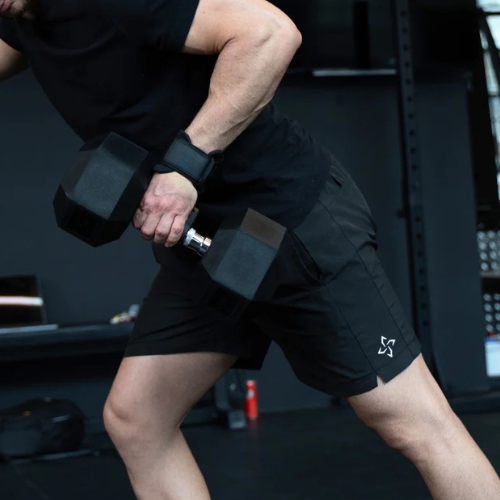
Most sessions involve: training kit, trainers, post-session shower kit or deodorant, a shaker bottle and nutrition, wallet, phone, and earbuds. Occasionally a change of clothes for the office. A bag designed around this reality looks different from most of what's on the market — which is designed to look good on a product page.
When a compact sling beats a full-size bag
Here's the question most gym bag guides skip: do you actually need a full-size bag?
If you're showering at the gym and going straight to work, yes — a 35-litre duffel makes sense. But if you're training in what you arrived in, going home after, and not changing at the gym — a full-size bag is more than you need. It becomes a locker anchor you carry back and forth without using half of it.
The Arnold Bag is the answer for this scenario. A compact gym sling with a magnetic bottle holder — your water bottle clips to the side, your phone sits in the front pocket accessible mid-set, keys and card in dedicated pockets. Everything you need for a session stays on your back throughout, not locked in a locker you have to make a trip for mid-workout.
At 490g, you don't notice wearing it. The Arnold Bag Pro is the waterproof version with extra-strength magnets, built specifically for 30oz and 40oz tumblers like the Stanley Quencher.
For the full breakdown of what belongs in a gym bag — and what you can leave at home: What to Pack in Your Gym Bag: The Minimalist's List.
What to skip
Oversized bags
The bigger the bag, the more you fill it. Unless you're regularly going overnight from the gym, anything over 45 litres is more than you need — and significantly more than you want to carry on a commute.
Bags with no organisational system
A single large compartment sounds simple. In practice, it's a pile of stuff you dig through every session. The shoe compartment and the front pocket are the two features that actually make a gym bag usable day-to-day.
Fashion-forward gym bags
Bags with very specific aesthetic choices tend to be bought on appearance and used with frustration. Neutral and functional outlasts everything else — both in durability and in not looking dated next season.
The price question
Good gym bags range from $50 to $200+. The ceiling is often more about brand recognition than about a better product. The floor is usually too low to be durable under daily use. The sweet spot for a bag you'll use every day for several years is somewhere in the $70–$130 range — enough to get quality materials and construction without paying a premium for a logo.
Before you buy at any price point: ask about the denier rating of the nylon, the zipper brand, and whether the base is reinforced. Brands that answer these questions directly are usually the ones worth buying from.
Related reading: How to Choose a Gym Bag That Actually Lasts · What to Pack in Your Gym Bag · The Best Gym Bag Gift Ideas





Share and get 15% off!
Simply share this product on one of the following social networks and you will unlock 15% off!