

If your atomizer has a bottom-fill valve, press it against your full-size bottle’s sprayer and pump in short strokes until the fill window reads 80 to 90 percent full. No valve? Use a needle-tip funnel for top-fill atomizers, or a blunt-tip syringe for splash bottles with no sprayer at all. Work over a towel, leave headspace, and test-spray away from your face before you pack it. A refillable atomizer like SPRITZ is built around the bottom-fill method, which is why it’s usually the fastest option on this list.
TL;DR:
- Filling within 80 to 90 percent ensures room for fragrance expansion and prevents leaks during temperature changes.
- Bottom-fill pump atomizers offer the fastest refill process, often taking less than a minute with minimal mess.
- Using a funnel for top-fill atomizers helps control pour speed and avoid foam or sputtering sprays.
- A blunt-tip syringe is ideal for splash bottles or decants, providing precise, bubble-free refills especially for no-spray source bottles.
- Keep atomizers upright, well-sealed, and tested before travel to prevent leaks and ensure even spray patterns during flights.
Table of Contents
- What You Need Before You Fill an Atomizer From a Spray
- How Do You Identify Your Atomizer Type?
- Filling a Bottom-Fill Pump Atomizer Step by Step
- Filling a Top-Fill Atomizer With a Mini Funnel
- When Should You Use a Syringe to Fill an Atomizer?
- Cleaning Between Scents and Everyday Maintenance
- Why Is My Atomizer Leaking or Spraying Weak?
- Packing a Filled Atomizer for Air Travel
- A Practical Note From Spritzshop
- Get a Refill-Ready Atomizer That Skips the Funnel
- Sources
- FAQ
What You Need Before You Fill an Atomizer From a Spray
You do not need a lab setup. You need a clean surface, a few small tools, and about two minutes.
Here’s the short list:
- Paper towels or a lint-free cloth (for wiping drips, not just for looks)
- A needle-tip mini funnel, sized for narrow atomizer necks
- A 1 to 5 ml blunt-tip syringe or pipette for splash bottles
- Rubbing alcohol for wiping seals between fragrances
- A tray, towel, or shallow dish to catch any overflow
Set up on a hard, well-lit surface. A kitchen counter or bathroom sink beats a carpeted desk, because dropped perfume on fabric doesn’t come out easily and an open flame nearby (a candle, a stovetop) is a real hazard around alcohol-based fragrance. Keep a small trash receptacle within reach for wrappers and used paper towels.
The number that matters most here is 80 to 90 percent. Filling any atomizer past that line is asking for trouble, since liquid expands with heat and a completely full chamber has nowhere for that expansion to go.
Pro Tip: Warm your hands around the bottle for 30 seconds before filling in cold weather. It thins the fragrance slightly and makes pump strokes smoother.
How Do You Identify Your Atomizer Type?
Before you touch a bottle, look at your atomizer’s base and your fragrance bottle’s top. The refill method depends entirely on what you’re holding, not on habit or guesswork.
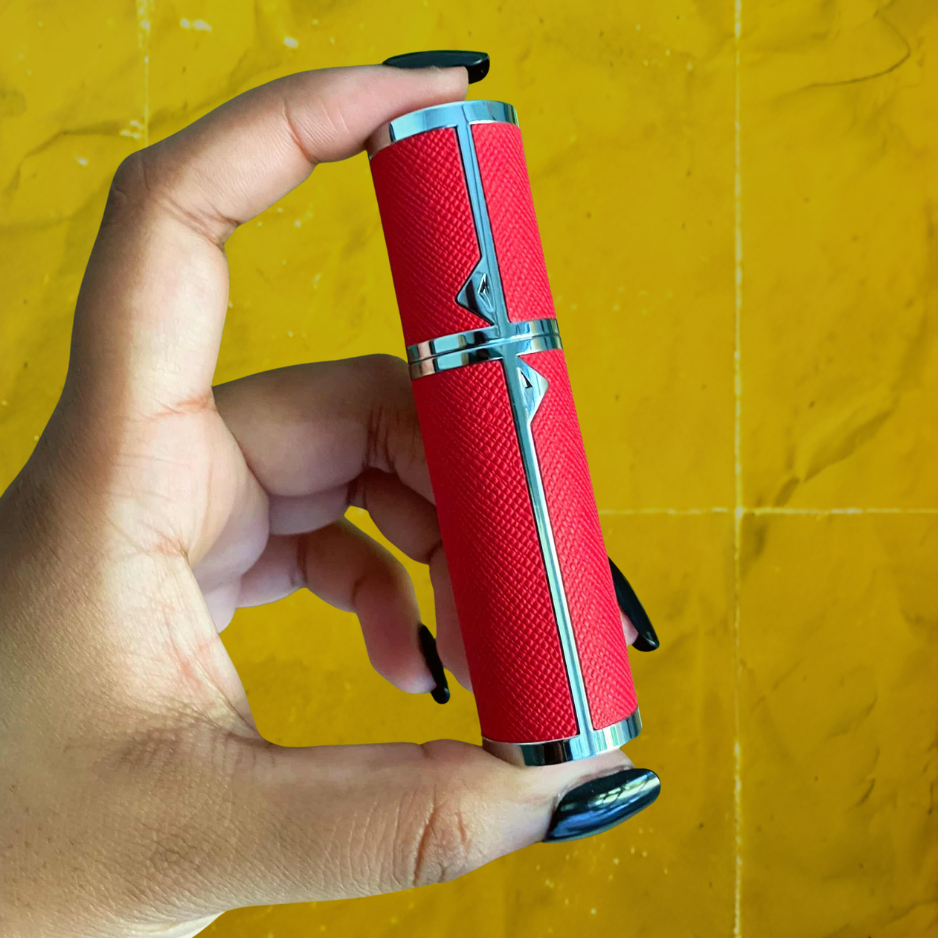
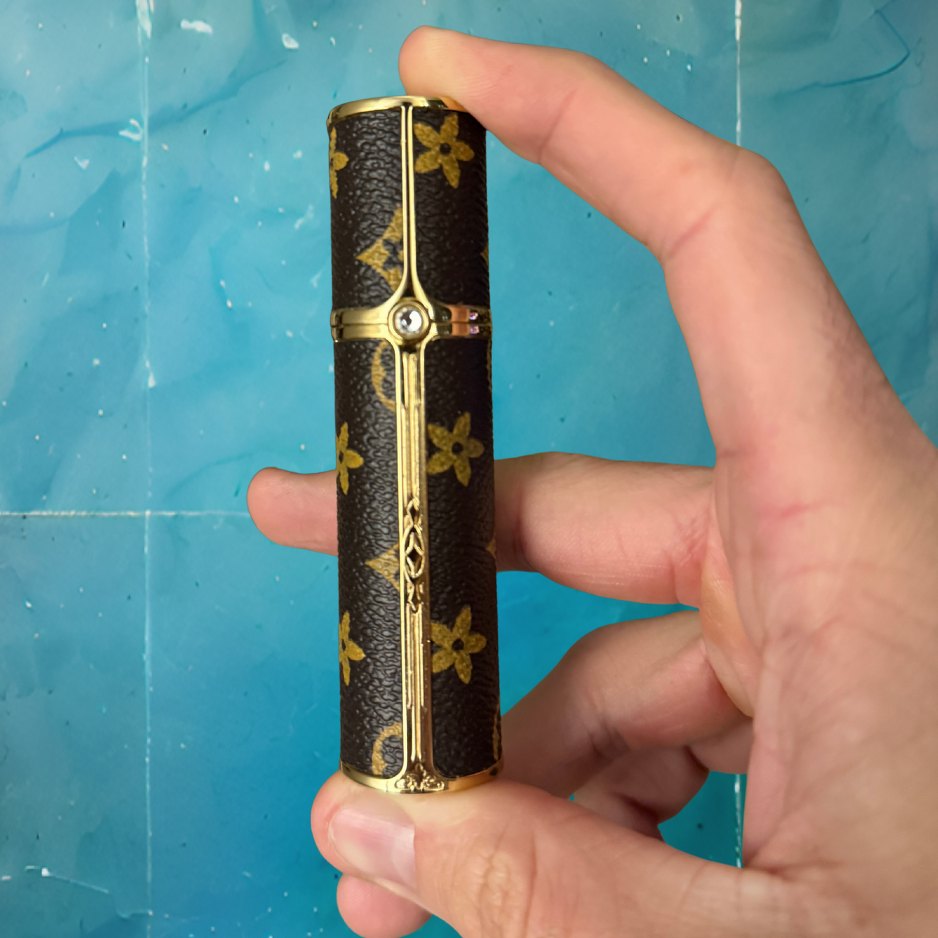
Bottom-fill pump atomizers have a small valve or nozzle recessed into the base, often with a tiny clear window on the side showing liquid level. This is the design most travel atomizers use, and it’s also the design SPRITZ builds around, because it skips funnels and syringes entirely.
Top-fill or screw-top atomizers open at the top, where the spray head unscrews or lifts off entirely. You’ll see threads or a snap-fit cap rather than a valve at the bottom. These need a funnel because there’s no valve to press against a sprayer.
Splash bottles and decants have no spray mechanism at all, just a plain opening or a pour spout. If your full-size bottle looks like this, or if you’re transferring from a small sample vial, a syringe is the cleanest transfer method.
Run through this quick check before you start:
- Does the atomizer’s base have a visible valve or fill window? If yes, use the bottom-fill pump method.
- Does the top unscrew or pop off with no bottom valve? If yes, grab the funnel.
- Does your source bottle lack a spray nozzle entirely? If yes, the syringe method is your only clean option, regardless of atomizer type.
Filling a Bottom-Fill Pump Atomizer Step by Step
This is the method most travel atomizers are designed around, and it’s also the quickest. Aromatick’s refill guide notes that a proper bottom-fill refill typically takes under a minute once you get the hang of the motion.
- Remove the cap from your atomizer and the cap or protective cover from your full-size bottle’s sprayer.
- Hold the full-size bottle upright and align the atomizer’s base valve directly over the sprayer nozzle.
- Press down firmly and pump in short, steady strokes rather than one long push.
- Watch the fill window as you go. It should climb steadily with each stroke.
- Stop pumping once the window reads 80 to 90 percent full.
- Lift the atomizer straight up off the sprayer, without tilting it sideways.
- Wipe the base and neck with a paper towel to catch any residual drips.
- Replace both caps, then test-spray once, away from your face, to confirm the pump primes correctly.
If you don’t see a fill window at all, some atomizers rely on weight or a faint internal line instead. In that case, pump for a count of ten, then check by holding the atomizer up to a light.
If the pump feels loose or sprays air instead of liquid, the base valve likely isn’t seated flush against the sprayer. Reposition it and press with slightly more even pressure, since a crooked seal is the most common reason bottom-fill pumps seem to “not work” on the first try.
Overpumping is the other common mistake. Once the window looks close to full, stop and check rather than adding a few extra strokes “just in case.” A few extra strokes is exactly how leaks start once the atomizer warms up in a pocket or bag.
Filling a Top-Fill Atomizer With a Mini Funnel
Screw-top and top-fill atomizers need a slower, more deliberate pour, since there’s no pump doing the work for you. WikiHow’s refill instructions walk through this exact sequence for bottles with a removable sprayer.
- Unscrew or lift off the spray head to expose the open neck underneath.
- Insert the needle-tip funnel into the neck, seating it snugly so liquid doesn’t run down the outside.
- Pour from your full-size bottle in small, controlled amounts rather than one steady stream.
- Stop before the atomizer looks completely full, aiming for that same 80 to 90 percent line.
- Reattach the sprayer tightly, checking that the threads catch fully before you stop turning.
- Prime the pump with two or three test sprays into a tissue before your first real use.
Funnels work better than syringes here because they let you pour continuously without refilling a syringe barrel three times for a single atomizer. Pour too fast, though, and you’ll get foam, which traps air bubbles that make the first several sprays sputter instead of mist evenly.
Give the atomizer a minute to settle after reattaching the sprayer. Wipe the neck and cap threads with a lint-free cloth first, since leftover fragrance on the seal is a common reason caps feel sticky or don’t screw on cleanly a few refills later.
When Should You Use a Syringe to Fill an Atomizer?
A syringe is the right call whenever your source bottle has no spray nozzle, whether that’s a splash-style cologne bottle, a decant vial, or a sample you’re pouring from a friend’s collection. FragrancePackage’s guide recommends a blunt-tip syringe specifically, since a sharp needle tip can nick internal seals or gaskets over repeated use.
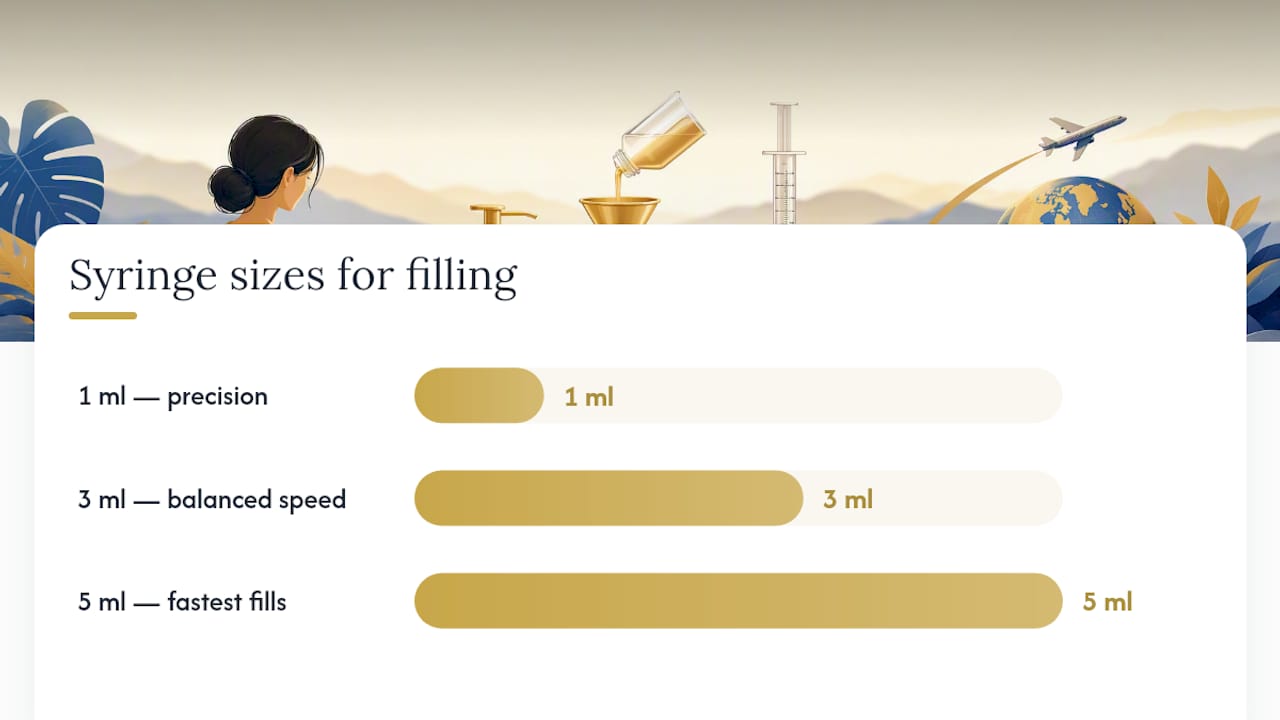
- Draw fragrance slowly into a 1 to 5 ml blunt-tip syringe, pulling the plunger back in small increments to avoid air bubbles.
- Hold your atomizer upright and steady, ideally braced against the tray or towel from your workspace.
- Insert the syringe tip into the atomizer’s neck opening.
- Depress the plunger slowly and evenly, watching the liquid level rise rather than pushing in one motion.
- Watch for bubbling or foam. If it appears, pause for a few seconds before continuing.
- Stop at roughly 90 percent full, leaving a visible gap of air at the top.
- Withdraw the syringe carefully, then wipe the neck before capping the atomizer.
Choose a 1 ml syringe for precision work with small decants, and a 3 to 5 ml syringe for filling a full travel atomizer in fewer draws. If you plan to reuse the same syringe for a different fragrance later, rinse it thoroughly with rubbing alcohol and let it dry completely first, since leftover residue mixes scents in a way that’s hard to undo.
Pro Tip: If the fragrance sprays erratically or foams during injection, stop and let the bubbles settle for a minute before continuing. Forcing the plunger traps air inside and throws off the spray pattern later.
Cleaning Between Scents and Everyday Maintenance
Switching fragrances in the same atomizer without cleaning it first is the fastest way to end up with a muddled scent that’s neither fragrance you intended. Aromatick’s maintenance guidance recommends flushing the chamber, wiping the valve and neck with rubbing alcohol on a lint-free cloth, and letting it air-dry a full 24 hours before adding a new scent.
If you rotate between two or three fragrances regularly, it’s simpler to keep a dedicated atomizer per scent family rather than cleaning one unit constantly. That’s part of why frequent travelers tend to own a small set of refillable atomizers rather than a single one.
A few habits keep any atomizer performing well over months of refills:
- Stick to the 80 to 90 percent fill line every single time, since a tight seal only stays tight when it isn’t under constant pressure from an overfull chamber.
- Run a wipe test after every refill: dry the neck and base fully, wait a minute, then check for new wetness.
- Do a single test spray away from your face before pocketing the atomizer, confirming the pump primes and the mist pattern looks even.
- Store atomizers upright, not on their side, especially in bags where they’ll shift during transit.
Why Is My Atomizer Leaking or Spraying Weak?
A damp atomizer isn’t automatically a broken one. Run the wipe test first: dry the neck and base completely, set the atomizer aside for a minute, then check again. WikiHow’s guide notes this simple check separates leftover transfer residue from an actual seal failure, and it’s a step a lot of people skip entirely before assuming the worst.
If moisture reappears after the wipe test, the seal is likely compromised. A more thorough version of this check involves capping the atomizer and leaving it upright inside a clear plastic bag overnight; pooled liquid in the bag by morning confirms a faulty seal that filling technique won’t fix.
Weak or sputtering spray usually points to one of three causes:
- An unprimed pump. Give it three or four test sprays into a tissue before assuming something’s wrong.
- Misaligned inner tubing. This happens more with top-fill atomizers after a rough refill; realign gently and prime again.
- Insufficient liquid. Below a certain level, the pump can’t draw fragrance up the tube consistently.
If leaks continue after a fresh seal check and proper refill technique, replacing the atomizer usually costs less than the fragrance you’ll lose to repeated spills.
Packing a Filled Atomizer for Air Travel
The TSA allows liquids in carry-on bags when each container holds 3.4 ounces (100 ml) or less and fits inside a single quart-sized clear bag. Most travel atomizers, which typically hold somewhere around 3 to 5 ml, fall comfortably under that limit with plenty of room to spare.
Pack smart beyond the basic rule:
- Keep the cap fully seated and consider a protective case or pouch to prevent accidental spray triggers in your bag.
- Store the atomizer upright when possible, especially in a travel organizer designed to hold it steady.
- Tuck an extra paper towel in a small zip bag alongside it, just in case.
- Avoid leaving filled atomizers in checked baggage exposed to extreme heat or cold, since temperature swings stress seals more than a plane ride itself.
Testing your spray and checking your seal before you leave home matters more here than anywhere else. A leak that shows up at 30,000 feet ruins a shirt; one caught on your bathroom counter just means a quick wipe.
A Practical Note From Spritzshop
We hear the same two questions from customers constantly: which method is fastest, and how do they stop leaks before a trip. Our answer hasn’t changed. Keep one atomizer clean and empty as a spare, so you’re never refilling in a rush at the airport. And cap it the second you’re done, every time, even if you’re setting it down for thirty seconds.
Run the test-spray step before you pack, not after you land. It takes ten seconds and catches problems while you can still fix them at home instead of in a hotel bathroom.
— Ash
Get a Refill-Ready Atomizer That Skips the Funnel
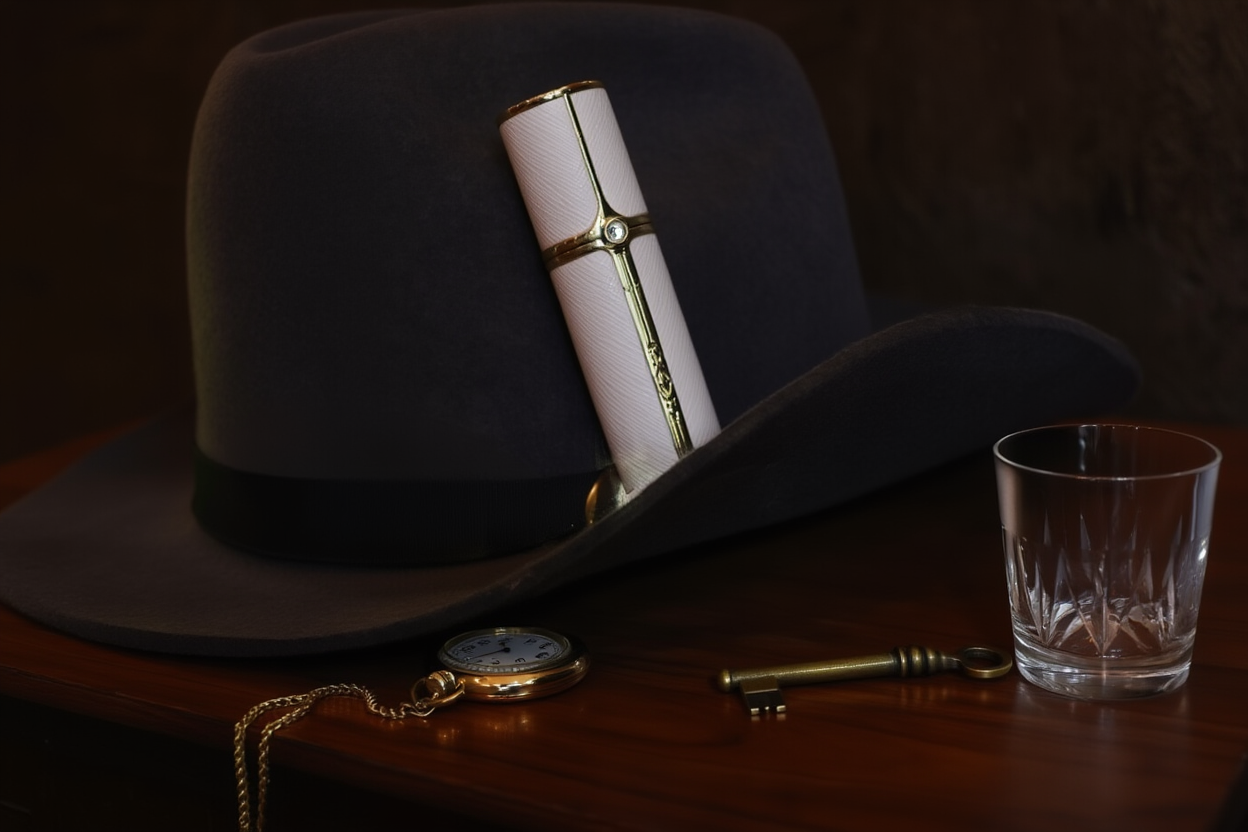
Most of the friction in this whole process disappears with the right atomizer. SPRITZ’s refillable atomizers are built with a bottom-fill valve and visible fill window as the standard design, which means the fastest, least messy method in this guide is also the default one, not a workaround.

That matters most when you’re packing in a hurry the night before a flight. No funnel to dig out, no syringe to rinse, just press and pump until the window reads full. Pair it with a travel organizer to keep it upright and protected in your bag, and you’ve solved both the filling problem and the packing problem in one pass. Customers rate these refillable atomizers highly, with many positive reviews, and some are backed by money-back guarantees and free worldwide shipping.
If you’re building out a full travel kit, the No BS Basics collection covers the wardrobe essentials worth packing alongside it. Browse the refillable atomizer collection and pick the size that matches your next trip.
Sources
- TSA — What can I bring? — Perfume
- How to refill atomizer (Aromatick blog)
- How to Refill a Perfume Travel Bottle (WikiHow)
- How to Refill Perfume Bottles: Portable Travel Atomizer Guide (FragrancePackage)
FAQ
How Do You Refill an Atomizer Bottle?
Match the method to your atomizer type: press a bottom-fill valve against your bottle’s sprayer and pump, use a mini funnel for top-fill screw-tops, or draw fragrance with a blunt syringe for splash bottles. Stop filling at roughly 80 to 90 percent to leave room for expansion.
Is an Atomizer Just a Spray Bottle?
Not quite. A spray bottle is any container with a sprayer attached, while an atomizer is specifically designed to be refilled repeatedly from another bottle, often with a bottom-fill valve or removable top built for that purpose. Full-size perfume bottles are usually splash or fixed-sprayer designs, not refillable atomizers.
How Do You Transfer Perfume Without a Syringe?
If your atomizer has a bottom-fill valve, you don’t need a syringe at all, just press it against the full-size bottle’s sprayer and pump. For top-fill atomizers without a valve, a small funnel poured slowly works just as well and avoids the mess of dripping directly from the bottle.
What’s the Fastest Way to Fill an Atomizer From a Spray Bottle?
The bottom-fill pump method is the fastest, typically taking under a minute once the valve is seated correctly against the sprayer. SPRITZ atomizers are built around this exact design so travelers can refill without funnels, syringes, or spills.
How Much Fragrance Can I Carry in an Atomizer on a Flight?
The TSA allows containers of 3.4 ounces (100 ml) or less in carry-on bags, placed in a single quart-sized clear bag. Most travel atomizers hold only a few milliliters, well within that limit.



साझा करें और 15% छूट पाएं!
बस इस उत्पाद को निम्नलिखित सामाजिक नेटवर्क में से किसी एक पर साझा करें और आपको 15% की छूट मिलेगी!