
Pick your size by measuring, not by label. Lay a best-fitting tee flat, measure pit-to-pit chest and shoulder-to-hem length, then match those numbers to the brand’s garment chart. Heavyweight fabric needs 1 to 2 inches more chest ease than a lightweight tee, so size up when you’re between two sizes. Also budget for 2% to 4% shrinkage if the fabric isn’t pre-shrunk.
TL;DR:
- Heavyweight fabrics require sizing up by one to two inches in chest measurements to maintain comfort and fit.
- Measure chest from armpit to armpit and double it to find the actual chest circumference for size matching.
- Choose a size with four to six inches of ease for regular fits, adding about an extra inch for heavyweight fabrics.
- Tall individuals should opt for dedicated Tall sizes rather than just sizing up, to ensure proper length.
- Shrinkage usually ranges from 2% to 5% in length and width after washing, so pre-shrunk options help maintain fit.
Table of Contents
- What Does a Heavyweight T-Shirt Size Chart Actually Show You?
- How Do You Measure a T-Shirt for Fit?
- Which Measurement Matters Most for Heavyweight Fit?
- What’s the Right Size for Tall, Broad, Plus-Size, or Short Builds?
- How Much Will a Heavyweight Cotton Tee Shrink?
- What Should You Do When You’re Between Two Sizes?
- Who’s Behind This Heavyweight Sizing Guide?
- What Shoppers Get Wrong About Heavyweight Fit
- Where to Find Heavyweight Tees With Real Garment Charts
- Sources
- FAQ
What Does a Heavyweight T-Shirt Size Chart Actually Show You?
A heavyweight tee size chart lists two numbers that matter more than anything printed on the tag: chest width and body length. Seager Co.'s heavyweight tee size chart is a good real-world example. Its small runs about 26 inches long with a 36-inch chest, medium comes in at 28 inches long with a 40-inch chest, and large sits at 29 inches with a 44-inch chest.

Here’s the part that trips people up: that “chest” number is usually a half-chest measurement, taken pit-to-pit, not the full circumference. Double it to estimate the actual chest circumference the shirt allows.
If your actual chest measures 42 inches, you’d land between L and XL on this chart. Since heavyweight cotton needs extra breathing room, most shoppers should size up to the 44 to 46-inch range rather than squeeze into the tighter option.
- Half-chest is measured flat, armpit to armpit, then doubled for circumference.
- Body length runs from the top of the shoulder seam down to the hem.
- Sleeve length and shoulder width appear on more detailed charts but matter less for overall fit.
How Do You Measure a T-Shirt for Fit?
Grab your best-fitting tee, a soft tape measure, and a flat surface. This becomes your “golden sample,” the reference every other shirt gets measured against.
- Lay the shirt flat and smooth out every wrinkle before you measure anything.
- Measure the chest by placing the tape one inch below the armhole, straight across from seam to seam.
- Measure body length from the high point of the shoulder (HPS) down to the bottom hem.
- Measure shoulder width from seam to seam across the top of the shirt.
- Measure sleeve length from the shoulder seam to the end of the cuff.
Keep the tape flat and level. Don’t stretch the fabric or leave it slack, and record everything in inches so you can compare directly against product pages. Gildan’s Heavy Cotton product spec uses this exact method: chest measured an inch below the armhole, body length from HPS to hem.
Pro Tip: Heavyweight fabric has more structure than a thin cotton blend, so the shoulder seam can drop half an inch to a full inch lower on your body than it would on a lightweight tee. If your golden sample has a raised, athletic-cut shoulder, don’t assume a heavyweight tee will match it exactly.
Which Measurement Matters Most for Heavyweight Fit?

Chest width comes first. Body length comes second. Shoulder and sleeve measurements matter, but they’re the easiest to live with if they’re slightly off. A shirt with the wrong chest width looks wrong every time you wear it, while a sleeve that runs half an inch long barely registers.
Heavyweight fabric drapes instead of clinging, which changes how much ease you actually want:
- Slim or fitted look: 2 to 4 inches of ease beyond your body’s chest measurement.
- Regular, everyday fit: 4 to 6 inches of ease.
- Oversized or boxy fit: 6 to 10 inches of ease.
Add roughly one extra inch to any of those ranges when you’re shopping heavyweight specifically, since 220+ GSM cotton doesn’t stretch or settle onto the body the way a thinner tee does. That extra structure also means the shoulder seam sits lower. Brands building heavyweight tees commonly design in a seam drop of half an inch to a full inch below the natural shoulder point, which is what gives these shirts their relaxed, slightly dropped silhouette instead of a snug athletic cut.
What’s the Right Size for Tall, Broad, Plus-Size, or Short Builds?
Standard charts assume an average build, and heavyweight fabric makes deviations from that average more noticeable because the fabric doesn’t flex to compensate. For plus-size and extended-size considerations, refer to the Men’s Sizing – SVBFLOR guide for extended sizing and measurement tables.
- Tall builds: Choose a dedicated Tall size instead of sizing up. Carhartt’s Tall options add length without inflating the chest, while sizing up for length alone usually leaves the body too wide.
- Broad shoulders: Check the shoulder seam placement on the chart before you buy. A regular fit or a size-up in chest width often solves the pull-across-the-back problem better than any generic “athletic fit” label.
- Plus size: Look for brands that grade plus sizes separately rather than just scaling up a straight-size pattern. Heavyweight plus-size grading needs the chest to expand faster than the shoulder to preserve mobility, a rule most plus-size grading guides build in starting around XL or 2XL.
- Shorter torsos: Match chest width first, then look for the shortest available body length in that chest range, so you’re not swimming in extra fabric below the waist.
How Much Will a Heavyweight Cotton Tee Shrink?
Untreated 100% cotton typically shrinks 3% to 5% in length and 2% to 4% in width after its first wash. That’s enough to turn a well-fitting medium into something noticeably tighter and shorter.
Brands that pre-shrink or compact their fabric before cutting, and test it against the AATCC TM 135 standard, usually hold dimensional change to 3% or less. That single step is the difference between a tee that fits the same in July as it did in January and one that quietly shrinks up your torso over a few wash cycles.
- Wash in cold water to slow fiber shrinkage.
- Tumble dry on low, or hang dry, instead of running high heat.
- If you want the shirt to shrink slightly on purpose, a warm wash followed by one hot dryer cycle will speed that up, but do it once, deliberately, not by accident.
Our guide on washing heavyweight tees covers the two washing mistakes that cause most of the fit complaints we see.
What Should You Do When You’re Between Two Sizes?
- If your golden sample’s chest measurement lands exactly between two sizes on the chart, size up. Heavyweight fabric is meant to hang with some drape, not stretch to fit.
- If the chest size matches but the body length runs two or more inches short, look for a Tall option first, or size up and accept the slightly wider chest as a trade-off for correct length.
- If only the sleeve or shoulder width is a little off, but chest and length both check out, let it go. That’s the kind of mismatch you won’t notice once the shirt’s on.
The one exception: if you’re specifically after a slim, Pro Fit style, stick with your true size rather than sizing up, since the fabric’s structure will do the shaping work for you.
Who’s Behind This Heavyweight Sizing Guide?
This guide comes from Ash at Spritzshop, where fit and fabric behavior get talked about daily, not just at checkout. Spritzshop is best known for refillable perfume atomizers, but the brand’s No BS Basics line applies the same measure-first thinking to apparel: published garment charts, honest shrinkage numbers, and no size-label guesswork.
If you want the exact chart behind a specific style, our No BS Basics Loose Boxy Tee page lists full garment measurements, and our roundup of the best heavyweight t-shirts breaks down fit differences across popular cuts.
What Shoppers Get Wrong About Heavyweight Fit
Most sizing regrets come from three habits: ordering by label instead of measurements, ignoring body length until the shirt’s already too short, and assuming every brand shrinks the same way.
Pro Tip: Keep your golden sample’s measurements saved as a photo on your phone. Next time you’re comparing charts, you’ll have real numbers in seconds instead of guessing from memory. When your numbers land between sizes, size up and check the return policy before you buy, not after.
— Ash
Where to Find Heavyweight Tees With Real Garment Charts
Spritzshop’s No BS Basics line was built around the exact problem this guide just walked you through: sizing that actually matches published garment measurements instead of a vague S/M/L guess.
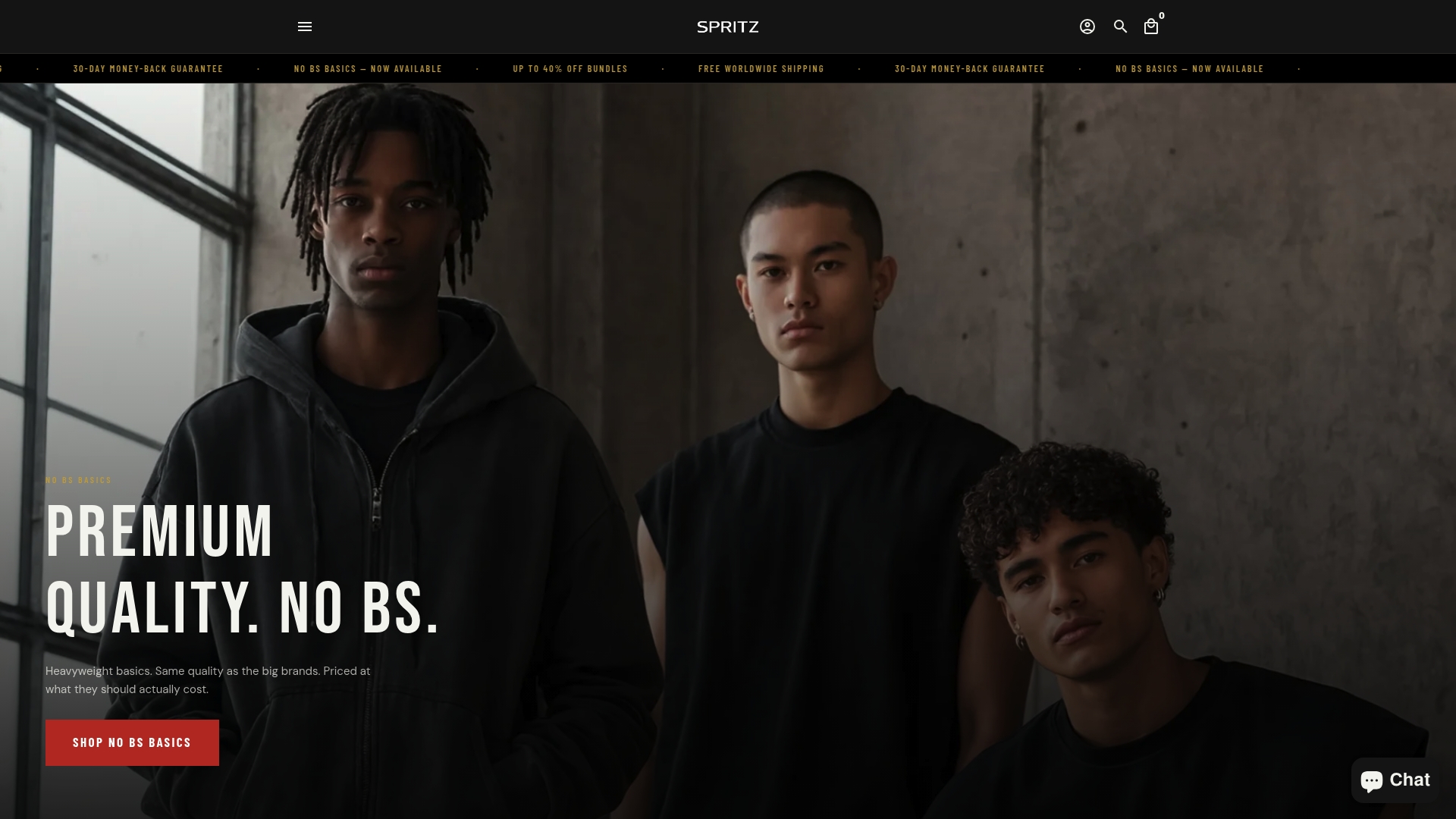
Every style in the collection lists chest width and body length up front, plus wash-care guidance so the fit you buy is the fit you keep after the first laundry cycle. If you’d rather see fit compared side by side before choosing, our best heavyweight t-shirt roundup walks through specific cuts and who they suit. Ready to shop? Browse No BS Basics and match your golden-sample measurements to the chart on any product page before you check out.
Sources
Shrinkage figures cite AATCC TM 135 testing. Garment chart examples come from Seager Co. and Gildan’s published measurement specs, linked throughout this guide.
- HEAVYWEIGHT TEE SIZE CHART – Seager Co.
- Gildan Heavy Cotton (5000) product measurement spec
- Carhartt K126 product and sizing notes
FAQ
How Do Heavyweight T-Shirts Fit Compared to Regular Tees?
Heavyweight t-shirts fit looser and drape rather than cling, because the thicker fabric holds its shape instead of stretching to the body. Expect the shoulder seam to sit slightly lower than on a lightweight tee, often by half an inch to a full inch, which gives heavyweight styles their relaxed silhouette.
What Size T-Shirt Should a 200-Pound Man Wear?
Weight alone doesn’t determine size. Chest and body length measurements do, so measure a best-fitting tee and compare its numbers to the brand’s garment chart rather than guessing from weight or a generic label.
Is Heavyweight the Same as Oversized?
No. Heavyweight describes the fabric’s thickness and structure, usually 220 GSM or higher, while oversized describes the cut. You can buy a heavyweight tee in a slim, regular, or oversized fit; heavyweight just means the fabric itself is thicker and more durable.
Should Your Stomach Show When You Raise Your Arms?
No, and if it does, the body length is too short for your torso. Prioritize a garment length that covers your waistband with arms raised, even if that means choosing a Tall option or sizing up rather than accepting a shirt that rides up.
How Much Ease Should a Heavyweight Tee Have at the Chest?
Regular fits typically need 4 to 6 inches of ease beyond your actual chest measurement, oversized fits need 6 to 10 inches. Add roughly one extra inch to those ranges for heavyweight fabric specifically, since it doesn’t stretch the way lighter cotton blends do.





साझा करें और 15% छूट पाएं!
बस इस उत्पाद को निम्नलिखित सामाजिक नेटवर्क में से किसी एक पर साझा करें और आपको 15% की छूट मिलेगी!