
How to Choose a Gym Bag That Actually Lasts
A gym bag that fails at the zipper three months in isn't a gym bag. It's a one-season purchase you'll replace before spring. Here's how to buy one that doesn't — and what to think about before you spend.
Why most gym bags don't last
The gym bag market is full of options at every price point that look similar on a product page and perform very differently in daily use. The failure modes are almost always the same: cheap zippers that split, thin fabric that tears at the base or the strap attachment points, lining that degrades from moisture exposure. The main fabric is usually fine. It's the stress points that fail.
What material actually matters
Nylon (600D or above)
Good nylon is tough, lightweight, and water-resistant. The denier number tells you the thread density — higher is more durable. 600D nylon is the minimum worth considering for a bag you're using every day. Below that and you'll see wear at stress points faster than you should.
Canvas
Heavy-duty canvas is durable and develops character with use. It handles abuse well. The downsides: heavier than nylon, not naturally water-resistant, and needs conditioning over time to stay flexible.
Polyester
Common in budget bags. Fine for occasional use, but it tends to hold odour, shows wear faster than nylon or canvas, and doesn't recover well from moisture. Not the right choice for a bag used daily.
Key point: Avoid bags where the base is made from a different, thinner material than the sides. The base takes the most stress of any part of a bag — it's on the floor, it holds the heaviest items, and it takes impact every time you set the bag down. If the base is cheap, the bag will fail at the base.
Compartments: what you actually need vs what you think you need
More compartments aren't always better. What you need are the right compartments — ones that keep clean and dirty separated, shoes away from everything else, and the things you need mid-session (phone, keys, water) accessible without unpacking the whole bag.
- A dedicated shoe compartment. Non-negotiable if you're bringing trainers. The single most underrated feature in a gym bag.
- A main compartment large enough for your training clothes, a towel, and any recovery kit.
- A front or top pocket for the things you need without opening the main compartment: keys, earphones, locker token.
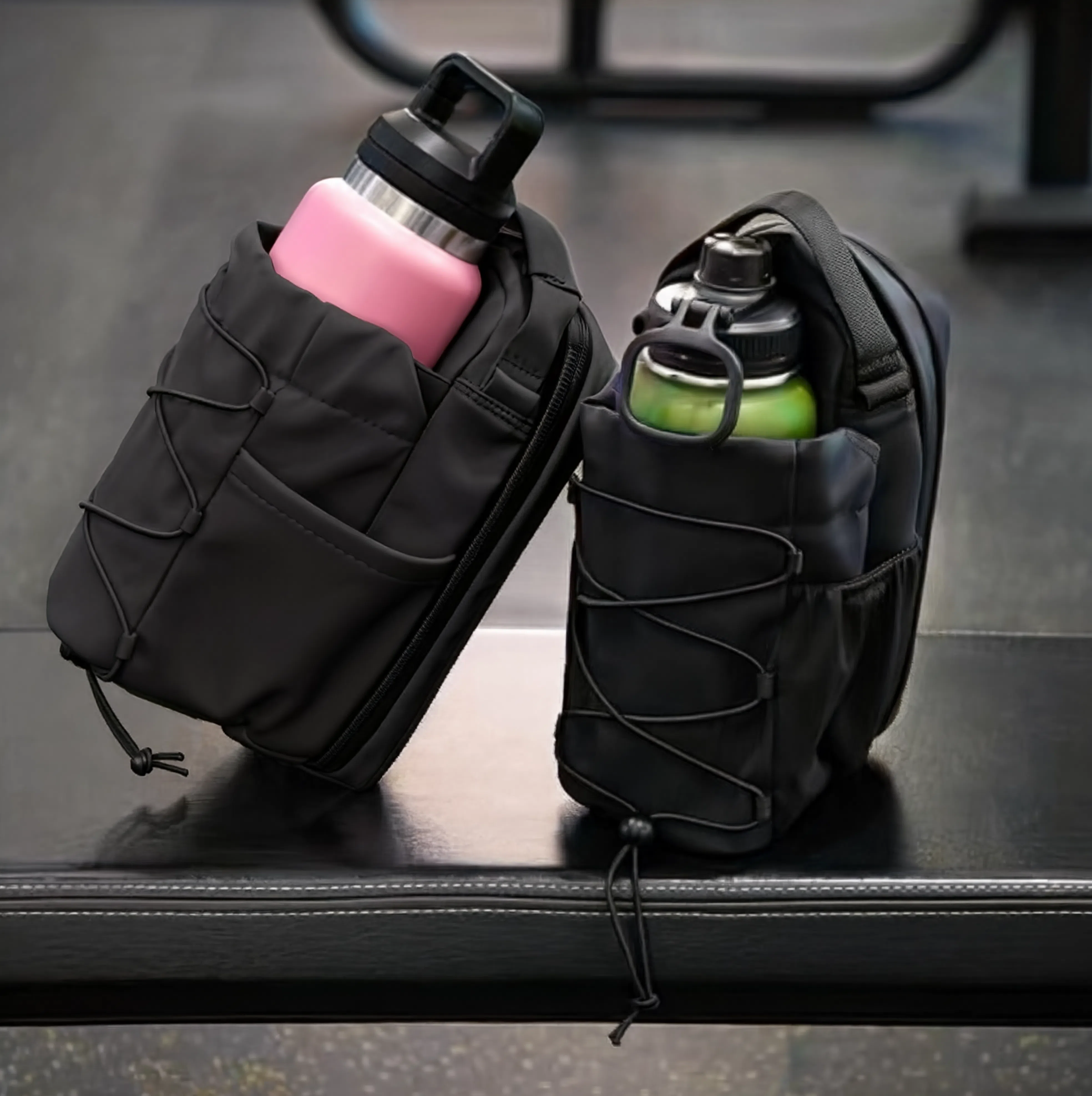
- An external water bottle sleeve — a wet bottle in a main compartment transfers moisture to everything around it.
Size: the temptation to go too big
The temptation is to buy big. Don't. A bag that's too large encourages overpacking, becomes a burden to carry, and ends up as a moving storage unit for things you never actually use at the gym.
For a standard gym session: 25–35 litres is the right range. If you're going gym-to-office and need to carry work clothes and a laptop as well: 35–45 litres is the ceiling before it becomes unwieldy. Anything over 45 litres is for overnight trips, not sessions.
The things that actually fail first
Zippers
Look for YKK zippers — they're the industry standard for durability. The zipper track should feel smooth and even, the pull tab should feel solid, and the teeth should engage cleanly. A zipper that feels flimsy new will fail under use. If the brand doesn't specify the zipper manufacturer, ask.
Strap attachment points
The points where shoulder straps attach to the body of the bag take enormous, repeated stress. Look for reinforced stitching (multiple rows, bar-tacked) or riveted attachment points. This is where cheap bags fail — the stitching opens up, the D-ring pulls out, and suddenly you're carrying a bag with one strap.
Base construction
Look for a stiffened or reinforced base. A bag that collapses under the weight of its own contents won't hold up to daily use. The base should hold its shape when the bag is set down empty.
Should you get a gym sling instead?
For anyone who trains regularly without changing clothes at the gym, a compact gym sling is often the better solution. A 25-litre duffel is genuinely useful if you're showering at the gym and changing for work. But if you're going directly from the gym back home — or if you train in what you wear to the gym — a full-size bag is more than you need.
The Arnold Bag is a compact gym sling designed around what most people actually carry in a session: phone, keys, card, and water bottle. The magnetic bottle holder snaps your bottle to the side, the front pocket is accessible mid-set, and at 490g it sits on your back so lightly you'll forget it's there.
For anyone who overloads a full gym bag with things they don't actually use, the sling is the practical reset. For the full breakdown of what belongs in a gym bag: What to Pack in Your Gym Bag.
What to look for in practice
Before you buy:
- What's the denier rating of the nylon?
- What zipper brand?
- Is the base reinforced?
- Are the strap attachments riveted or bar-tacked?
If the brand can't answer those questions clearly, move on. Confidence in specs is almost always a signal of confidence in the product.
Related reading: What to Pack in Your Gym Bag · The Best Gym Bag Gift Ideas · Best Gym Bags for Men 2026





साझा करें और 15% छूट पाएं!
बस इस उत्पाद को निम्नलिखित सामाजिक नेटवर्क में से किसी एक पर साझा करें और आपको 15% की छूट मिलेगी!