

Wearing perfume on a plane is fine, and skipping it is fine too. The rule that actually matters is this: your scent should be discovered, not announced. Apply it before you leave for the airport, keep it light, and pack any bottle you bring within the TSA’s carry-on liquid limit.
TL;DR:
- Use a light spray applied well in advance of boarding to ensure the scent settles into your skin and doesn’t overwhelm nearby passengers.
- Pack perfume in TSA-compliant containers no larger than 3.4 ounces or 100 milliliters, ideally in refillable atomizers or small decants for better control.
- Avoid heavy, resinous, or gourmand scents that are more likely to trigger complaints or headaches in enclosed airplane cabins.
- Be mindful of cultural differences in fragrance norms, opting for lighter scents when traveling internationally to prevent causing discomfort.
- Keep your perfume bottles well-sealed, upright, and labeled to prevent leaks during pressure changes and ensure safe, effective travel.
Table of Contents
- What Is Good Plane Perfume Etiquette?
- Which Travel Fragrance Format Should You Pack?
- What Are the TSA Rules for Perfume on a Plane?
- What Should You Do if a Seatmate’s Perfume Bothers You?
- How Do You Pack Perfume So It Survives a Flight?
- How Ash Maintains a Travel Atomizer Between Trips
- Do Cultural Norms Around Fragrance Change on Planes?
- How Do You Choose a Less Intrusive Perfume for Flying?
- A Personal Note on Wearing Scent in the Air
- Travel Smarter With a Refillable Atomizer Built for Planes
- Sources
- FAQ
What Is Good Plane Perfume Etiquette?
Good plane perfume etiquette comes down to timing and volume, not whether you wear fragrance at all. Spray at home, in the hotel room, or in the airport bathroom, never in your seat. Cabin air recirculates in a sealed tube for hours, and a scent that felt perfect in your bedroom mirror can turn into something a stranger three rows back can’t escape.
Do this:
- Apply some time before boarding so the alcohol evaporates and the scent settles into your skin instead of hanging in a cloud around you.
- Pick fresh, low-projection notes: citrus, clean musk, light florals, soft aquatics.
- Use a light application on clothing rather than heavy layering.
- Spray from arm’s length and test how far it projects before you’re stuck next to a stranger for four hours.
Skip this:
- Never spray in your seat, in the aisle, or in the lavatory once you’re airborne. It doesn’t just affect the person next to you; it travels through the recirculated air system.
- Avoid heavy oud, resins, amber, and sugary “gourmand” scents built around ethyl maltol. Etiquette experts and fragrance writers consistently name these as the notes most likely to trigger complaints or headaches in close quarters.
- Don’t use perfume to cover up hygiene issues after a long travel day. More scent on top of the problem usually makes it worse, not better.
Pro Tip: If you’re unsure how strong a fragrance reads to other people, ask a friend to smell your wrist from three feet away, not up close. That’s roughly the distance of an airplane armrest.
Which Travel Fragrance Format Should You Pack?
The format you choose affects both how much you smell like and how much risk you’re taking with your luggage. Here’s how the main options stack up:
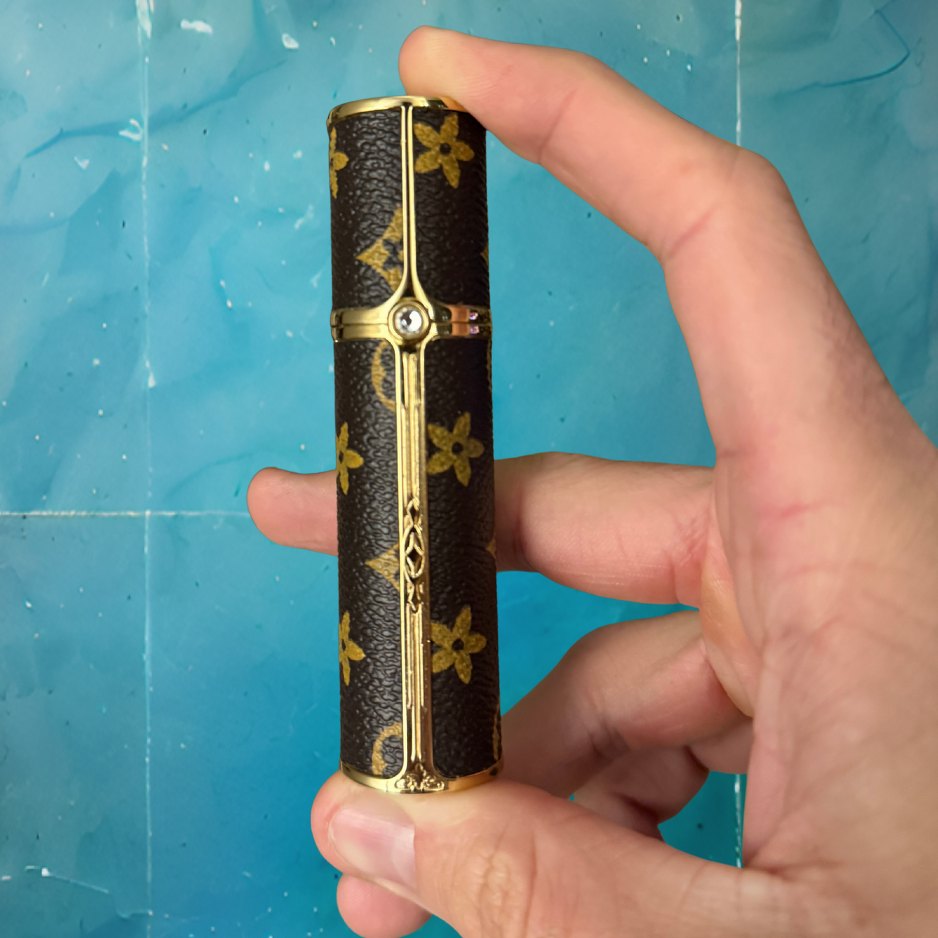
- Refillable atomizers. Compact, reusable, and built to be leak-tested, a quality atomizer lets you carry exactly the amount you need without hauling a full retail bottle through security. Small glass atomizers with a proper seal handle cabin pressure changes far better than flimsy plastic vials, which are the most common source of leaks at altitude.
- Pre-filled decants. A 5 to 10 ml decant covers most trips and lets you bring two or three scents instead of committing to one. Used sparingly, projection stays low by design since you’re working with a tiny volume.
- Rollerballs and solid perfumes. These carry zero spray risk and almost no projection, which makes them the safest bet in a middle seat or on a red-eye where everyone around you is trying to sleep.
For most travelers, a 5 to 10 ml decant or a small refillable spray hits the sweet spot: enough product for a full trip, light enough to stay considerate, and small enough to disappear into a jacket pocket.
What Are the TSA Rules for Perfume on a Plane?
TSA carry-on rules cap perfume containers at 3.4 ounces or 100 ml, and it’s the container size that matters, not how much is left inside. A half-empty 4-ounce bottle still gets pulled at the checkpoint. Every liquid container has to fit inside a single, clear, resealable quart-sized bag along with your other liquids.
Checked-luggage limits are more generous but not unlimited: aggregate toiletry allowances top out at 2 kg or 2 liters per person, with no single container exceeding 0.5 kg or 500 ml, and aerosol nozzles need to be protected from accidental discharge.
Airlines add a layer on top of TSA rules that many travelers overlook. Most carriers’ contracts of carriage reserve the right to refuse service to a passenger whose odor is judged offensive, a clause that exists for hygiene issues but applies just as easily to an overdone fragrance. The practical takeaway: keep bottles under the size limit, and keep your application light enough that it never becomes a conduct issue in the first place. For a full breakdown of what fits in a carry-on, SPRITZ’s guide to mini perfume bottles walks through size limits in more detail.
What Should You Do if a Seatmate’s Perfume Bothers You?
- Try a physical buffer first. A scarf pulled up near your nose, or a peppermint oil inhaler, can cut the intensity without any conversation at all.
- Ask about moving. If the flight isn’t full, a polite word to a flight attendant about switching seats solves the problem quietly for everyone.
- Speak to your neighbor directly, but gently. Something like, “Would you mind if I ran to grab a fresh air vent? I’m sensitive to strong scents,” keeps the tone non-confrontational.
- Loop in the crew for anything severe. Flight attendants can sometimes reseat passengers or offer other accommodations when a scent is causing a genuine physical reaction, not just mild annoyance.
- If you have a medical sensitivity, say so plainly. Naming it as a health issue rather than a preference tends to get a faster, more serious response from staff.
How Do You Pack Perfume So It Survives a Flight?
- Keep carry-on bottles in your quart-sized liquids bag, capped tight, and packed upright so gravity isn’t working against the seal.
- Cushion aerosol caps with tape or a protective cover so nothing triggers mid-flight in your bag.
- In checked luggage, wrap glass bottles inside clothing or a padded case, and think twice before checking anything expensive or irreplaceable.
- Before you fly, shake and invert your decant or atomizer as a quick pressure test; if it leaks in your hand at home, it will leak in your bag at 35,000 feet.
- Label every decant. Unmarked mini bottles get confused fast, especially if you’re carrying more than one scent.
Spray atomizers with a proper seal generally outperform splash vials or improvised droppers here. Less exposed liquid, fewer chances for cabin pressure to force product out through a loose cap.
How Ash Maintains a Travel Atomizer Between Trips
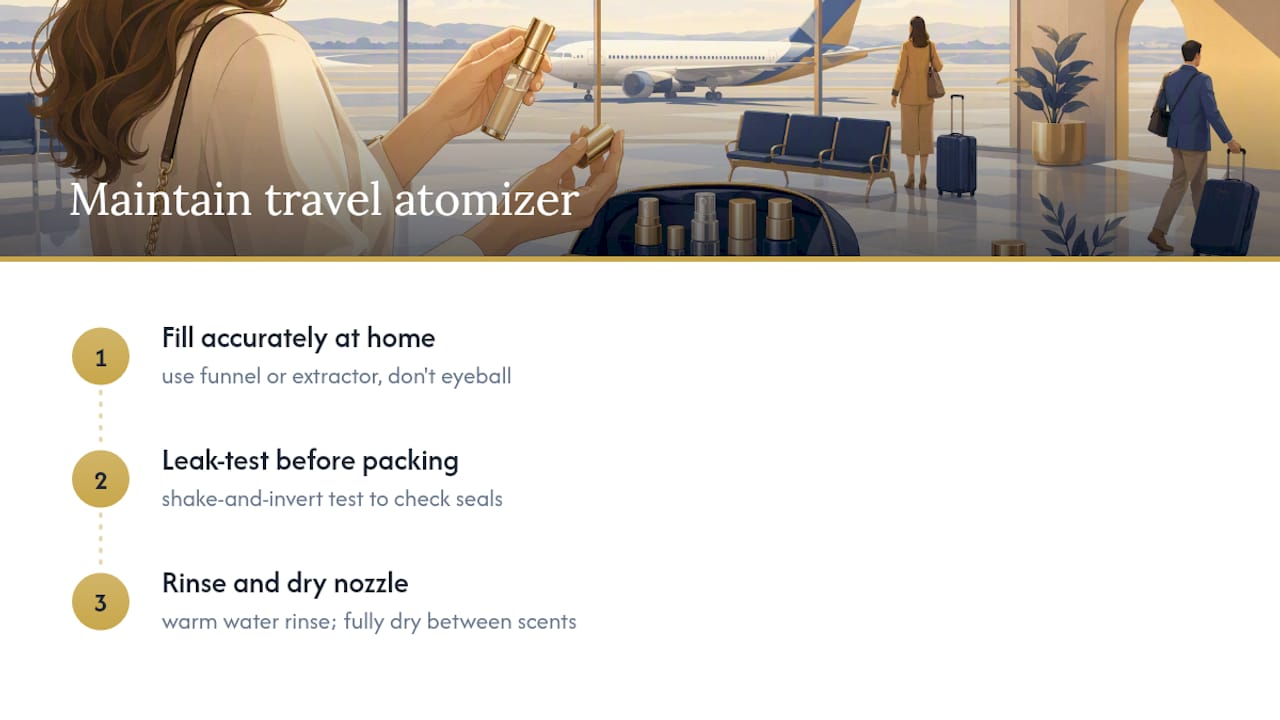
Decanting well is a habit, not a one-time task. Fill your atomizer at home using a funnel or extractor rather than trying to eyeball a pour, then run the shake-and-invert leak test before it ever goes near your suitcase. Rinse the nozzle with warm water between different scents so notes don’t bleed into each other. A well-sealed atomizer keeps projection lower too, since a tight seal prevents the slow, involuntary release that a worn-out spray head causes over weeks of travel. For a deeper walkthrough on cleaning and pressure handling, SPRITZ’s travel atomizer guide covers the maintenance side step by step.
Pro Tip: Rinse and fully dry your atomizer nozzle before switching scents. Skipping this step is the number one reason travel atomizers start smelling like a blend nobody asked for.
Do Cultural Norms Around Fragrance Change on Planes?
Fragrance tolerance varies more by culture than most travelers expect, and international flights put those differences in the same cabin. In parts of the Middle East and South Asia, stronger, resin-heavy scents like oud are everyday wear, worn in amounts that would read as overpowering by Scandinavian or East Asian standards, where lighter, cleaner fragrance is the norm and heavy scent in shared spaces is often considered impolite.
North American etiquette tends to sit in the middle, generally favoring subtlety in enclosed public spaces but without the strict scent-free norms found in some Canadian workplaces and schools. None of this makes one standard “correct.” It just means the person next to you on a long-haul flight may have grown up with a completely different baseline for what counts as “a lot” of perfume.
The safest approach on any international route is to default toward the lighter end of your own comfort zone, not the heavier end of what you’d wear at home. A scent that reads as tasteful at a dinner party in one country can read as intrusive in a metal tube with recycled air, regardless of where you or your seatmate are from. When in doubt, less is the more universally polite choice.
How Do You Choose a Less Intrusive Perfume for Flying?
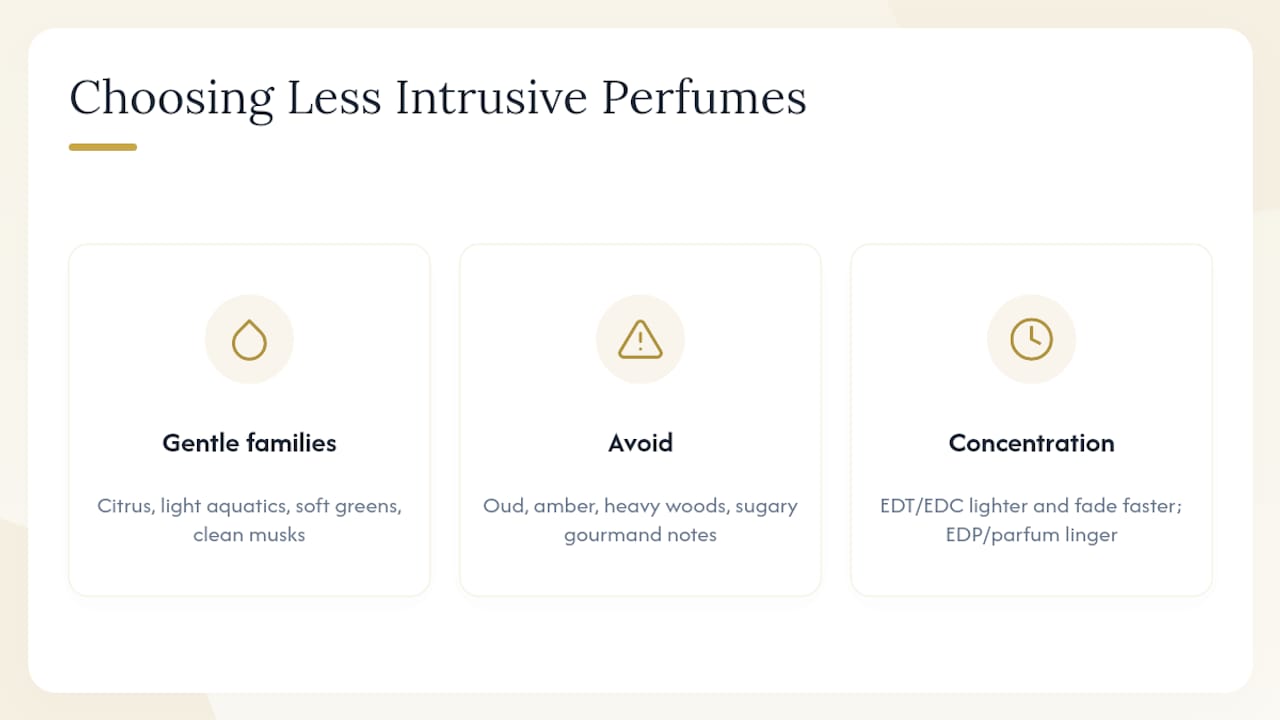
Choosing a flight-friendly perfume starts with picking scent families that don’t fight for attention. Citrus, light aquatics, soft green notes, and clean musks tend to read as pleasant rather than invasive because they don’t have the heavy molecular weight that makes a scent linger and spread. Fragrance experts specifically flag oud, amber, heavy woods, and sugary gourmand notes as the categories most likely to trigger complaints in shared, enclosed spaces.
If you’re sensitive to fragrance yourself or traveling with someone who is, look for perfumes labeled fragrance-free adjacent or built around fewer aromatic compounds, since these tend to cause fewer headaches and less throat irritation in recirculated air. A quick way to check before you buy: read the note breakdown, not just the marketing description. A partner resource like Rook Perfumes’ guide to fragrance families is a useful primer if you want to understand what “niche” or “gourmand” actually means on a label before you commit to a bottle for your next trip.
Concentration matters too. Eau de toilette and eau de cologne formulations sit lighter and fade faster than eau de parfum or parfum extrait, which makes them a more forgiving choice for a five-hour flight where you can’t control the room the way you can at home.
A Personal Note on Wearing Scent in the Air
I wear a light citrus or clean musk on morning flights, nothing on red-eyes. Someone next to me might be pregnant, migraine-prone, or just exhausted, and a strong scent isn’t worth their discomfort. Discovered, not announced, still the rule that matters most.
— Ash
Travel Smarter With a Refillable Atomizer Built for Planes
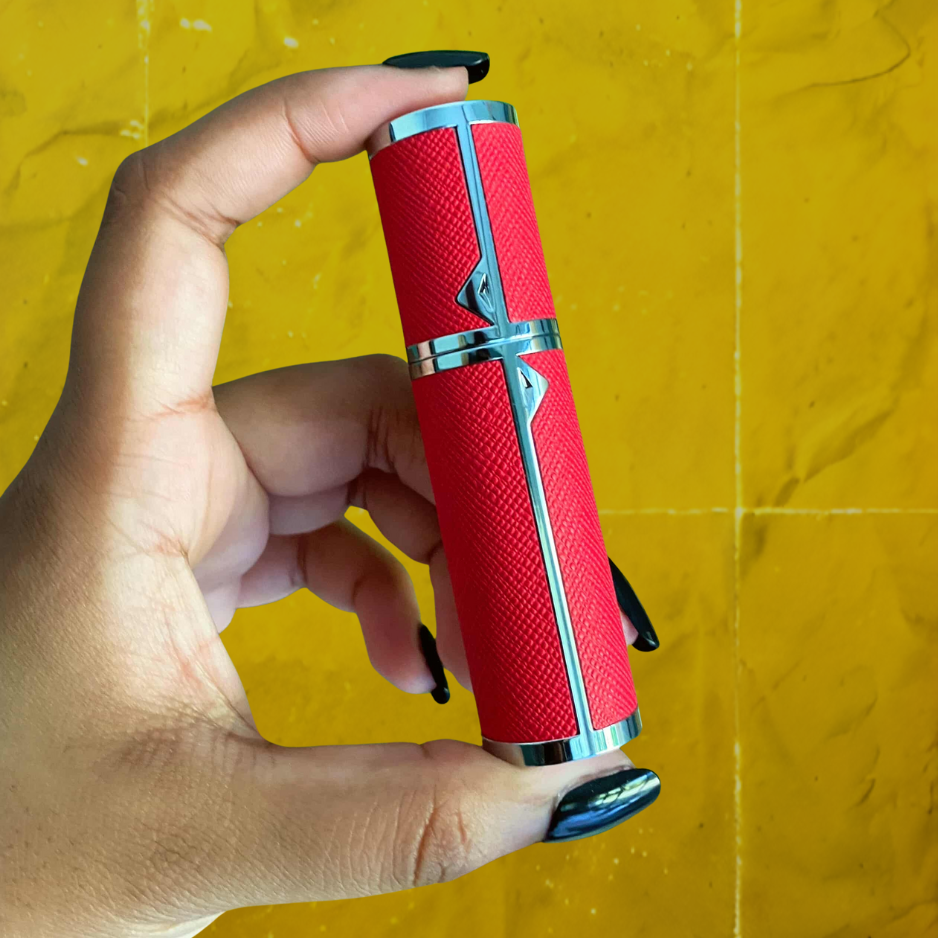
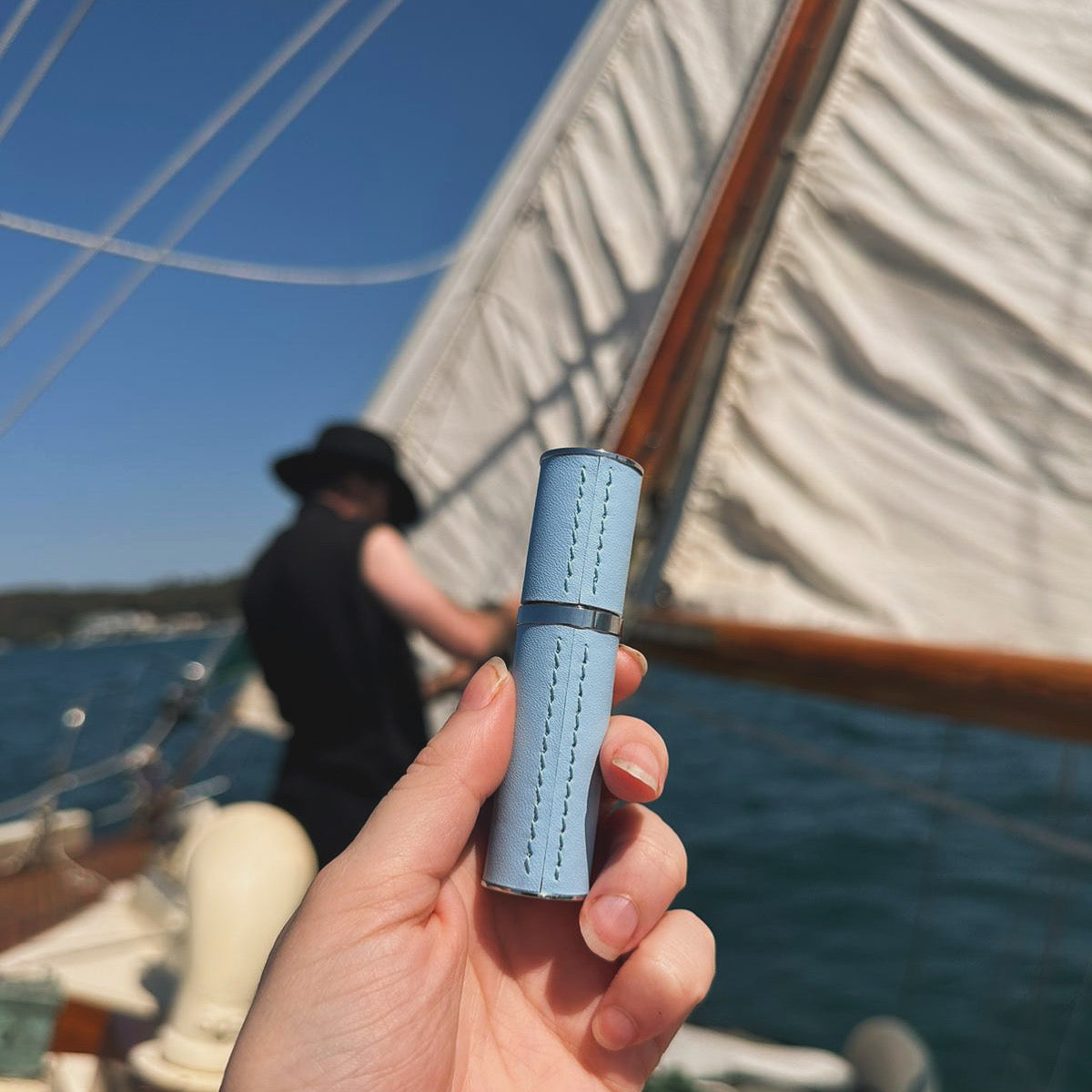
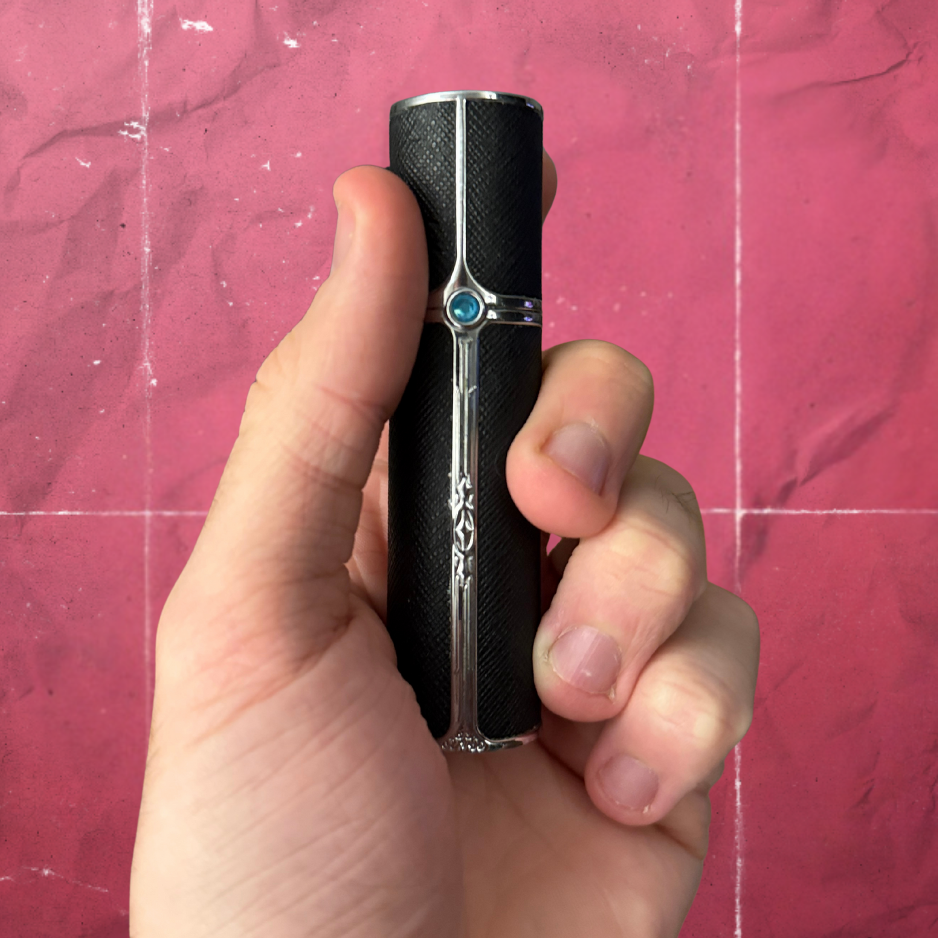
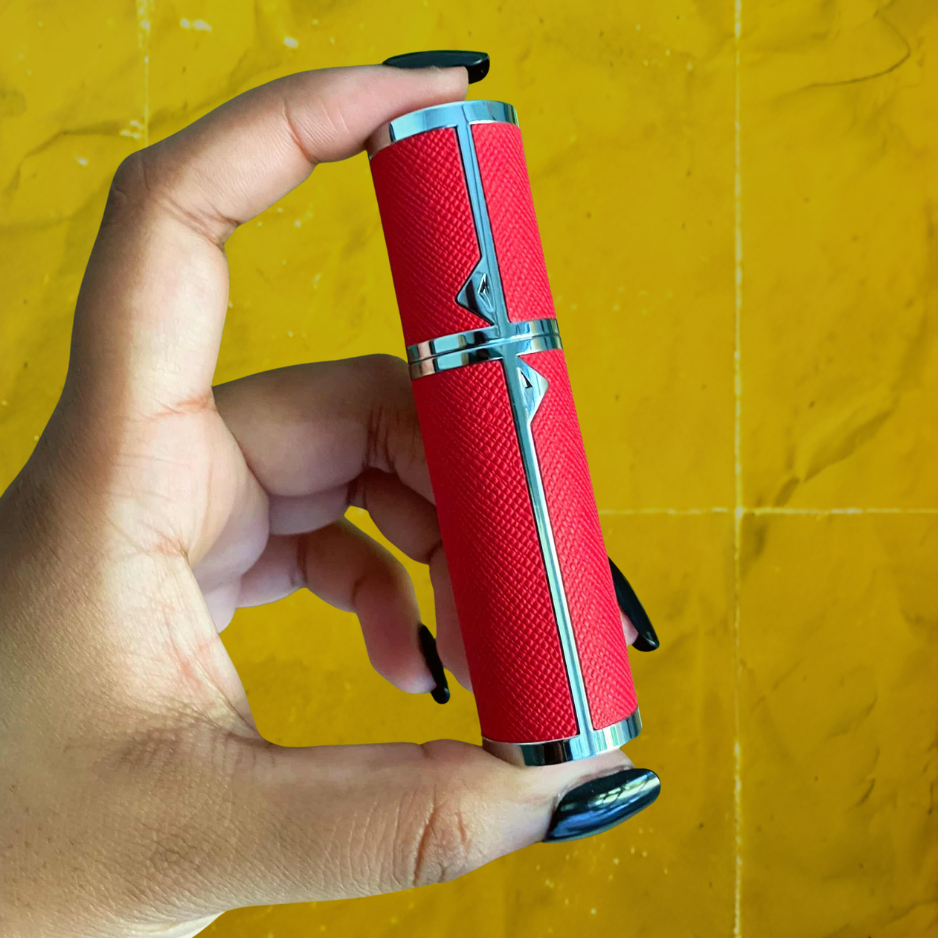
Refillable atomizers provide a solution for carrying fragrance within TSA limits, reducing the risk of bottle breakage and helping control scent application in shared cabins. Refilling from standard perfume bottles allows control over the amount carried, keeping it typically under TSA carry-on limits, which reduces leakage risk and helps prevent over-application.
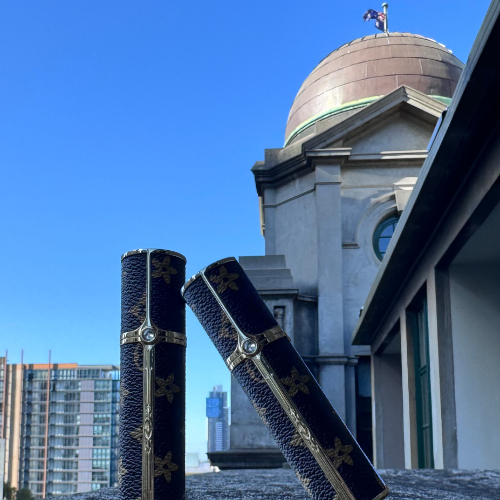
Look for a leak-tested design, an easy refill mechanism, and a compact size that disappears into a jacket pocket or the front sleeve of a carry-on. Spritzshop’s refillable perfume atomizers are built around those three features, backed by a 4.84 average rating across more than 10,000 reviews. Pair one with a travel organizer to keep your liquids bag tidy at security, or check the full atomizer set if you like carrying two or three scents on longer trips. Browse the collection and pick the size that fits your next itinerary.
Sources
- Perfume | Transportation Security Administration
- Travel-Size Perfume: TSA Rules + How to Pack It Right – Aromatick (fragrance blog)
- Is Wearing Perfume on a Plane Okay? — The Cut
- Air travel smells worse than ever. Here’s how to fix it. — Seattle Times
FAQ
What Are the Rules for Perfume on a Plane?
Carry-on perfume must be in a container of 3.4 ounces (100 ml) or less, packed in your quart-sized liquids bag. Checked luggage allows larger amounts, up to 2 kg or 2 liters total per person, with no single container over 0.5 kg or 500 ml.
Can I Bring a 3.4 oz Perfume on a Plane?
Yes, a container sized at exactly 3.4 ounces (100 ml) or under meets the TSA carry-on limit as long as it fits in your one-quart liquids bag with your other toiletries.
Will TSA Throw Away My Perfume?
TSA will confiscate any liquid container over 3.4 ounces at the checkpoint, even if it’s mostly empty, since the size of the container is what’s checked, not the amount inside. A refillable atomizer or small decant sized well under the limit avoids this risk entirely.
Why Not Wear Jeans on a Plane?
This isn’t really a fragrance question, but the same logic applies: comfort and consideration for tight quarters matter more than fashion on a flight. The parallel etiquette principle for scent is the same one that governs jeans, layers, or anything else you wear in a shared space: keep it comfortable for you and unobtrusive for everyone around you.
What’s the Best Travel Format for Bringing Perfume?
A small refillable atomizer or a 5 to 10 ml decant is generally the most practical choice. Both meet TSA size limits, reduce the risk of a shattered glass bottle in your bag, and let you carry only as much fragrance as you’ll actually use on the trip.



साझा करें और 15% छूट पाएं!
बस इस उत्पाद को निम्नलिखित सामाजिक नेटवर्क में से किसी एक पर साझा करें और आपको 15% की छूट मिलेगी!