

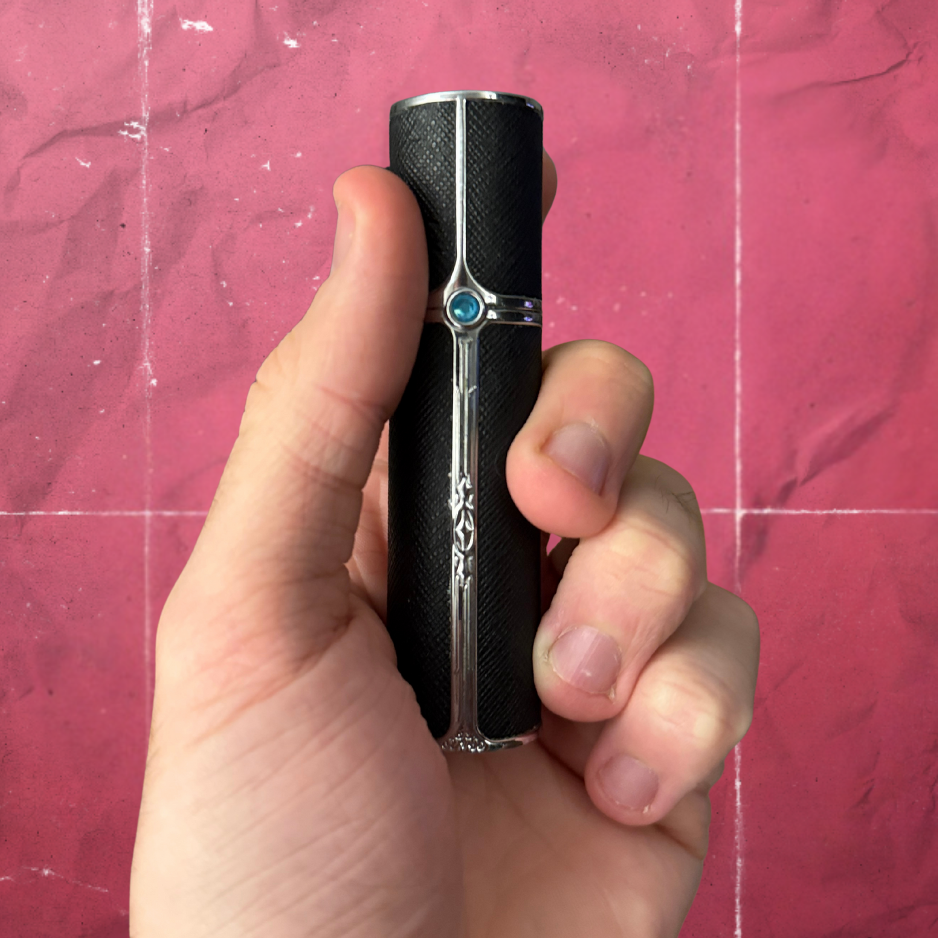
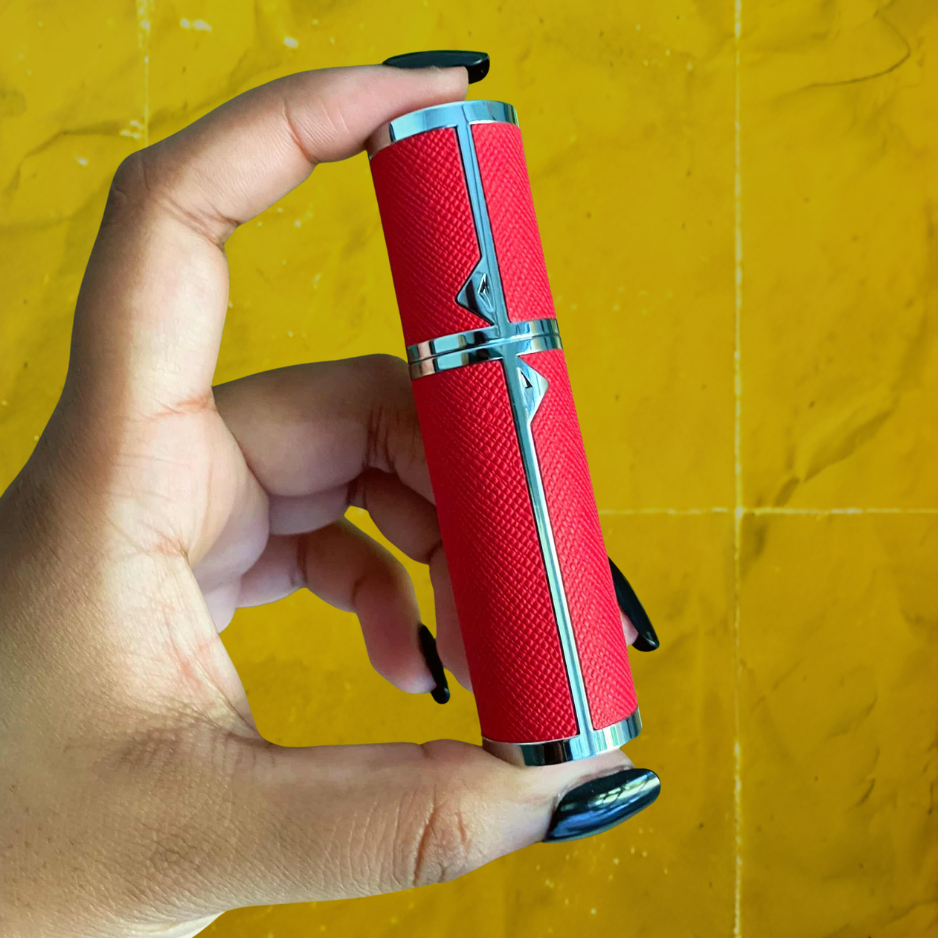
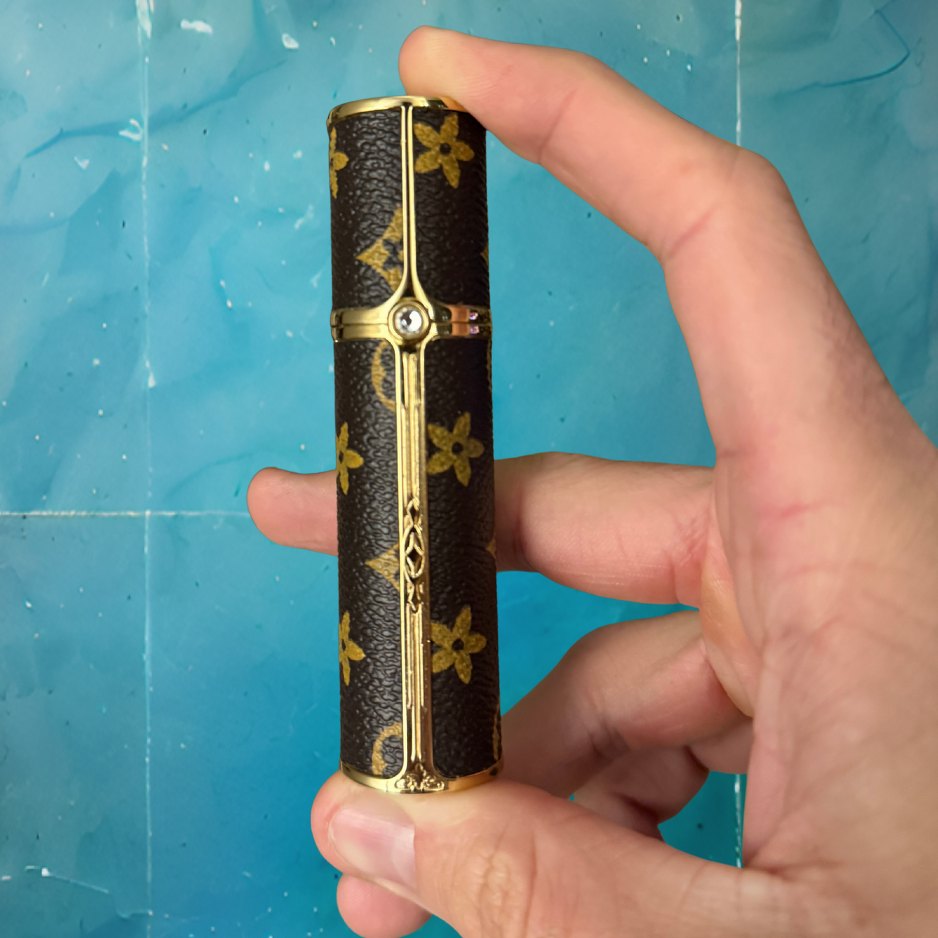
The cleanest way to refill an atomizer without spills is to use a compatible bottom-fill design, purge trapped air with two or three short pumps before you start, and leave 10 to 15 percent headspace at the top. If your bottle isn’t bottom-fill compatible, a small funnel or blunt-tip syringe does the job just as cleanly. A ready-made option, like the SPRITZ Brando Perfume Atomizer, removes most of the guesswork entirely.
TL;DR:
- Bottom-fill atomizers are the easiest to refill without spills, provided the valve is properly aligned and the air is purged beforehand.
- For non-bottom-fill bottles, using a small funnel or syringe significantly reduces the risk of leaks and messes during refilling.
- Proper cleaning between scents requires a soap soak followed by two alcohol rinses to eliminate residual fragrance oils, preventing scent contamination.
- Ensuring a full, flush seal on caps and maintaining proper headspace of 10 to 15 percent is crucial to avoid leaks and weak spray performance after refilling.
- The SPRITZ Brando Perfume Atomizer offers a leak-resistant, easy-to-use bottom-fill design suitable for frequent travel and quick, clean refills.
Table of Contents
- Tools and Safety Checklist for a Spill-Free Atomizer Refill
- How Do You Refill a Bottom-Fill Travel Atomizer?
- What if Your Bottle Isn’t Bottom-Fill Compatible?
- How Do You Clean an Atomizer Before Switching Scents?
- Why Is My Atomizer Leaking or Spraying Weak After a Refill?
- Why Refill Method Matters More Than People Think
- See the SPRITZ Brando Atomizer Built for Clean Refills
- Sources
- FAQ
Tools and Safety Checklist for a Spill-Free Atomizer Refill
Before you touch a single bottle, lay out what you actually need. Most refill disasters happen because someone tries to wing it over a bathroom sink with no plan.
Here’s what belongs on your work surface:
- A tissue or microfiber cloth for wiping valves and stems
- A small polypropylene funnel (chemical-resistant, won’t warp from fragrance oils)
- A blunt-tip syringe or pipette for precision transfers
- Disposable gloves, if you’re sensitive to concentrated fragrance oils
- Rubbing alcohol for pre- and post-refill cleaning
- A flat, stable surface with paper towel underneath
Once your tools are ready, identify what you’re working with. Perfume bottles generally fall into four categories: bottom-fill (a recessed valve on the base, common on quality travel atomizers), screw-top (a removable cap over an open neck), crimped pump (a nozzle permanently sealed to the bottle, no removable parts), and rollerball (a ball applicator pressed into the neck).
Bottom-fill valves are the easiest to spot: flip the bottle over and look for a small circular indentation. Screw-tops twist off by hand. Crimped pumps and rollerballs resist any attempt to unscrew or pry them, which is your cue to switch methods rather than force anything.
Whatever type you’re dealing with, work slowly and purge trapped air before you fill. Rushing is the single biggest cause of spitting, spatter, and post-fill leaks.
How Do You Refill a Bottom-Fill Travel Atomizer?
Bottom-fill atomizers are the fastest and least messy option once you get the rhythm down. Here’s the sequence that works almost every time:
- Purge the atomizer first. Press the spray nozzle 2 to 3 times on the empty atomizer. This clears trapped air from the chamber before liquid enters, which prevents the spitting and spatter that ruins most refill attempts.
- Align the valves flat. Place the atomizer’s base valve directly over the large bottle’s exposed spray stem. Keep it perfectly vertical. Even a slight angle breaks the seal and lets fragrance leak sideways instead of transferring up.
- Pump in a rhythm, not a rush. Press down firmly, then release. Pause 1 to 2 seconds between each pump to let displaced air escape back through the stem. Rhythmic pumping with pauses reduces spurting far more than fast, repeated pushes.
- Stop at 85 to 90 percent full. Watch the fill line through the glass or plastic. Leaving that last 10 to 15 percent of headspace matters more than it seems. It gives the liquid room to expand with temperature changes, which is exactly why manufacturers spec headspace on small travel bottles in the first place.
- Wipe and test. Wipe the valve dry with your cloth, then test-spray once, aimed away from your face and clothing, to confirm a clean mist.
If you get spatter instead of a clean stream, don’t keep pumping through it. Realign the valve, purge again with two dry pumps, and slow your pace. Speed is what causes the mess, not the bottle itself.
What if Your Bottle Isn’t Bottom-Fill Compatible?
Screw-top, crimped-pump, and rollerball bottles each need a different approach. None of them are harder, just different.
- Screw-top bottles: Unscrew the cap fully. Insert your small polypropylene funnel, but lift it slightly, about 1 to 2 millimeters, so it doesn’t seal flush against the neck. A funnel pressed flush against the opening creates an air-lock that forces liquid back up around the funnel’s edges. Pour slowly and stop just short of the top.
- Crimped-pump bottles: These nozzles are sealed permanently to the bottle and aren’t meant to come off. Draw fragrance out with a blunt-tip syringe instead, then inject it slowly into your atomizer’s opening. Avoid deep, fast plunges, since those create pressure spikes that push liquid back out the way it came in.
- Rollerball bottles: If the ball unscrews, remove it and pour or syringe fragrance directly into the neck. If it doesn’t budge, use your syringe at the edge of the rollerball housing instead of forcing it.
One rule matters more than any technique: some crimped collars are built to stay sealed, and prying at them risks cracking the glass or bending the pump mechanism. When a bottle won’t cooperate, syringe extraction is the safer DIY route. For anything beyond that, professional decanting services exist, or you can simply keep that particular fragrance in its original bottle.
How Do You Clean an Atomizer Before Switching Scents?
Cross-contamination between fragrances is the second most common complaint after spills, and it’s almost always a cleaning shortcut. A rinse under the tap isn’t enough. Fragrance oils cling to plastic and metal internals in a way water alone can’t touch.
The reliable method Spritzshop recommends runs in two stages:
- Stage 1, soap soak: Fill the atomizer with hot, soapy water. Let it sit long enough to loosen the fragrance oils clinging to the pump internals, then rinse thoroughly with clean water.
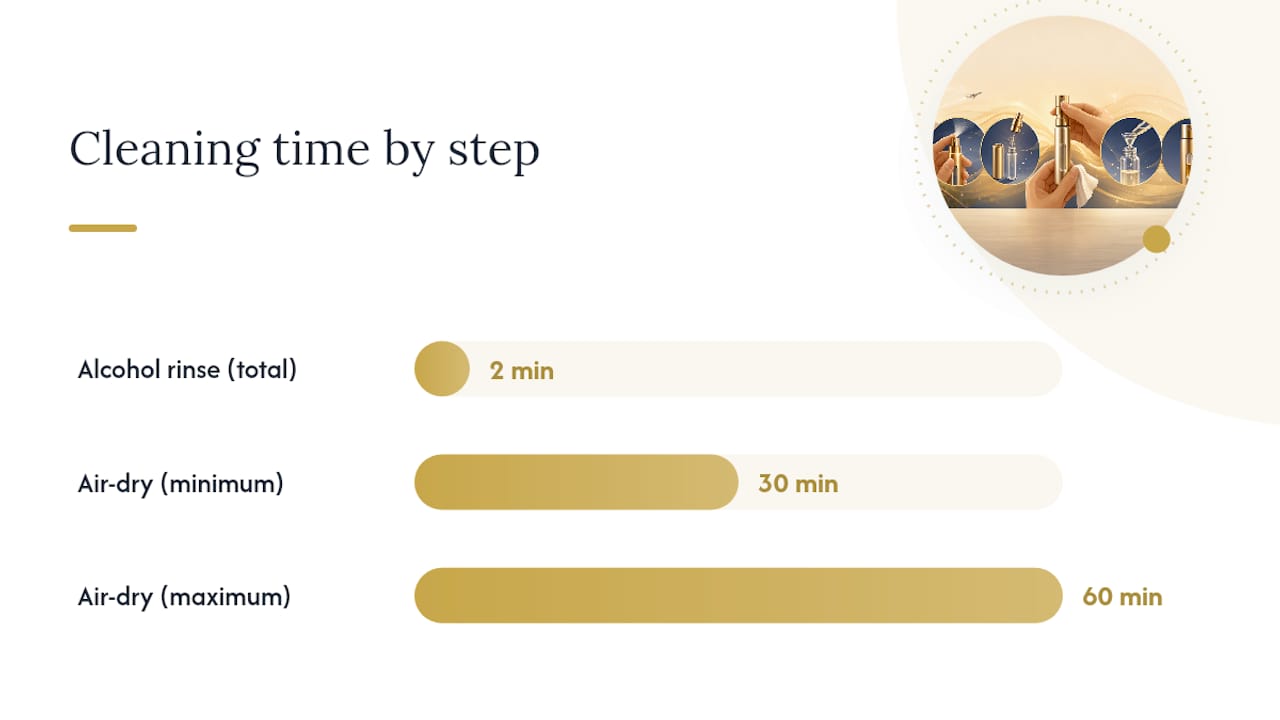
- Stage 2, double alcohol rinse: Fill with high-proof isopropyl or perfumer’s alcohol, cap it, and shake vigorously for about 60 seconds. Pour it out and repeat a second time. A single alcohol rinse rarely removes everything; the second cycle is what actually clears out residue hiding in the pump mechanism, especially when you’re switching between strong, heavy fragrance families.
- Drying: Let the atomizer air-dry completely, uncapped, for 30 to 60 minutes or longer if humidity is high. Do a smell check before refilling. If you catch even a faint trace of the old scent, run Stage 2 again.
Pro Tip: Shake harder than feels necessary during the alcohol rinse. Gentle swirling barely reaches the pump’s internal channels, which is where most leftover scent hides.
This two-stage habit is exactly what separates people who successfully rotate five fragrances through one travel atomizer from people who end up with a bottle that smells like a confusing blend of three perfumes at once.
Why Is My Atomizer Leaking or Spraying Weak After a Refill?
Most post-refill problems trace back to one of three causes, and each has a fast fix.
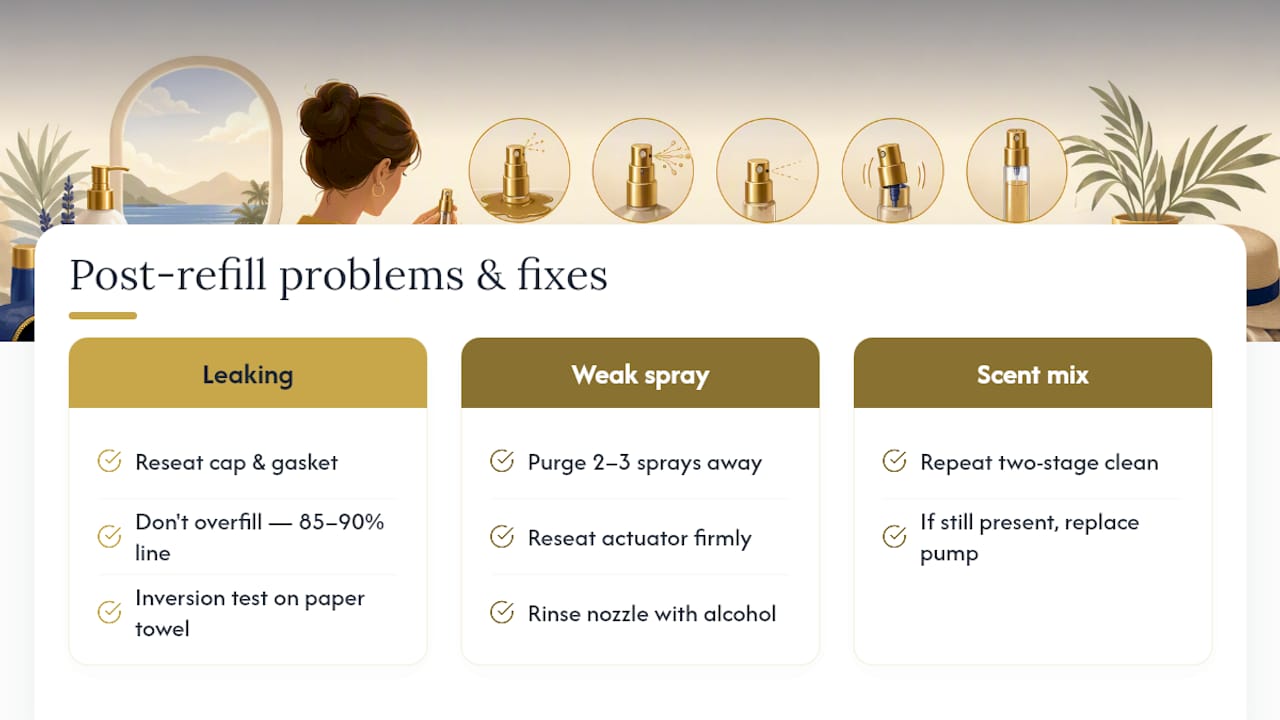
Leaking after fill: Check that the cap is fully seated and the gasket sits flush, then confirm you didn’t overfill past that 85 to 90 percent line. Run the inversion test: wipe the atomizer dry, then set it upside down on a paper towel for about five minutes. A dry towel afterward confirms a solid seal; a wet spot means the cap or gasket needs reseating.
Sputtering or weak spray: This almost always means trapped air. Spray it 2 to 3 times away from your face to purge the line, then reseat the actuator by pressing it down firmly. If the spray still feels weak, residue may be clogging the nozzle, so rinse it with a bit of alcohol.
Persistent scent mixing: If a new fragrance keeps picking up notes from the last one, that’s a cleaning problem, not a mechanical one. Repeat the two-stage clean above. If the smell still lingers after that, the pump itself may have absorbed oils permanently, and it’s time to check whether your atomizer is due for replacement.
Why Refill Method Matters More Than People Think
Most people treat atomizer refills as an afterthought, something you rush through in a bathroom before a trip. That’s backward. The refill moment is where nearly every long-term complaint about travel atomizers actually starts, whether it’s a pocket that smells like spilled perfume or a pump that stops working after three uses.
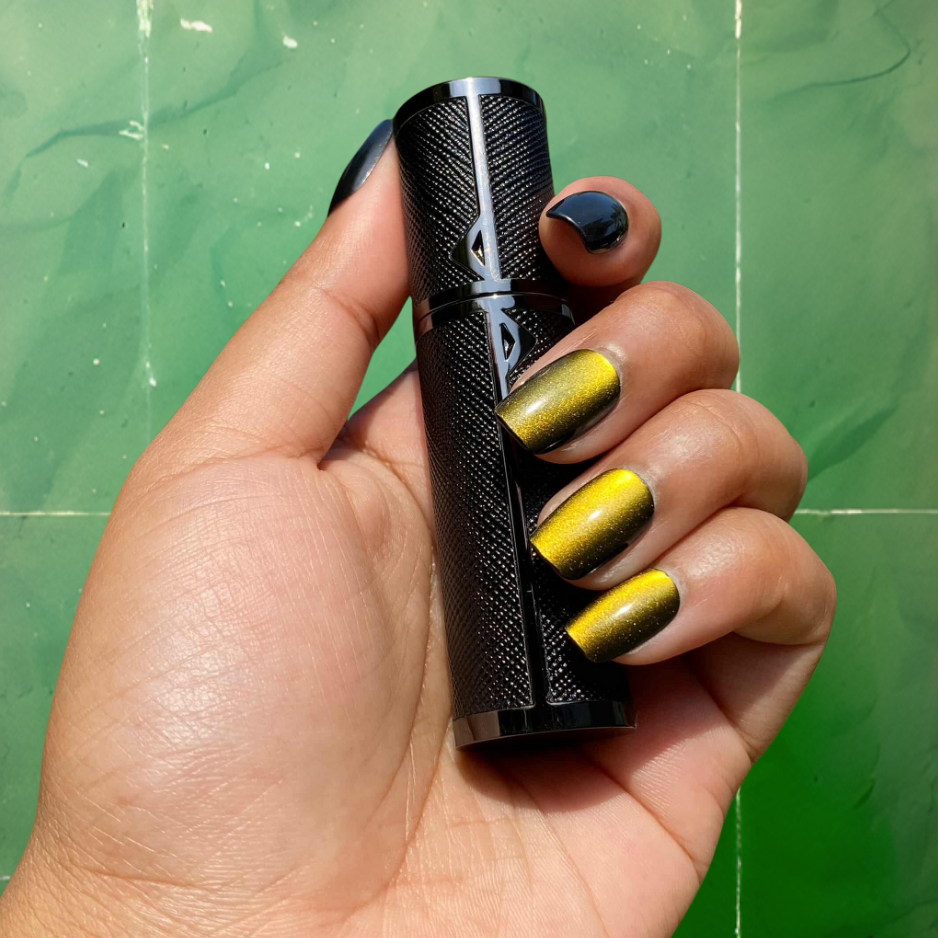
Spritzshop built the Brando atomizer around this exact failure point. The bottom-fill valve design exists specifically so travelers don’t need a syringe kit and a steady hand every time they want to switch scents before a flight. Customers rate it highly across many reviews, and a recurring theme in that satisfaction is how little mess the whole process involves. A well-aligned bottom-fill valve means you can refill it in an airport bathroom, a hotel room, or a car console without needing a flat countertop and full concentration.
— Ash
See the SPRITZ Brando Atomizer Built for Clean Refills
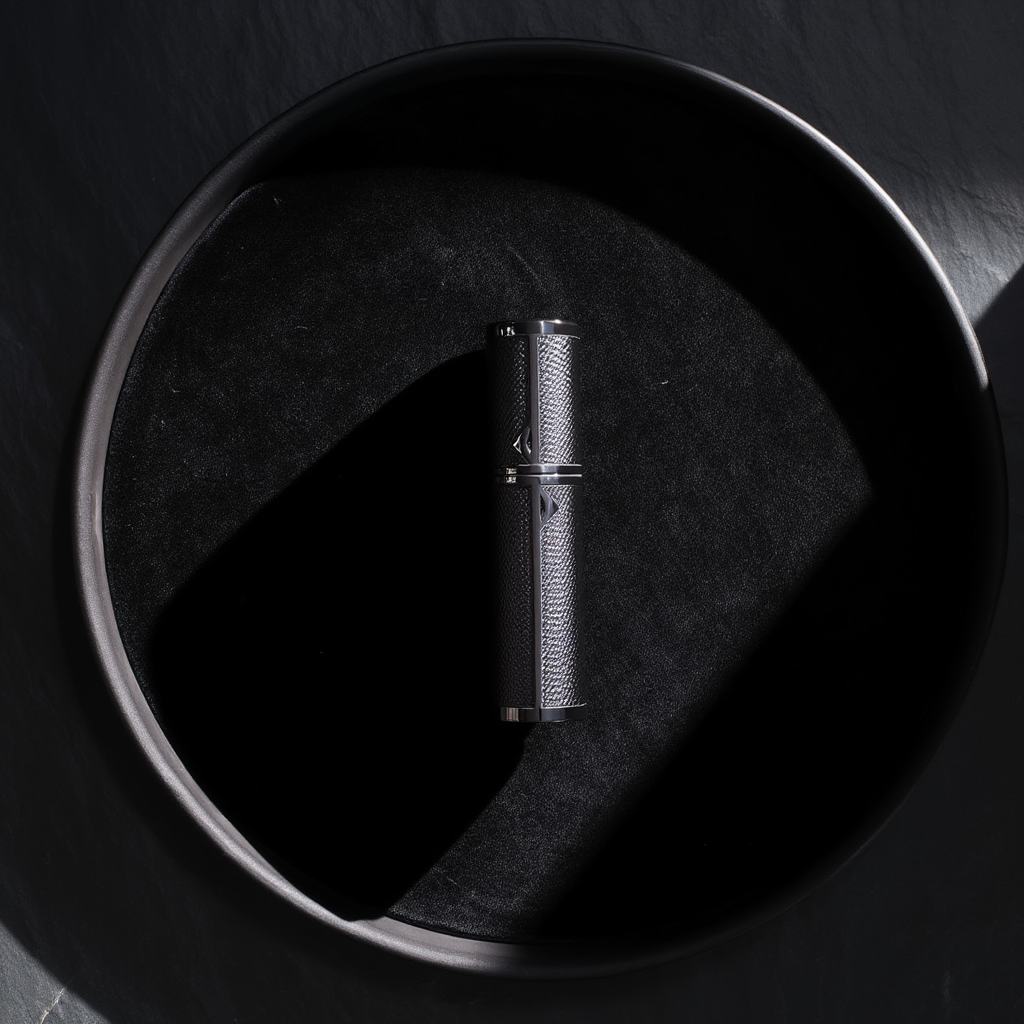
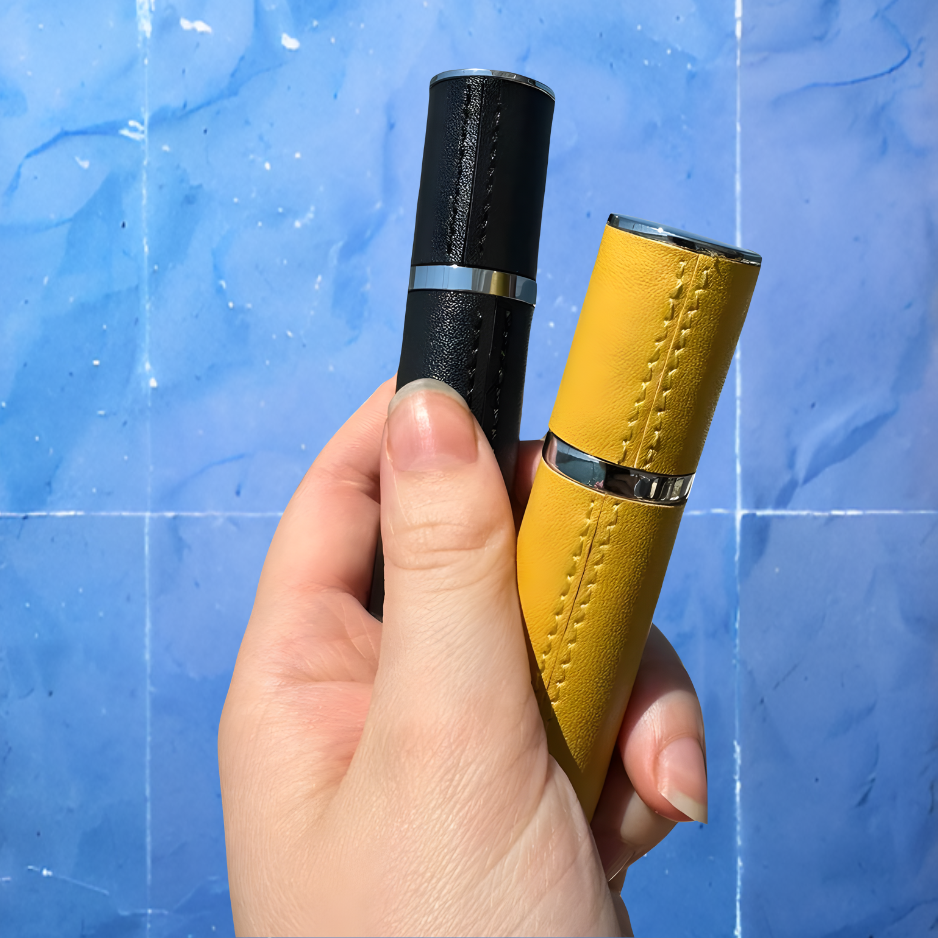
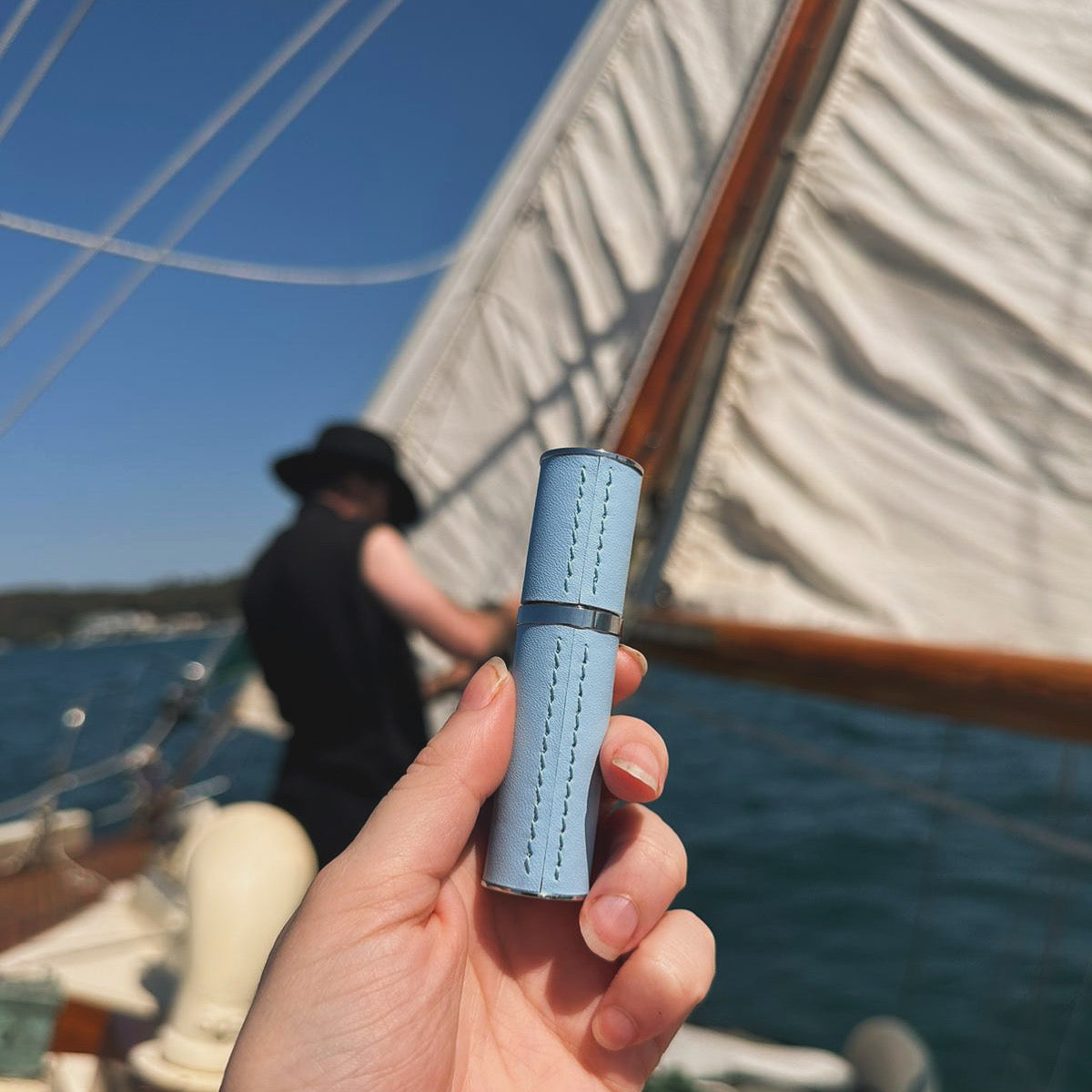
If you’d rather skip the funnel-and-syringe routine altogether, the SPRITZ Brando Perfume Atomizer is built specifically for fast, leak-resistant bottom-fill transfers. Its one-way valve pairs with nearly any standard perfume bottle, so the alignment and purge steps above become second nature after your first refill.

It’s slim enough for a jacket pocket or a carry-on side pouch, and the durable casing holds up to the kind of daily handling that cracks cheaper plastic atomizers within weeks. If you travel often enough that refilling has become a monthly chore, or you just want one atomizer that handles the transfer cleanly every time, check out the Brando atomizer and see how it fits your next trip.
Sources
- How to Refill a Perfume Bottle Without Spilling (3 Pro Methods)
- How to Refill a Perfume Atomizer Without Leaks or Waste
- How to Clean Refillable Travel Atomizers for New Scents?
- How to Refill a Perfume Bottle Without Spilling - Knowledge - JY packaging
FAQ
Can You Refill an Atomizer?
Yes. Most travel atomizers, especially bottom-fill designs, are built to be refilled repeatedly from any standard perfume bottle without needing special tools.
How Do You Refill a Perfume Atomizer Without the Original Bottle?
If the original bottle isn’t available, use a blunt-tip syringe to draw fragrance from wherever it’s stored, then inject it slowly into the atomizer’s opening, pausing between small amounts to avoid pressure buildup.
What Is the Best Refillable Perfume Atomizer for Travel?
Look for a bottom-fill design with a one-way valve, like the SPRITZ Brando atomizer, since it transfers fragrance faster and with less mess than funnel or syringe methods.
How Do You Fill Up an Atomizer Without Making a Mess?
Purge trapped air with two or three empty pumps first, align the valve flat over the source bottle, then pump slowly with a pause between each press until you reach about 85 to 90 percent full.
Why Does My Atomizer Spit or Leak Right After Refilling?
Spitting usually means trapped air wasn’t purged before filling, while leaking after the fact often points to overfilling past the recommended headspace or a cap that isn’t seated correctly.




साझा करें और 15% छूट पाएं!
बस इस उत्पाद को निम्नलिखित सामाजिक नेटवर्क में से किसी एक पर साझा करें और आपको 15% की छूट मिलेगी!