

The safest way to wash heavyweight t-shirts is cold water on a gentle cycle, turned inside out, with a mild detergent and no overloading the drum. Air-dry flat or on a wide hanger, or tumble on low heat and pull the shirt out while it’s still slightly damp. The two things that actually ruin a heavyweight tee are heat and overcrowding, not the washing itself.
TL;DR:
- Washing heavyweight T-shirts in cold water on a gentle cycle and avoiding overloading the machine helps prevent shrinking and fiber damage.
- Turning shirts inside out, using mild detergent, and skipping bleach protect graphics and fiber integrity over time.
- Air drying flat or on a wide hanger is best to maintain shape, while low-heat tumble drying minimizes shrinkage if necessary.
- Pretreating stains with enzyme cleaners and soaking whites with oxygen bleach effectively removes dirt without damaging the dense fabric.
- To extend longevity, wash less frequently, around every 2 to 3 wears for casual T-shirts, and address small tears early to prevent deterioration.
Table of Contents
- How Do You Prep Heavyweight T-Shirts Before Washing?
- What’s the Right Way to Wash Heavyweight T-Shirts?
- How Do You Get Stains Out of Heavy Cotton Tees Without Damaging Them?
- How Do You Dry Heavyweight Cotton T-Shirts Without Shrinking Them?
- How Do You Soften Heavyweight Cotton Without Weakening It?
- Why Heavyweight Tees Reward Careful Laundering
- Do Cotton-Poly Blend Heavyweight Tees Need Different Care?
- What Mistakes Ruin Heavyweight T-Shirts Fastest?
- How Often Should You Wash Heavyweight T-Shirts?
- Can You Bring Faded Heavyweight Cotton Back to Life?
- What the Research Actually Supports
- Where to Find Heavyweight Tees Built to Last
- Sources
- FAQ
How Do You Prep Heavyweight T-Shirts Before Washing?
Check the care label before you do anything else. A tag that reads “100% cotton, preshrunk, machine wash cold” is telling you the manufacturer already accounted for some shrinkage in the cut, but that doesn’t mean the fabric is shrink-proof. It just means the worst of it already happened at the factory.
Sort your load with intention, not habit. Heavyweight tees don’t belong in the same load as jeans, towels, or anything with zippers and rivets, since that kind of hardware abrades the surface fibers on heavier jersey knits over time. Separate by color too, since darks and lights fading into each other is a laundry-day classic nobody enjoys.
Before the wash cycle starts, pretreat the trouble spots:
- Dab enzyme-based prewash spray directly on underarm and collar stains and let it sit for 5 to 10 minutes.
- For stubborn deodorant buildup, rub a small amount of liquid detergent into the fabric with your fingers before washing.
- Soak dingy whites in warm water for a suitable period if they need a reset.
- Wash any indigo-dyed or heavily saturated heavyweight tee alone for the first few washes, since dark denim-style dyes can transfer color onto lighter fabrics until the dye stabilizes.
What’s the Right Way to Wash Heavyweight T-Shirts?
Cold water is your default setting, and it should stay that way for nearly every wash. Cold water protects both color and fiber structure far better than warm or hot, which is where most of the visible shrinkage and fading actually happens. Warm water has a place, but only for durable whites carrying heavy soil, and even then it’s a trade-off you’re making on purpose, not by default.
Here’s the sequence that works for most heavyweight cotton tees:
- Turn the shirt inside out to protect any printed graphics and reduce surface friction against other items.
- Drop printed or embellished tees into a mesh wash bag if you have one on hand.
- Select a gentle or normal cycle depending on how tightly the fabric is knit. A tighter, denser weave can usually handle normal; a looser heavyweight knit does better on gentle.
- Measure detergent precisely. A mild, liquid, color-safe detergent works best, and using too much just leaves residue trapped in the dense fibers, which actually makes shirts feel stiffer and smell worse over time.
- Load the washer no more than three-quarters full so the water and detergent can actually circulate around the fabric.
Skip the fabric bleach on anything but true whites, and even then, oxygen bleach is the gentler choice compared to chlorine.
Pro Tip: Run an extra rinse or a second short spin cycle at the end. It pulls more water out of the dense cotton before drying, which cuts down drying time and reduces how long the shirt sits exposed to heat.
How Do You Get Stains Out of Heavy Cotton Tees Without Damaging Them?
Underarm stains and old deodorant marks are protein and mineral based, which means enzyme cleaners are the right tool. Apply directly to the stain, let it work for the time listed on the product, then wash as usual. Don’t scrub aggressively on heavyweight cotton. The dense weave holds onto friction damage more visibly than lightweight jersey does.
- For deodorant residue, a paste of baking soda and a few drops of water works as a gentler mechanical option; test on an inside seam first if the shirt is colored.
- Whites benefit from a warm soak with oxygen-based bleach, which helps lift dinginess without weakening the cotton the way chlorine bleach can over repeated use.
- Never use chlorine bleach on colored heavyweight tees. It’s one of the fastest ways to weaken fibers and create yellow or faded patches.
- If a shirt has delicate trim, embroidery, or was a genuine investment piece, professional cleaning is worth the cost over risking it at home.
How Do You Dry Heavyweight Cotton T-Shirts Without Shrinking Them?
Air drying flat on a clean towel, or draped over a wide hanger, is the lowest-risk option for heavyweight cotton. Hanging a heavy, wet tee by the shoulders on a narrow hanger stretches the neckline and shoulder seams out of shape before it even finishes drying.
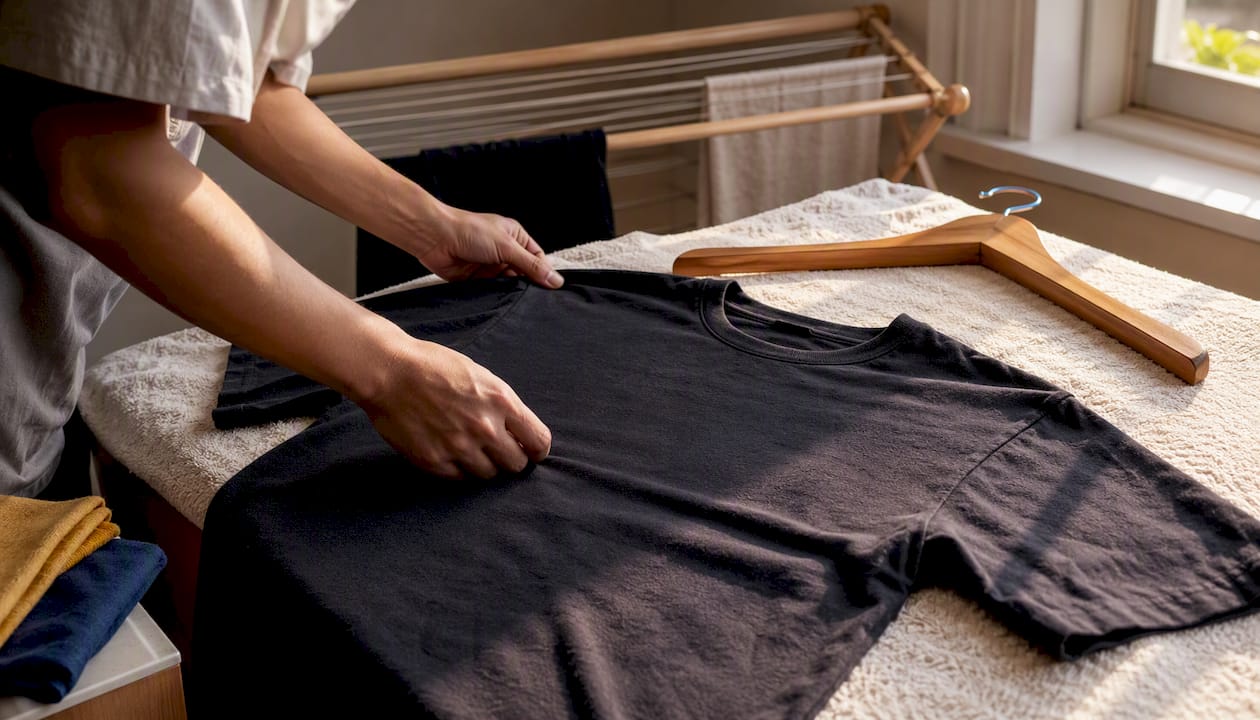
If you need the dryer, use the lowest heat setting, run a shorter cycle than usual, and pull the shirt out while it’s still slightly damp to finish air drying. That last few minutes of tumbling on high heat is exactly where most shrinkage happens, even on shirts labeled preshrunk.
A few things make shrinkage more likely:
- High heat exposure, whether from the dryer or an accidental hot wash
- Repeated washing without ever air drying in between
- Overloading the dryer, which forces more tumbling and friction per shirt
- Fabric that wasn’t preshrunk at the factory to begin with
Preshrunk heavyweight cotton typically loses only a small amount of length and width with proper cold-water care, according to testing that tracked shrinkage across different fabric and drying combinations. Fabric weight also plays into this. Understanding what GSM actually measures helps explain why a 280 GSM tee behaves differently in the wash than a 150 GSM one. While the shirt is still damp, smooth out the shoulder seams and tug the collar back into its original shape. Cotton holds a shape best right before it fully dries.
How Do You Soften Heavyweight Cotton Without Weakening It?
A half-cup of white vinegar added to the rinse cycle softens dense cotton without leaving the waxy buildup that liquid fabric softener tends to create over repeated washes. Wool dryer balls do something similar in the dryer by physically working the fibers loose as they tumble. If you do use liquid softener, use it sparingly and skip it on any tee with printed graphics, since the coating can dull ink over time.
Rotating shirts through your wardrobe instead of wearing the same three tees on repeat cuts down on total wash cycles, which is one of the simplest ways to extend a heavyweight tee’s life. Fix small holes or loose hems as soon as you notice them, before a wash cycle turns a pinhole into a real tear.
Fold heavyweight tees for storage rather than hanging them. The weight of dense cotton pulls at the shoulders over time on a hanger, even when dry. If you do hang lighter pieces, use a wide, padded hanger and save narrow wire hangers for shirts that can’t stretch out of shape as easily.
Pro Tip: A quick pass with a steamer or iron on low heat after drying restores drape and knocks out the stiffness that heavyweight cotton sometimes develops after air drying.
Why Heavyweight Tees Reward Careful Laundering
Heavyweight cotton earns its reputation for lasting years specifically because the denser weave resists wear better than lightweight jersey, and testing on premium heavyweight tees has found they stay soft and breathable even after repeated wear when the owner launders conservatively. That’s the whole game with heavy cotton: the fabric does most of the durability work on its own, and your job is just not to undo it with heat and harsh detergent.
Keep this checklist somewhere you’ll actually see it before laundry day:
- Cold water, gentle cycle, inside out, every time
- Wash indigo or heavily dyed tees alone for the first few cycles
- Air-dry when you can, low heat and slightly damp removal when you can’t
- Mild liquid detergent, measured, never eyeballed
- Reshape collars and seams while the shirt is still damp
When in doubt about a specific shirt, the printed care label and the manufacturer’s own care page beat any general rule, since fabric blends and finishes vary between brands.
Do Cotton-Poly Blend Heavyweight Tees Need Different Care?
Cotton-polyester blends behave differently in the wash because polyester resists shrinking and holds heat, while cotton does the opposite. That combination actually makes blended heavyweight tees more forgiving in some ways. A 60/40 or 50/50 blend shrinks less overall than 100% cotton, so a warm wash won’t cause the same size loss.
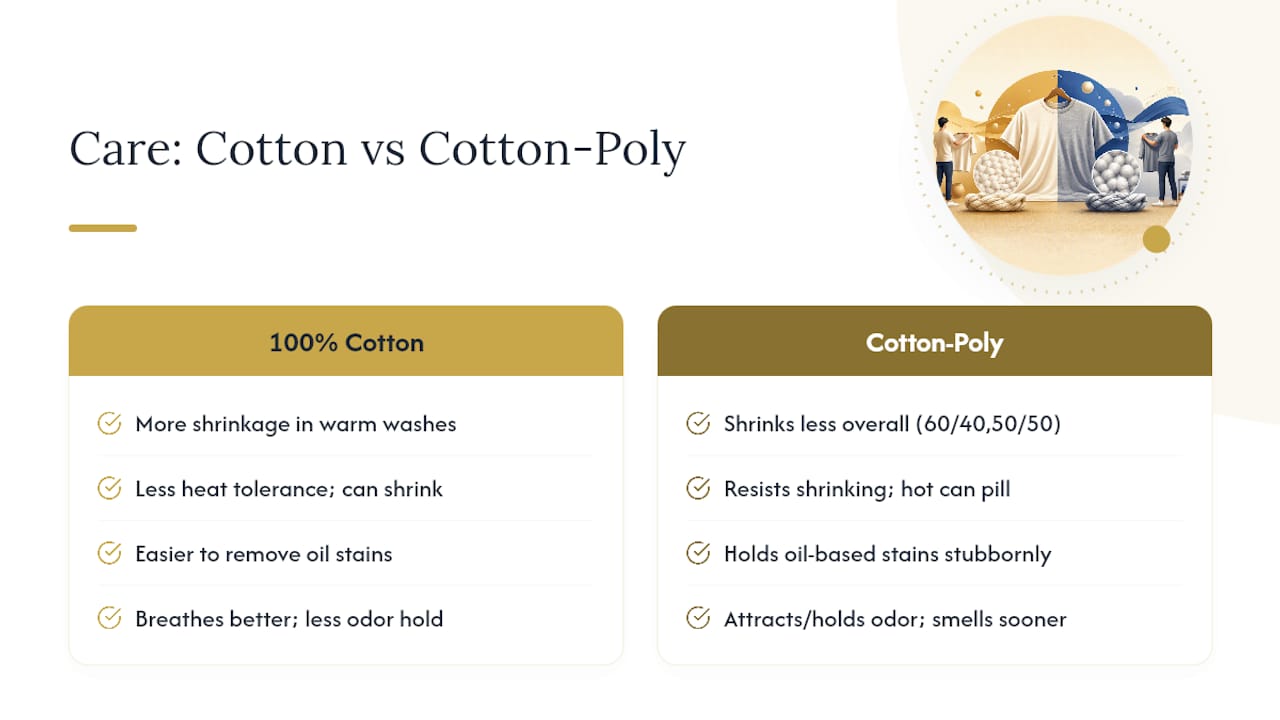
But blends bring their own quirks. Polyester holds onto oil-based stains, especially deodorant and body oil, more stubbornly than pure cotton does, so pretreating underarm areas becomes even more important on a blend. Polyester also attracts and holds odor differently, since the synthetic fibers don’t breathe the same way cotton does, which is worth remembering if you notice a blend tee smelling sooner after a workout.
Stick with cold to warm water rather than hot, since hot water can still degrade the polyester fibers and cause pilling even if it won’t shrink the shirt much. Skip the dryer sheets and heavy fabric softener on blends. Polyester fibers absorb the coating and can develop a slightly greasy feel over time that’s hard to wash back out. A low-heat tumble dry is generally fine for blends since the polyester content limits shrinkage, but pulling the shirt out while still a little damp still helps preserve the print and prevents the plastic-like sheen that overheated polyester sometimes gets.
What Mistakes Ruin Heavyweight T-Shirts Fastest?
The single biggest mistake is washing hot and drying hot at the same time. Either one alone is manageable; stacking both heat exposures back to back is how a shirt that fit perfectly last month suddenly feels a size smaller.
Overloading the washer is the second most common error, and it’s an easy one to miss. Heavyweight cotton needs room to move through the water. Cram too many shirts into one load and they rub against each other under pressure, which accelerates pilling and fading, particularly along the shoulders and side seams where fabric folds against itself.
A few other habits quietly cause damage over time:
- Using too much detergent, which leaves residue trapped in the denser weave and makes fabric feel stiff and look dull
- Skipping the inside-out step on printed tees, letting graphics take direct friction damage in the wash
- Hanging wet heavyweight shirts on narrow hangers, stretching the shoulders before the fabric even dries
- Using chlorine bleach on anything but true whites, weakening cotton fibers and creating yellow patches
- Washing new indigo or dark-dyed tees with lighter garments before the dye has had a chance to set
None of these mistakes are dramatic on their own. A single overloaded wash won’t ruin a shirt. It’s the accumulation, wash after wash, that turns a well-made heavyweight tee into a stretched, faded version of itself well before it needed to happen.
How Often Should You Wash Heavyweight T-Shirts?
Most heavyweight cotton tees don’t need a wash after every single wear the way a thin, lightweight shirt does. The denser weave holds less body oil and sweat against the skin, and many people find a heavyweight tee can go a few wears between washes if it wasn’t a heavy sweat day, as long as it airs out properly between uses.
That said, frequency depends heavily on use. A heavyweight tee worn under a jacket for a few hours at a desk job has a very different wash need than the same shirt worn during a workout. Gym or heavy-labor wear should get washed after every use, no exceptions, since trapped sweat breaks down cotton fibers over time even when the shirt still looks clean.
The balance to strike is this: washing less often preserves the fabric, since every wash cycle is mechanical stress on the fibers, but skipping washes when a shirt genuinely needs it lets oils and salt build up in ways that eventually degrade the cotton anyway. A reasonable rule for casual heavyweight tees is every 2 to 3 wears unless visibly soiled or sweated through, then adjusting based on how the shirt actually smells and feels.
Can You Bring Faded Heavyweight Cotton Back to Life?
Fading on heavyweight cotton usually comes from repeated exposure to hot water, direct sun during drying, and harsh detergent, rather than from the fabric itself breaking down. That’s actually good news, since it means some of the color loss is reversible or at least disguisable.
For faded darks, a color-refresh laundry treatment or dye-specific detergent designed for that color family can restore some depth, though it won’t perfectly match the original saturation. Washing exclusively in cold water going forward slows further fading dramatically, since heat is what breaks down dye molecules fastest.
For faded whites gone dingy or yellow, the fix is more straightforward. Presoak in warm water with an oxygen-based brightener, then dry in direct sunlight when possible, since natural UV light has a genuine bleaching effect on cotton that’s gentler on the fibers than chemical bleach.
Turning shirts inside out before every wash going forward also slows future fading, since the outer surface facing away from direct water and detergent contact takes less abrasion. If a heavyweight tee has faded past the point either method helps, that’s usually the natural end of its wash life rather than a fixable problem, and it’s a reasonable point to retire it to yard work or rotate in a fresh replacement.
What the Research Actually Supports
Most washing advice online treats every cotton t-shirt the same, and that’s where a lot of heavyweight-specific care goes wrong. A 150 GSM shirt and a 280 GSM shirt do not behave identically in a washer or dryer, and treating them the same is how people end up either overworking a delicate lightweight tee or underwashing a heavyweight one that could handle more.
The conventional wisdom oversells the dryer as a necessary evil and undersells how much air drying actually preserves both shrinkage and shape retention. Testing on preshrunk shirts still shows measurable shrinkage under repeated heat exposure, which tells you the “preshrunk” label is a starting point, not a guarantee.
If there’s one thing worth prioritizing above everything else in this guide, it’s temperature discipline. Cold water washing and low-heat or air drying will do more to preserve a heavyweight tee’s fit and feel than any specific detergent brand or softening trick. The fabric’s own density does the heavy lifting on durability. Your job is mostly just staying out of its way.
— Ash
Where to Find Heavyweight Tees Built to Last
If you’re shopping for a heavyweight tee rather than just maintaining one you already own, Some brands offer premium unbranded heavyweight cotton basics designed with density and structure suited to cold-water, low-heat care.

Beyond the tees themselves, Spritzshop’s preshrunk cotton guide breaks down exactly how much shrinkage to expect from a preshrunk heavyweight cut, so you’re not guessing after your first wash. If you’re weighing which heavyweight tee to add to your rotation, the heavyweight t-shirt buying guide walks through what separates a shirt that lasts years from one that stretches out by summer. Browse the Monroe collection to see current heavyweight styles and start building a wardrobe that’s actually built to survive real laundry days.
Sources
- How To Wash White T-Shirts – The Laundress
- The Best Men’s White T-Shirts | Reviews by Wirecutter
- How to Wash T Shirts: Tips for White, Black, and Machine Care
- Blank Heavyweight T-shirt Washed Indigo 275 GSM – House Of Blanks
FAQ
How Do You Soften a Heavyweight Cotton T-Shirt?
Add a half-cup of white vinegar to the rinse cycle or use wool dryer balls in the dryer, both of which loosen dense fibers without the buildup that liquid fabric softener leaves behind over time.
Do 100% Cotton T-Shirts Shrink When You Wash Them?
Yes, even preshrunk 100% cotton tees can lose a small amount of size when exposed to heat, and testing shows shrinkage varies by fabric and drying method, so cold water and low-heat drying keep shrinkage to a minimum.
Can You Wash Heavyweight T-Shirts in a Washing Machine?
Yes, a standard washing machine works fine on a gentle or normal cycle as long as you use cold water, turn the shirt inside out, and avoid overloading the drum so the fabric can move freely.
Can You Put 100% Cotton T-Shirts in the Dryer?
Yes, but use the lowest heat setting and pull the shirt out while it’s still slightly damp to finish air drying, since high heat during tumbling is where most shrinkage happens.
How Often Should Heavyweight Cotton T-Shirts Be Washed?
Casual heavyweight tees can usually go 2 to 3 wears between washes if they’re not visibly soiled, while gym or heavy-labor wear should be washed after every use to prevent sweat buildup from breaking down the fibers.




साझा करें और 15% छूट पाएं!
बस इस उत्पाद को निम्नलिखित सामाजिक नेटवर्क में से किसी एक पर साझा करें और आपको 15% की छूट मिलेगी!