
Travel atomisers leak for four reasons, and three of them are avoidable in about ten seconds. The container was overfilled, the seal is a screw thread rather than a valve, the vessel is plastic, or it went in a bag at altitude with a weak closure. Cabin pressure is the one people blame, but pressure only exposes a seal that was already marginal. Here is what actually fails, why it fails, and how to stop it.
In this article
- Reason 1: it was overfilled
- Reason 2: the seal is a screw thread
- Reason 3: the vessel is plastic
- Reason 4: altitude found the weak point
- The five-point fix
- What to look for when buying
- FAQ
Reason 1: it was overfilled
This is the most common cause and almost nobody mentions it.
Liquid expands when it warms. A container filled to the absolute brim has nowhere for that expansion to go, so the pressure pushes against whatever seal is holding it in. Leave a small air gap and the air compresses instead, absorbing the change.
A car in summer, a bag in direct sun, a pocket against your body for a few hours. All of these warm the contents by enough to matter. Fill to roughly nine tenths and the problem largely disappears.
Reason 2: the seal is a screw thread
There are two ways a travel atomiser holds fragrance in, and they are not equally reliable.
Screw-top designs unscrew so you can pour fragrance in through a funnel. The seal is a thread plus a rubber or silicone gasket. Threads work loose with vibration. Gaskets swell and harden over time because perfume is mostly alcohol and alcohol degrades rubber. That is why a screw-top atomiser that was fine for a year suddenly starts weeping.
Bottom-fill designs draw fragrance in through a one-way valve, the same principle as the pump on your perfume bottle. There is no opening to unscrew, because the fragrance goes in through the mechanism rather than past it. The seal is not something you tighten, it is closed by default.
If your atomiser came with a small funnel in the box, it is a screw-top, and the funnel is telling you where the weak point is.
Reason 3: the vessel is plastic
Cheap atomisers use a plastic inner reservoir. Two problems follow.
Plastic flexes. Squeeze it in a packed bag and the pressure inside spikes against the seal. Metal does not deform.
Plastic is also slightly permeable to alcohol over long periods, which matters more for evaporation than for outright leaking, but the two failures often show up together.
Look for an aluminium or stainless inner vessel rather than a metal shell wrapped around a plastic tube. The outer casing being metal tells you nothing about what is actually holding the liquid.
Reason 4: altitude found the weak point
Aircraft cabins are pressurised to roughly the equivalent of six to eight thousand feet, not sea level. The air trapped in your atomiser expands as the cabin pressure drops during climb, and that expansion pushes outward on every seal.
This is why things leak on planes and not on the ground. But note what is actually happening. Altitude does not create a leak. It applies a modest, predictable pressure differential that finds a seal which was already marginal.
A properly sealed valve handles it. A worn gasket on a full screw-top does not.
The same effect explains why it is usually the flight home that ruins a bag: the atomiser has been opened, refilled, warmed and knocked about for a week by then.
The five-point fix
- Leave headroom. Fill to about nine tenths, never to the brim.
- Close the nozzle. If your atomiser has a click closure or a cap, use it. A spray head loose in a bag will get pressed.
- Store it upright. On its side, the liquid sits against the seal permanently instead of the air gap doing that job.
- Keep it out of the car. A closed car in summer is the harshest heat cycle your fragrance will meet, and it accelerates both leaking and degradation of the fragrance itself.
- Retire old gaskets. If you use a screw-top and it has been a couple of years, the gasket is likely hardened. That is a consumable, not a permanent part.
What to look for when buying
If you are replacing one that failed, the specification that matters is the fill mechanism, not the finish.
- Bottom-fill valve rather than a screw top and funnel. No opening means no thread to work loose.
- Metal inner vessel, not just a metal outer shell.
- A positive closure on the spray head, so it cannot be depressed in a bag.
- Under 100ml so it clears carry-on rules without a conversation at security.
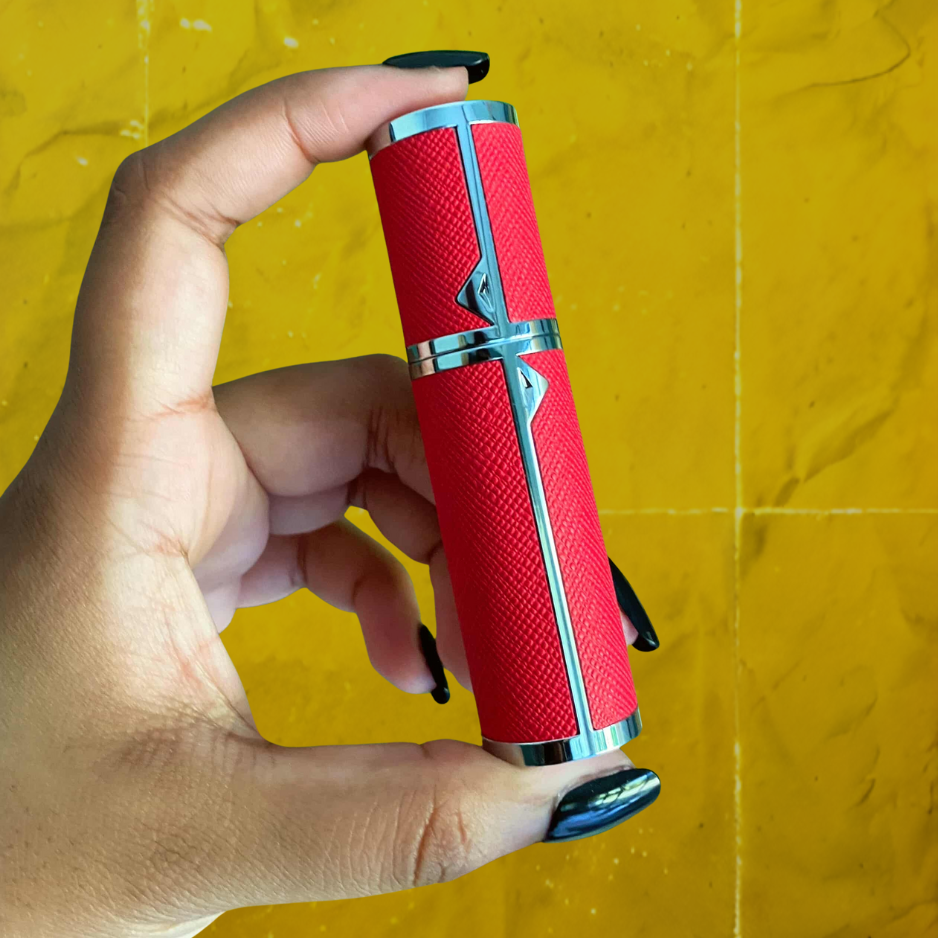
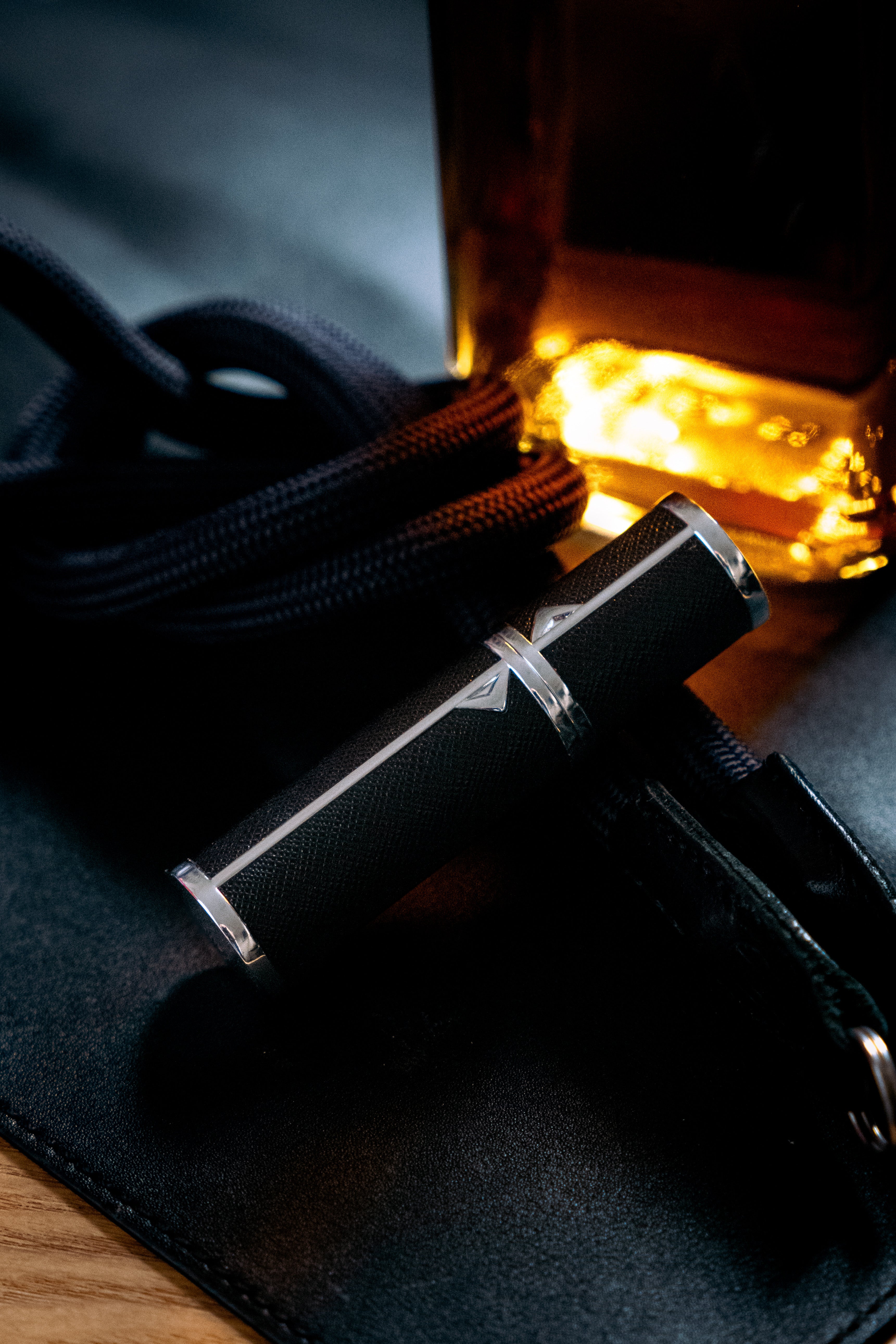
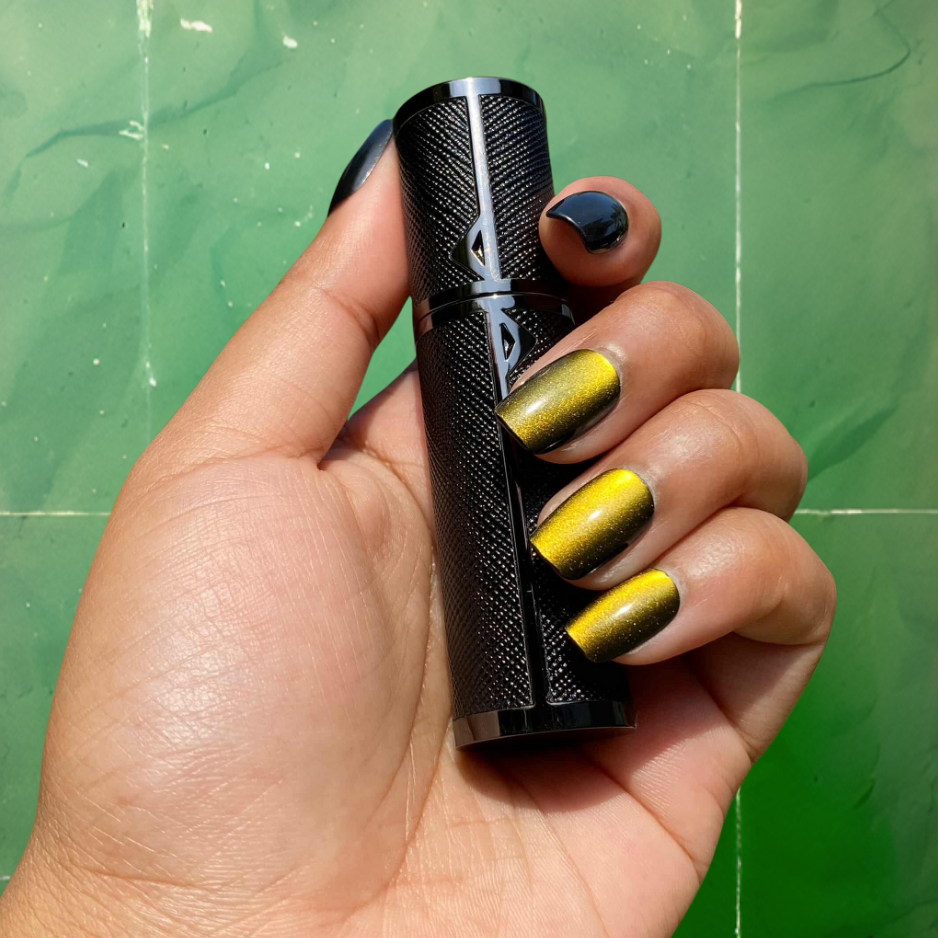
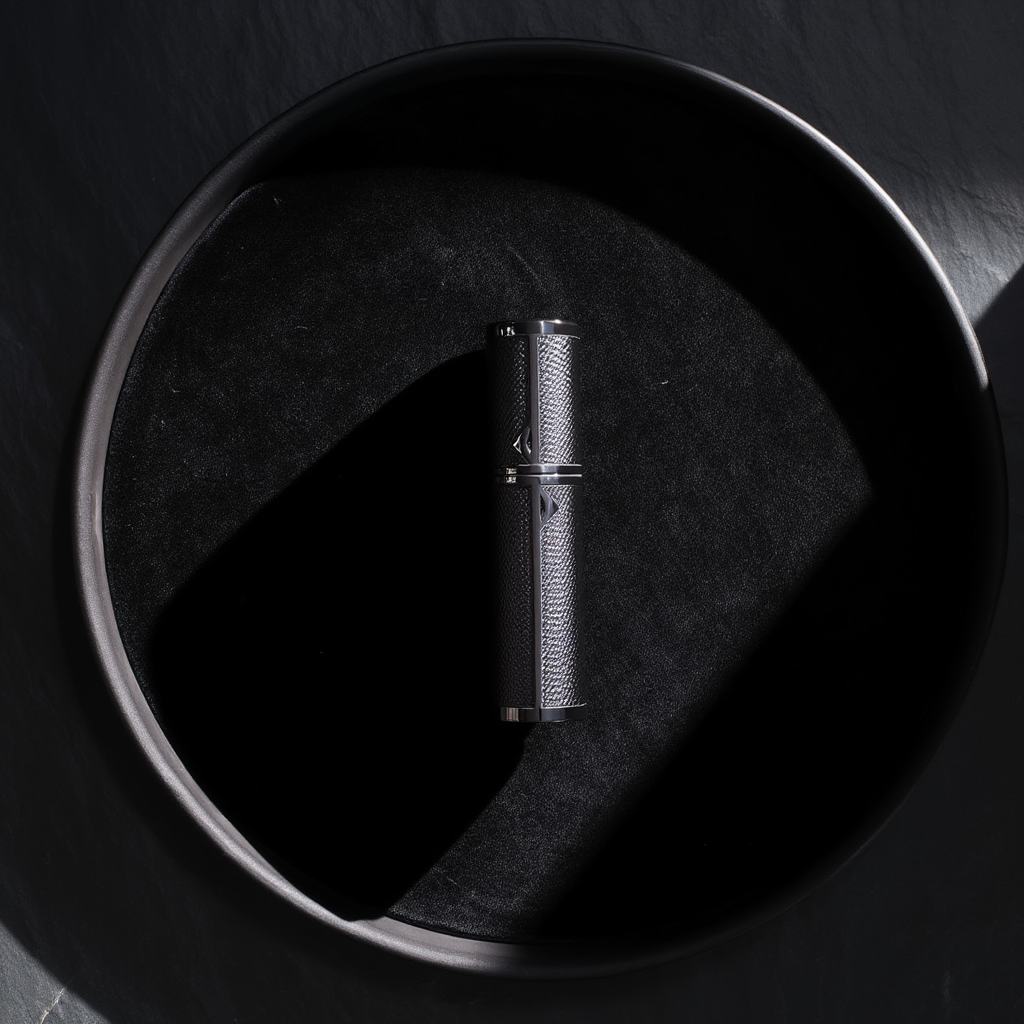
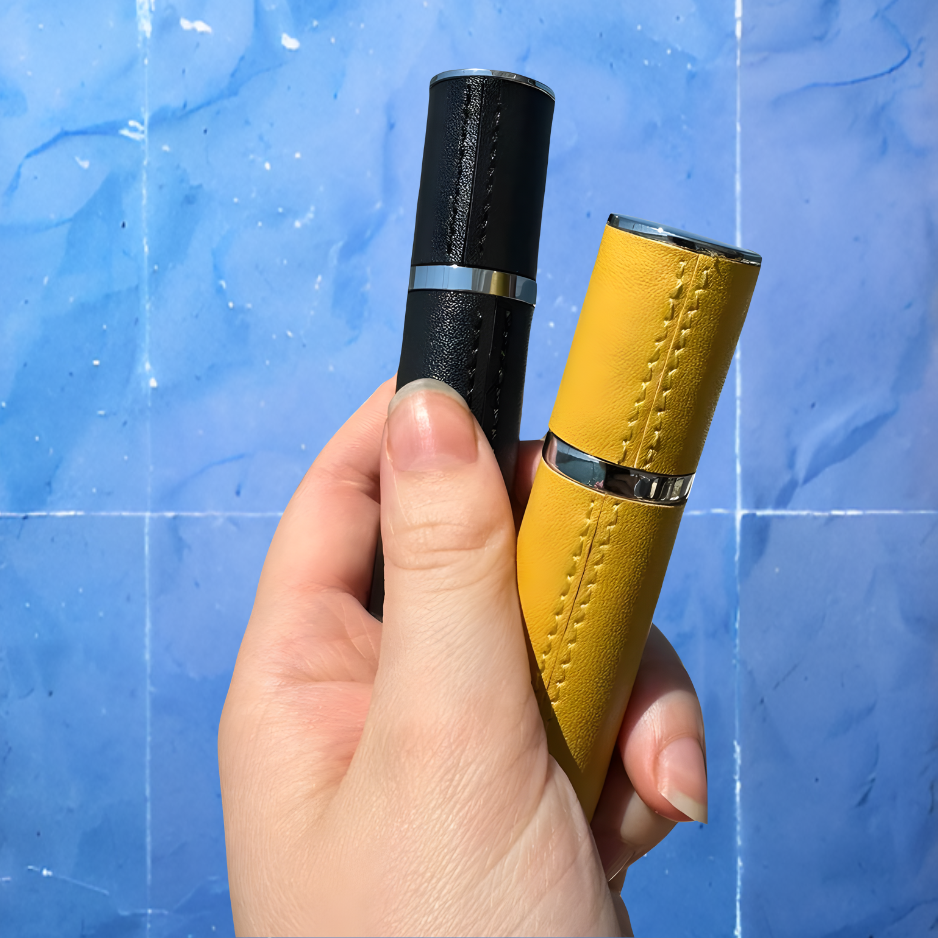
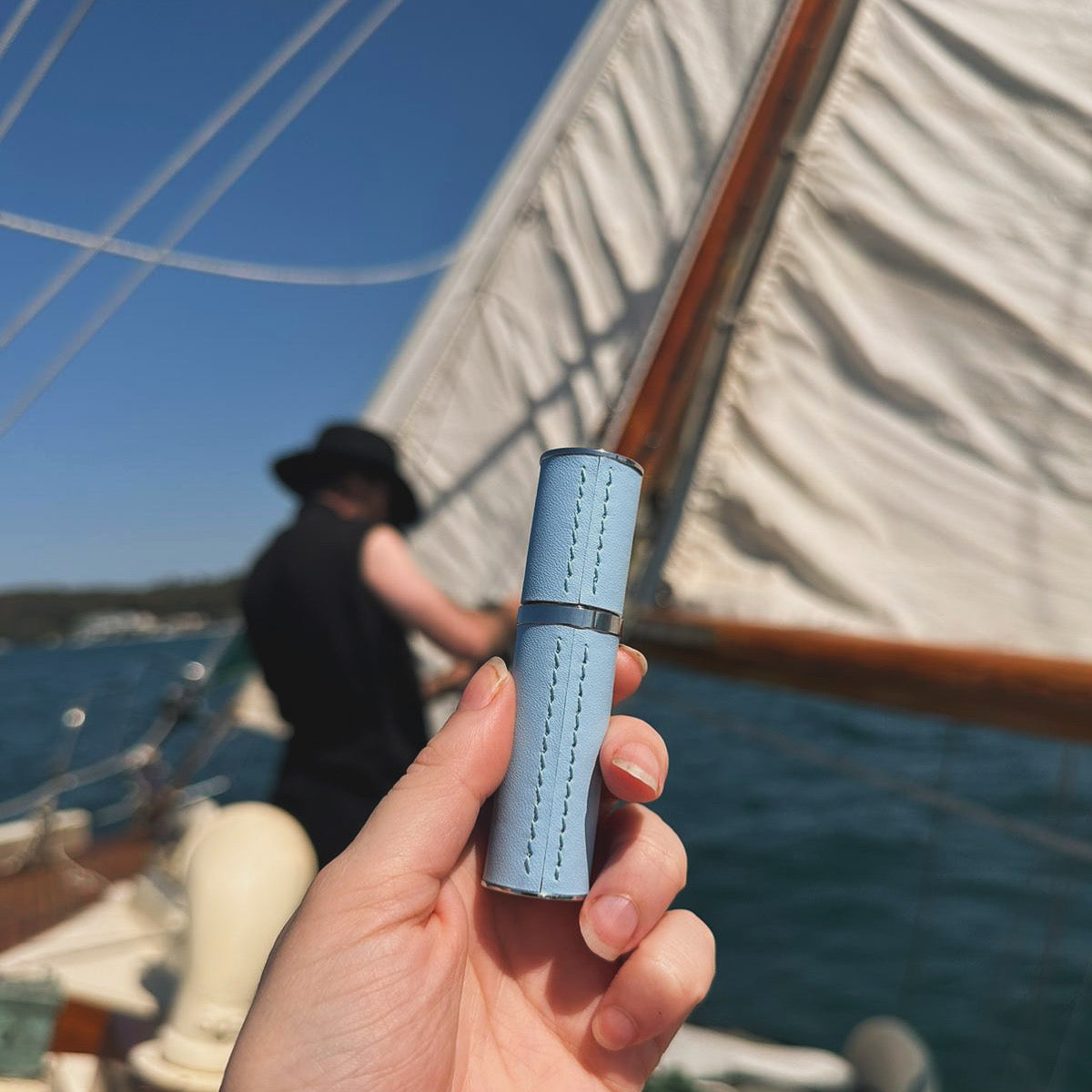
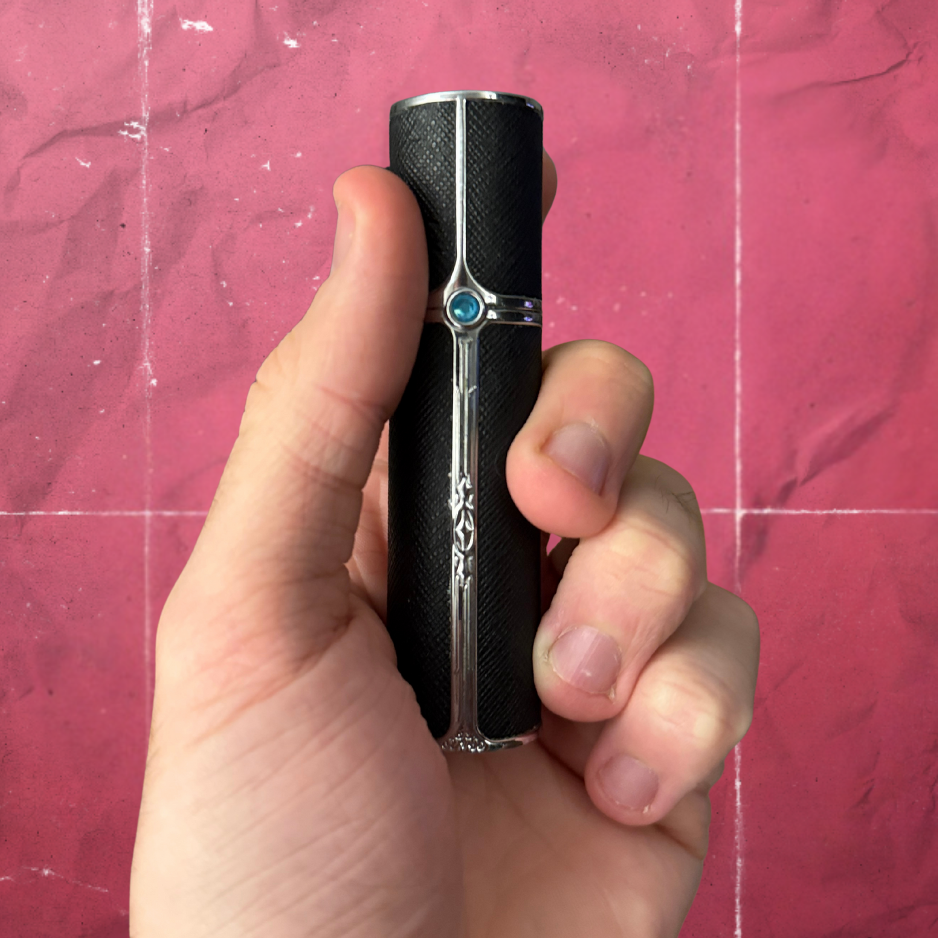
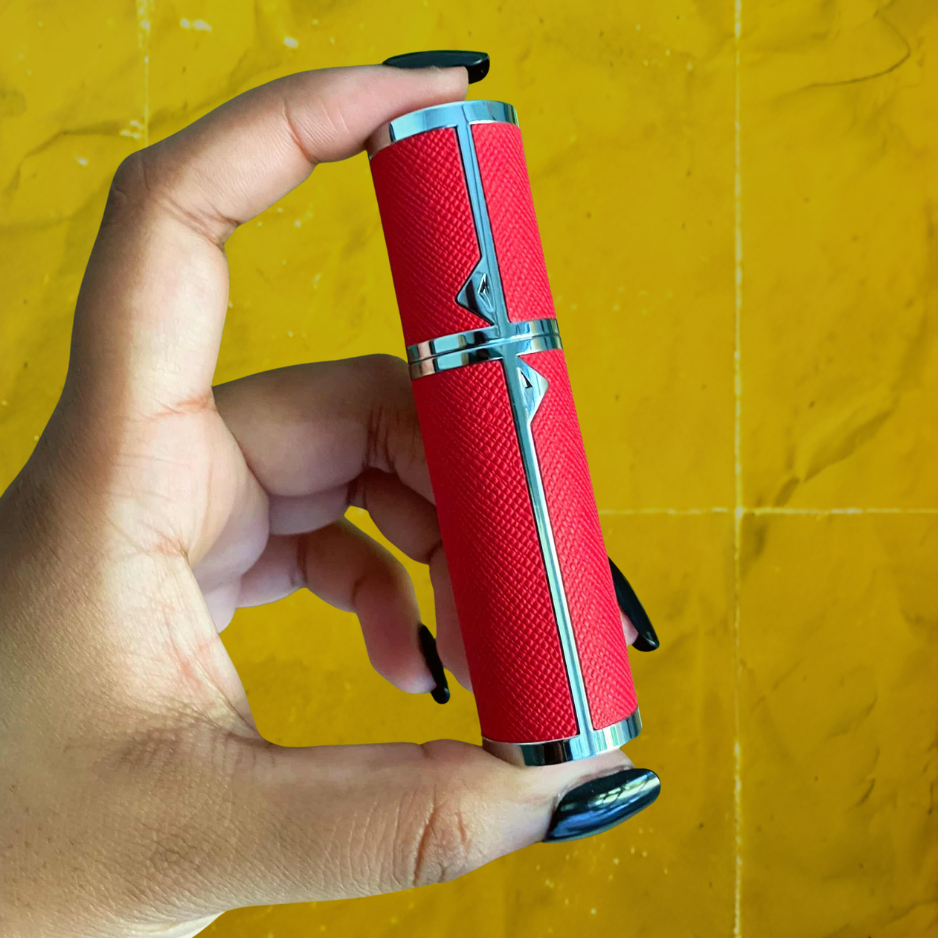
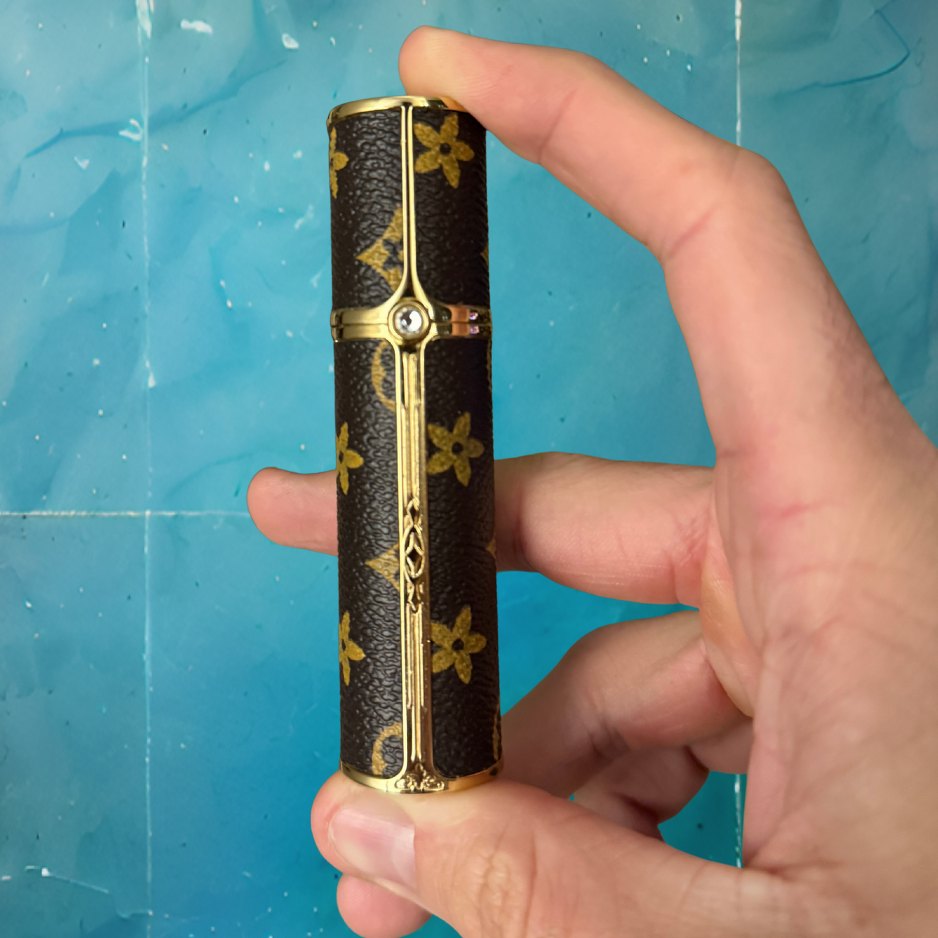
Aluminium body, CNC copper bottom-fill valve, sealed click closure. No thread to loosen and no funnel required. Pressure-tested for carry-on.
Being straight about it: no container is immune to physics. Overfill anything, leave it in a hot car on its side with the nozzle exposed, and you will eventually get a problem. What a sealed valve and a metal vessel do is remove the three failure points you cannot see, so the only variable left is how you fill and store it.
Frequently asked questions
Why did my perfume atomiser leak on a plane?
Cabin pressure drops during climb, so air inside the atomiser expands and pushes against the seals. That pressure difference finds any seal that was already marginal, most often a screw thread with an aged gasket, or a container filled to the brim with no air gap.
How full should I fill a travel atomiser?
About nine tenths. The remaining air gap absorbs expansion when the contents warm or the outside pressure drops.
Do bottom-fill atomisers leak?
They are far less prone to it, because the fragrance enters through a one-way valve rather than past a threaded opening. There is no seal to work loose. Overfilling one can still cause problems.
Why does my atomiser leak from the bottom?
On screw-top designs that is the gasket. On bottom-fill designs it usually means the valve has fragrance residue on it, which stops it seating cleanly. Wipe the valve after every fill.
Can I take a perfume atomiser in hand luggage?
Yes, in a container of 100ml or less, in your clear liquids bag. See Can You Take Perfume on a Plane?
Does perfume damage the seal over time?
The alcohol base degrades rubber and silicone gaskets over months and years, which is why older screw-top atomisers start to weep. Valve-based metal designs have no gasket in the fluid path to degrade.
Zero leaks. That's the whole job.
Sealed valve, metal vessel, click closure. Over 10,000 verified reviews at 4.84 stars.
Shop SPRITZ →Free worldwide tracked shipping. 30-day money-back guarantee.



साझा करें और 15% छूट पाएं!
बस इस उत्पाद को निम्नलिखित सामाजिक नेटवर्क में से किसी एक पर साझा करें और आपको 15% की छूट मिलेगी!