

Yes, plastic is fine for perfume in the short term, and it’s risky for the long term. The compatibility depends almost entirely on two things: which polymer the bottle is made from and how long the fragrance sits inside it. PET, PP, and ionomer resins handle alcohol-based perfume reasonably well for weeks or months; softer, uncertified plastics can leach compounds or dull the scent within days.
TL;DR:
- PET, PP, and ionomer resins can safely hold alcohol-based perfumes for weeks or months, but longer storage risks leaching or scent dulling, especially with lower-quality plastics.
- Ionomer resins and high-quality PET outperform cheaper plastics in resisting absorption and leaching, making them better choices for short-term or travel use.
- Longer-term storage or concentrated oils should always be kept in glass to prevent chemical reactions and preserve fragrance integrity.
- Refillable atomizers with metal or glass components eliminate plastic-related risks and are ideal for travel, with the right seal being crucial to prevent evaporation and oxidation.
- Proper storage habits, including keeping bottles cool, sealed tightly, and away from light and heat, significantly extend fragrance freshness, regardless of container material.
Table of Contents
- Which Plastics Handle Perfume Best?
- How Plastic Actually Changes Your Perfume
- When Plastic Makes Sense, and When It Doesn’t
- Storage Habits That Protect Fragrance in Plastic
- Why Refillable Atomizers Solve the Travel Problem
- Plastic vs. Glass: The Sustainability Trade-Off
- Quick Checklist: Should You Use Plastic Right Now?
- A Traveler’s Take on Plastic, Glass, and What Actually Works
- The Smarter Way to Carry Perfume While Traveling
- Sources
- FAQ
Which Plastics Handle Perfume Best?
Not all plastic is created equal, and perfumers know this better than anyone. The polymer’s molecular structure determines whether alcohol and fragrance oils pass through it, react with it, or leave it completely alone.
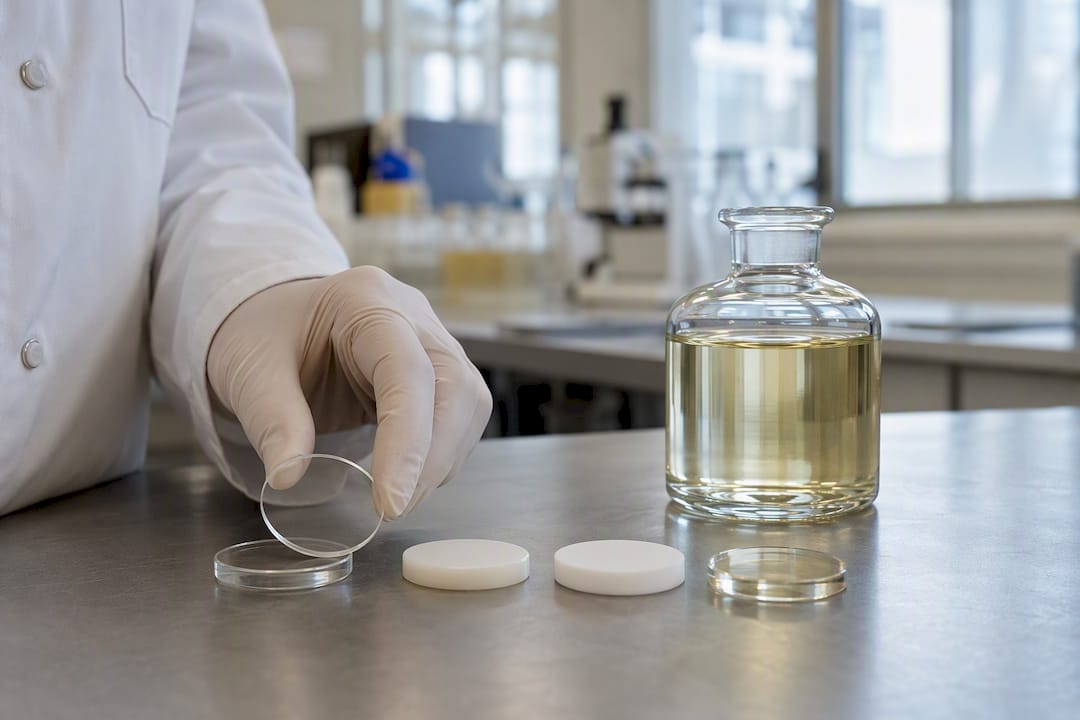
Polyethylene terephthalate (PET) is the material you’ll find in most travel-size perfume bottles and clear plastic sprays. It’s transparent, lightweight, and holds up fine for short to medium stretches, though its resistance to alcohol weakens over long-term contact. Amcor’s 100ml Odessa PET bottle is a real-world example of PET being marketed specifically for perfume and personal care, often with recycled content built in.
Polypropylene (PP) shows up less in the bottle body and more in pump mechanisms and caps, where its chemical resistance actually beats PET. Trade guides point to PP as the safer pick for components that touch concentrated liquid repeatedly, since it holds up better against solvents over thousands of pump cycles.
High-density polyethylene (HDPE) is the workhorse of bulk fragrance storage. It’s opaque, tough, and rarely used for the bottle you’d actually display, but it’s common in the larger containers that hold fragrance before it’s packaged into retail bottles.
Ionomer resins, including Surlyn™, sit at the top of the compatibility ladder. Material suppliers describe them as offering glass-like clarity with genuine chemical stability, which is why they show up in premium refillable systems rather than dollar-store spray bottles. Newer bio-based and chemically recycled grades (often marketed as REN or CIR variants) extend that performance while cutting the environmental footprint.
PCR (post-consumer recycled) plastics add a sustainability angle, but verify the claim. Look for a stated PCR percentage on the packaging or product listing, not just a general “eco-friendly” label.
How Plastic Actually Changes Your Perfume
Perfume isn’t a passive liquid sitting in a container. It’s an active alcohol-and-oil mixture that can pull compounds out of a plastic wall or lose its own molecules through one that isn’t sealed tight.
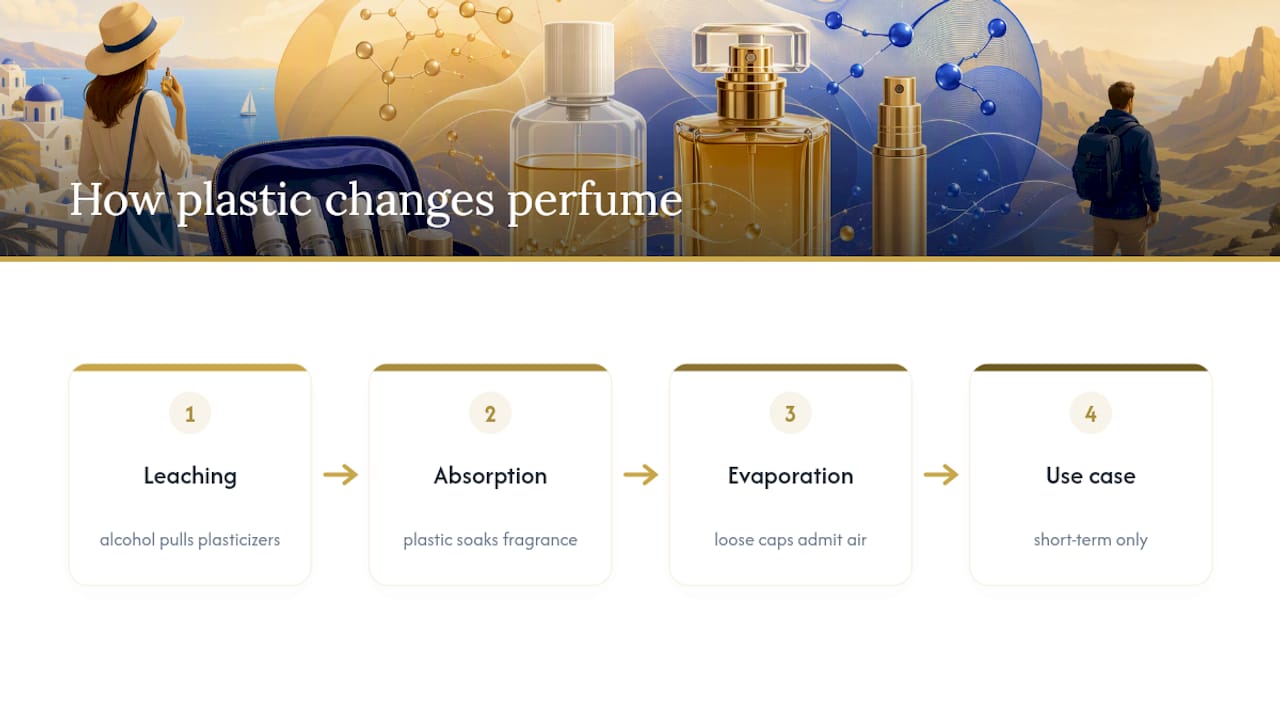
Leaching happens when alcohol, the dominant solvent in most eau de parfum and eau de toilette formulas, breaks down plasticizers or additives in a low-grade polymer and pulls them into the liquid. This is why alcohol resistance matters so much more than simple durability when a supplier evaluates a plastic for fragrance use.
Absorption works the other way. Porous or poorly formulated plastics can soak up fragrance molecules from the inside, which is why a cheap plastic vial sometimes smells weaker after a few weeks even though nothing spilled. Inert materials like ionomer resins and properly formulated PET resist this far better than generic craft-store plastic.
Evaporation and seal quality decide how much headspace air gets into the bottle every time it’s opened. A loose plastic cap lets in more oxygen than a well-fitted glass stopper, and oxidation is one of the fastest ways a fragrance’s top notes fade.
Industry guides consistently frame this as a timeline problem rather than a plastic-versus-glass fight: plastic works for travel and samples but isn’t ideal for years-long storage.
When Plastic Makes Sense, and When It Doesn’t
The right container depends entirely on how long the fragrance needs to survive and what’s actually inside it.
- Travel atomizers and short-term decants — plastic is genuinely fine here. A few weeks to a few months of contact with a well-matched polymer rarely causes noticeable change.
- Promotional samples and testers — brands hand these out in plastic vials for a reason. Nobody expects a sample to last a year, and it doesn’t need to.
- Diluted body mists — lower alcohol and oil concentration means less aggressive interaction with the container, so plastic tolerance is higher here than with a concentrated parfum.
- Collector’s bottles and rare fragrances — avoid plastic entirely. If you’re storing something for years, glass is the only material with the proven inert track record for that timeframe.
- Concentrated perfume oils and raw aromatic materials — these are far more chemically aggressive than a diluted spray, and even ionomer resins deserve caution here without a documented compatibility test.
Storage Habits That Protect Fragrance in Plastic
A good bottle can’t compensate for bad habits. Heat, light, and air are the real enemies of any perfume, plastic or glass.
- Keep bottles away from direct sunlight and out of hot spaces like a car dashboard or trunk; heat accelerates every chemical reaction happening inside that liquid.
- Minimize the empty air space (headspace) in a bottle when you can. Less air means less oxidation.
- Never mix two different fragrances in the same plastic container, even after rinsing. Trace scent molecules cling to plastic surfaces longer than most people expect.
- Choose new, food-grade or cosmetics-grade plastic rather than repurposing a container that once held something else. The FDA’s guidance on cosmetics packaging treats the container as part of the product’s overall safety profile, not an afterthought.
- Decant carefully and test a small amount first if you’re planning to keep a fragrance in the container for more than a few weeks.
Pro Tip: Label every plastic decant bottle with the fragrance name and the date you filled it. Perfume that’s been sitting in plastic for six months smells nothing like the day you poured it, and you’ll want a reference point.
Why Refillable Atomizers Solve the Travel Problem
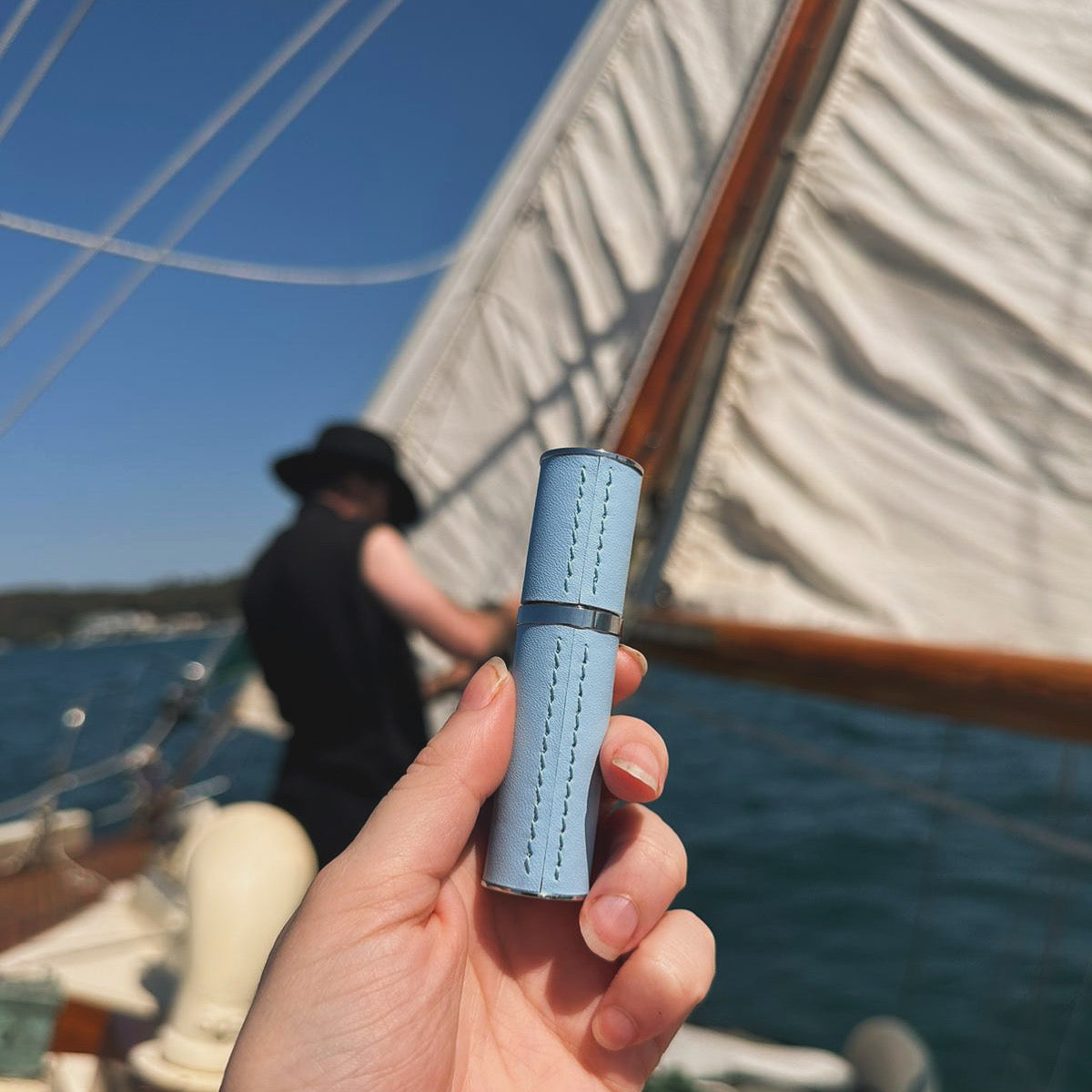
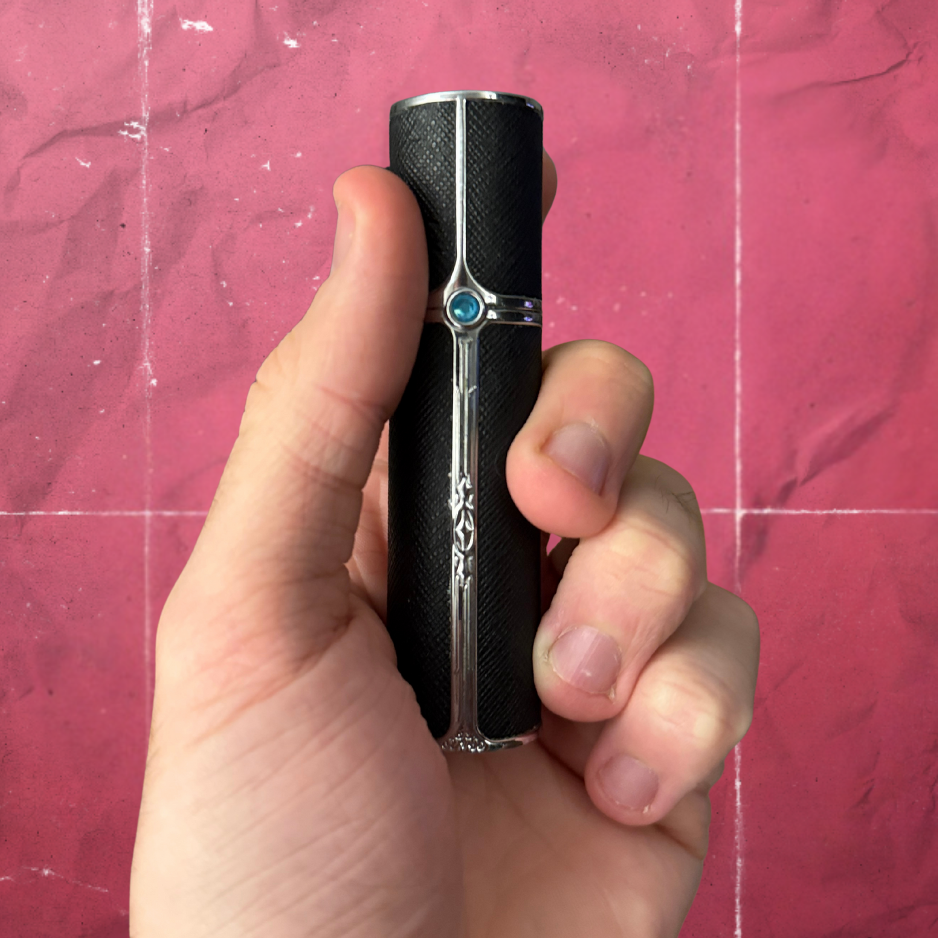
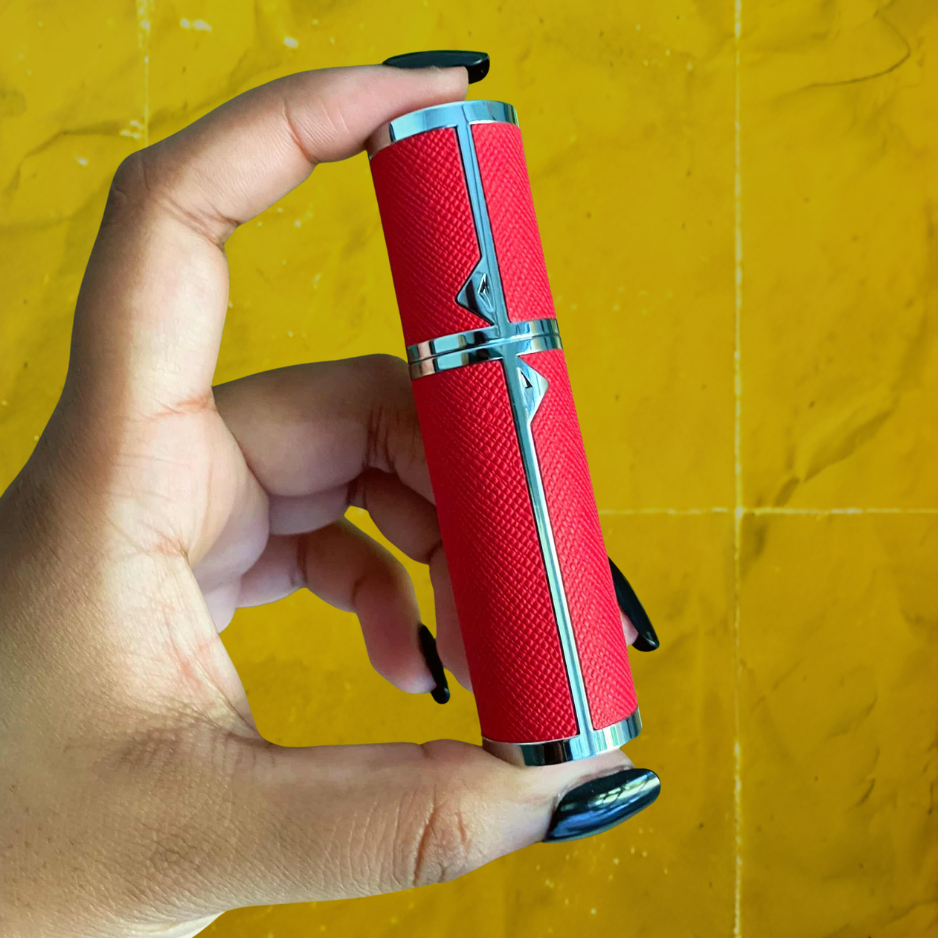
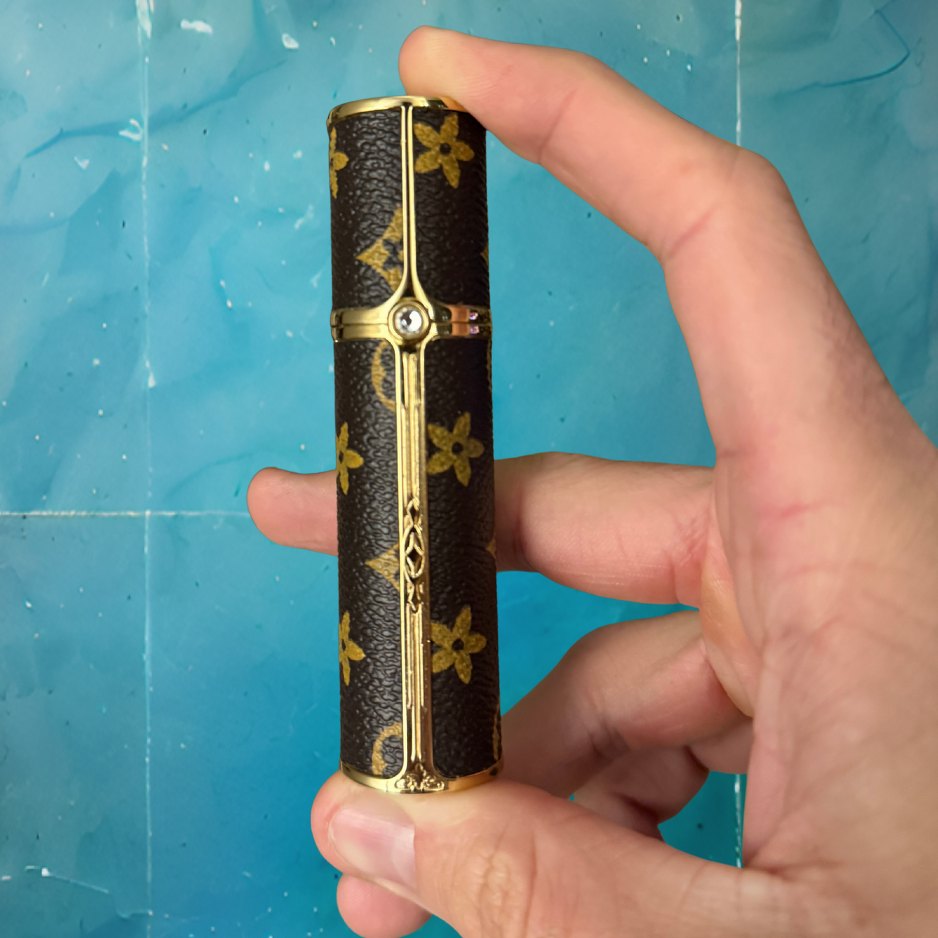
A refillable atomizer sidesteps most of the risk that comes with tossing perfume into a random plastic bottle for a trip. The internal components in a well-made atomizer, typically metal or glass, don’t interact with alcohol the way a cheap plastic vial does, and the seal is engineered specifically to prevent leaks and slow evaporation between fills.
Spritzshop’s refillable atomizers were built around exactly this problem. You fill directly from any standard perfume bottle you already own, which means you’re never guessing whether an unlabeled plastic vial is food-grade or fragrance-safe. The design fits in a pocket or purse, and Spritzshop customers have rated the experience 4.84 out of 5 across more than 10,000 reviews, which reflects how well the refill mechanism holds up to real travel use.
- Choose an atomizer over a loose plastic bottle when you’re carrying perfume through airport security, a gym bag, or a weekend trip.
- Choose a small plastic sample vial only when the fragrance is genuinely disposable, like a one-time tester you don’t plan to keep past the trip.
Plastic vs. Glass: The Sustainability Trade-Off
Glass wins on inertness. It doesn’t leach, doesn’t absorb, and recycles indefinitely without losing quality, but producing and shipping it costs more energy because of its weight.
- Glass: premium feel, chemically inert, infinitely recyclable, but heavier freight and higher production energy use.
- Plastic: lighter shipping footprint, genuinely recyclable when it’s PET or PCR-blended, but recycling outcomes depend heavily on your local municipal stream.
- Newer bio-based ionomer grades and chemically recycled PET are narrowing that gap, giving packaging designers a way to keep clarity and durability while improving lifecycle impact.
A refill-first system beats either single-use option on its own, since it stretches one container’s usable life across dozens of fills instead of one.
Quick Checklist: Should You Use Plastic Right Now?
- Purpose — travel or sample? Plastic is fine. Long-term keepsake? Choose glass.
- Concentration — diluted mist or eau de toilette? Lower risk. Concentrated parfum or raw oil? Higher risk.
- Intended storage length — under a few months, plastic works; over a year, it doesn’t.
- Material label — confirm PET, PP, HDPE, or ionomer; skip anything unlabeled.
- Seal quality — a loose cap undoes almost every other precaution on this list.
A Traveler’s Take on Plastic, Glass, and What Actually Works
Every frequent traveler goes through the same phase: decanting perfume into whatever plastic vial happens to be lying around, then wondering three weeks later why the fragrance smells flat. That’s not bad luck. It’s usually a mismatch between the polymer and the alcohol content, or a cap that never sealed properly in the first place.
The shift toward refillable atomizers isn’t really about glass versus plastic. It’s about removing the guesswork. A well-engineered atomizer, the kind Spritzshop customers rate at 4.84 out of 5 across 10,000-plus reviews, takes the material-compatibility question off your plate entirely because it’s already solved at the design stage. You’re not evaluating whether a random drugstore bottle is cosmetics-grade. You’re just filling it and going.
That’s the practical lesson buried in all the chemistry above: the right container matters more than the debate over plastic versus glass ever will.
— Ash
The Smarter Way to Carry Perfume While Traveling
Skip the guesswork of finding a compatible plastic bottle and refilling it hoping the seal holds. Spritzshop’s refillable atomizers are built for exactly the travel and transfer problem this article covers, letting you fill directly from any standard bottle you own instead of decanting into an unlabeled vial of uncertain material.
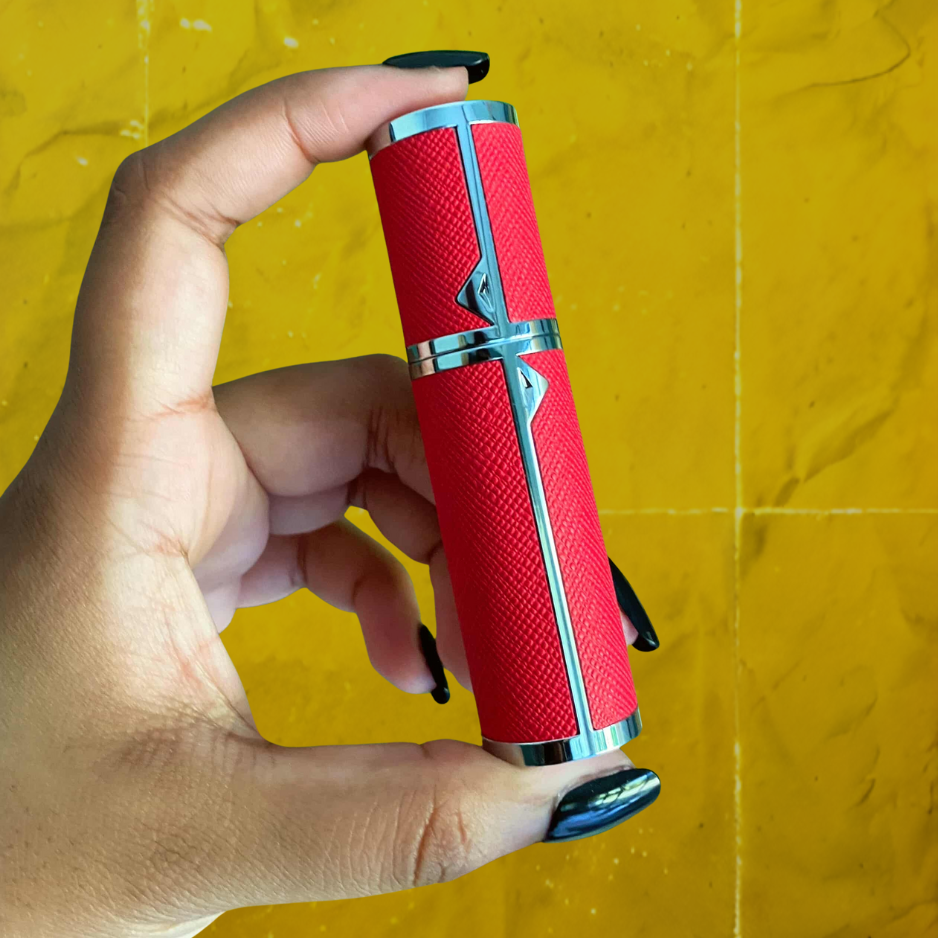
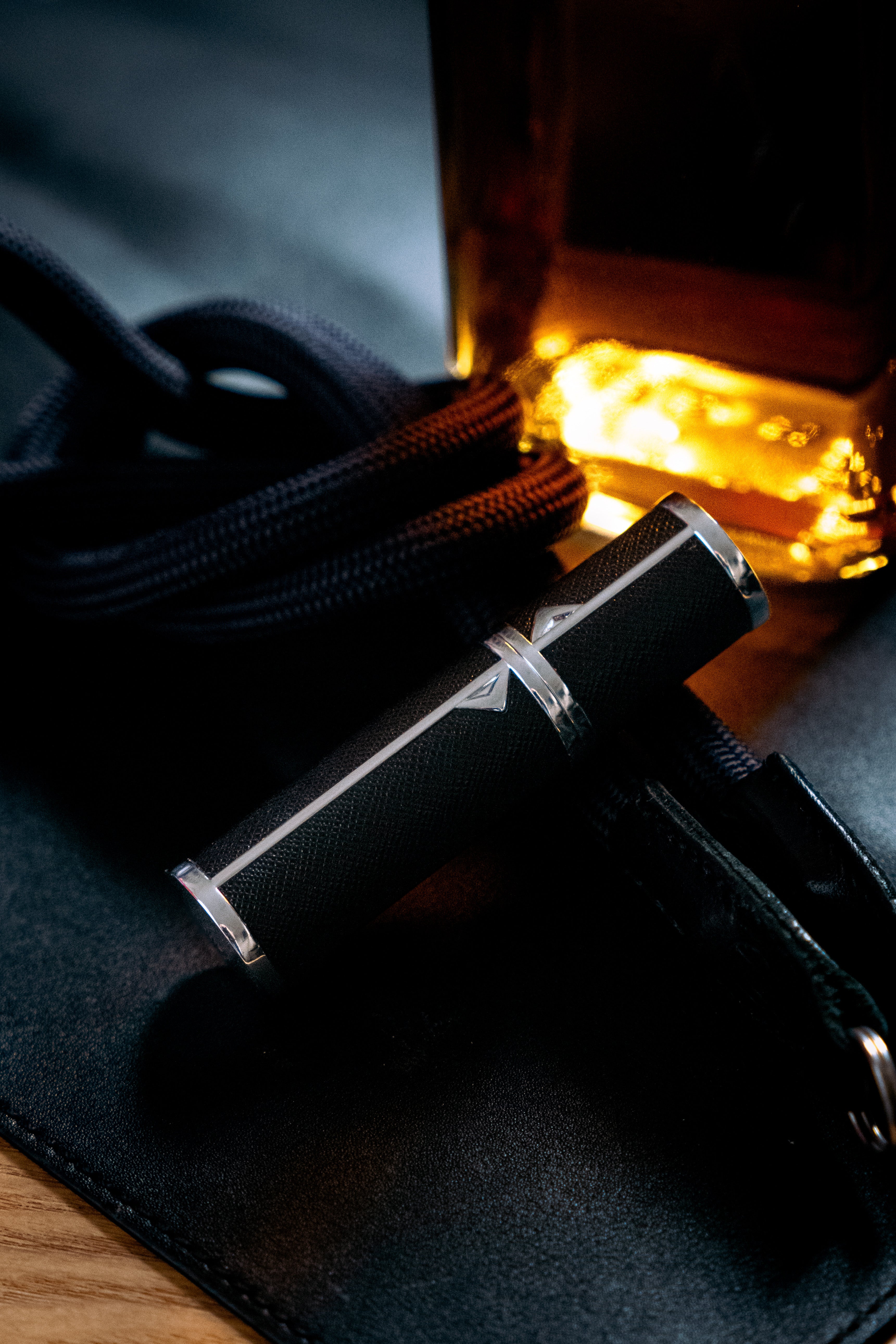
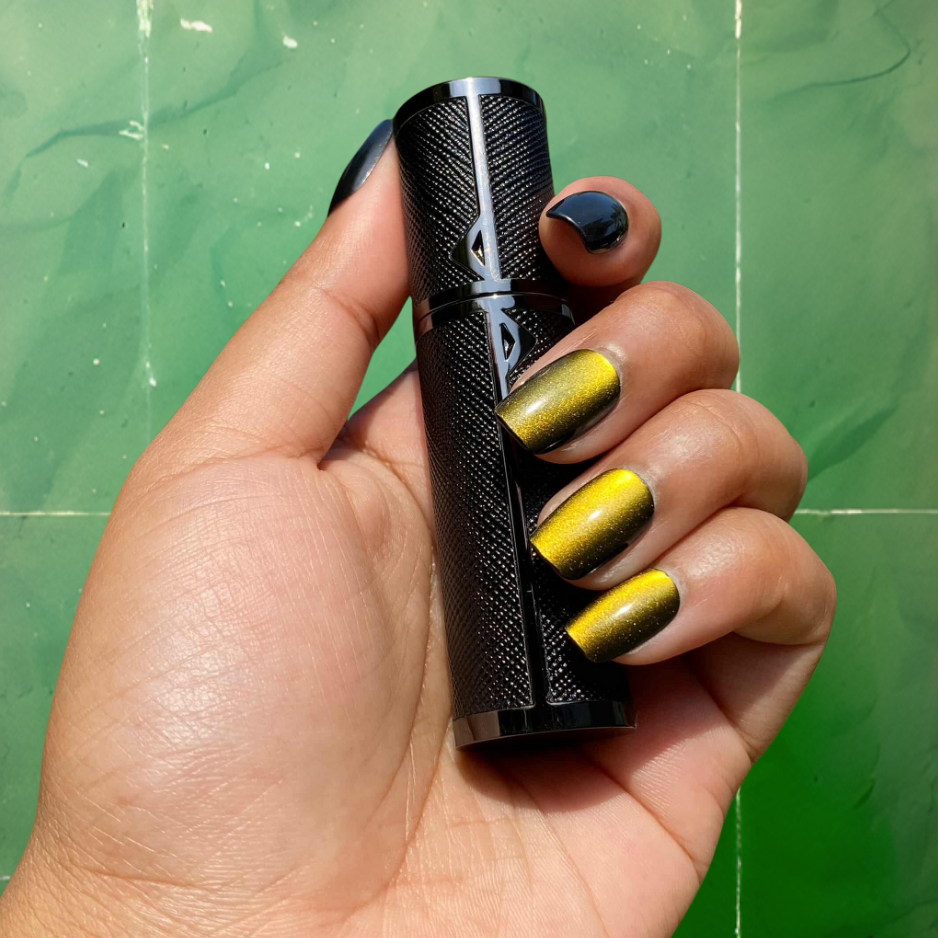
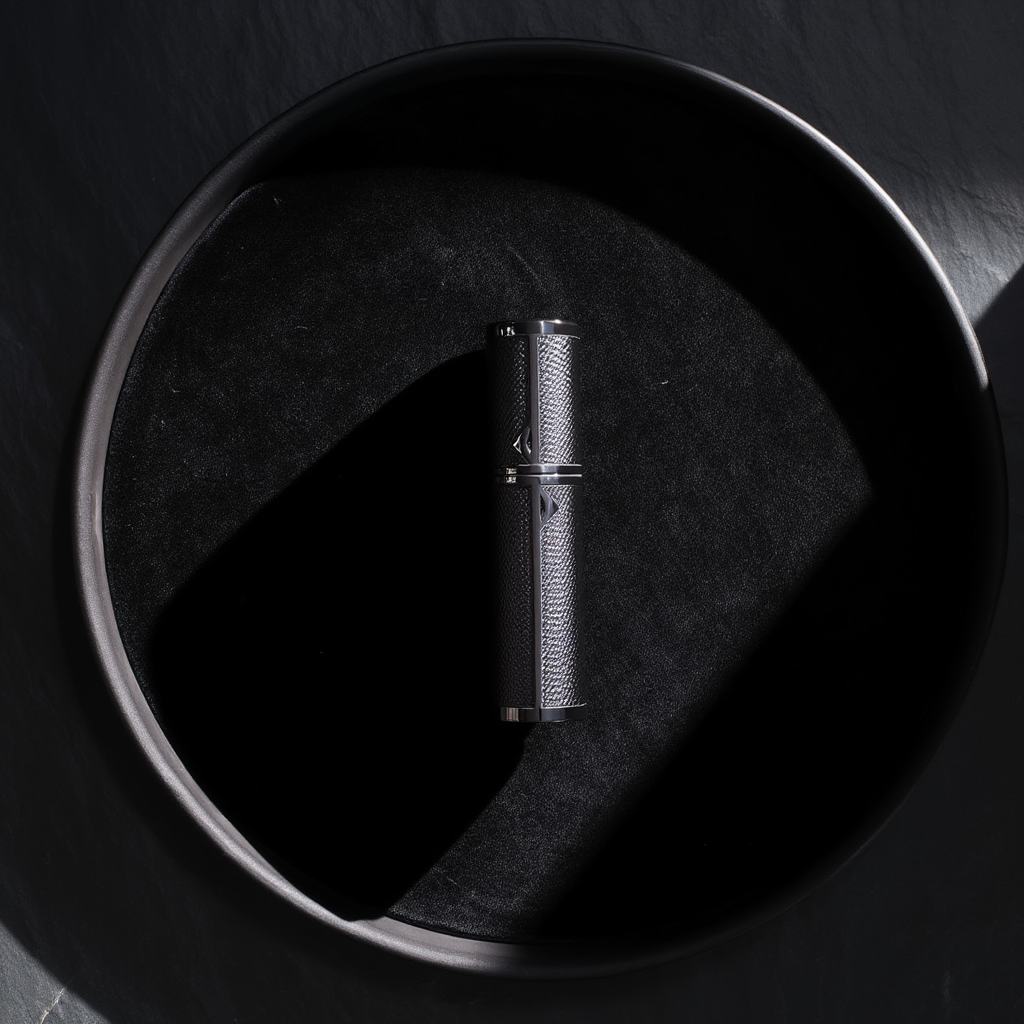
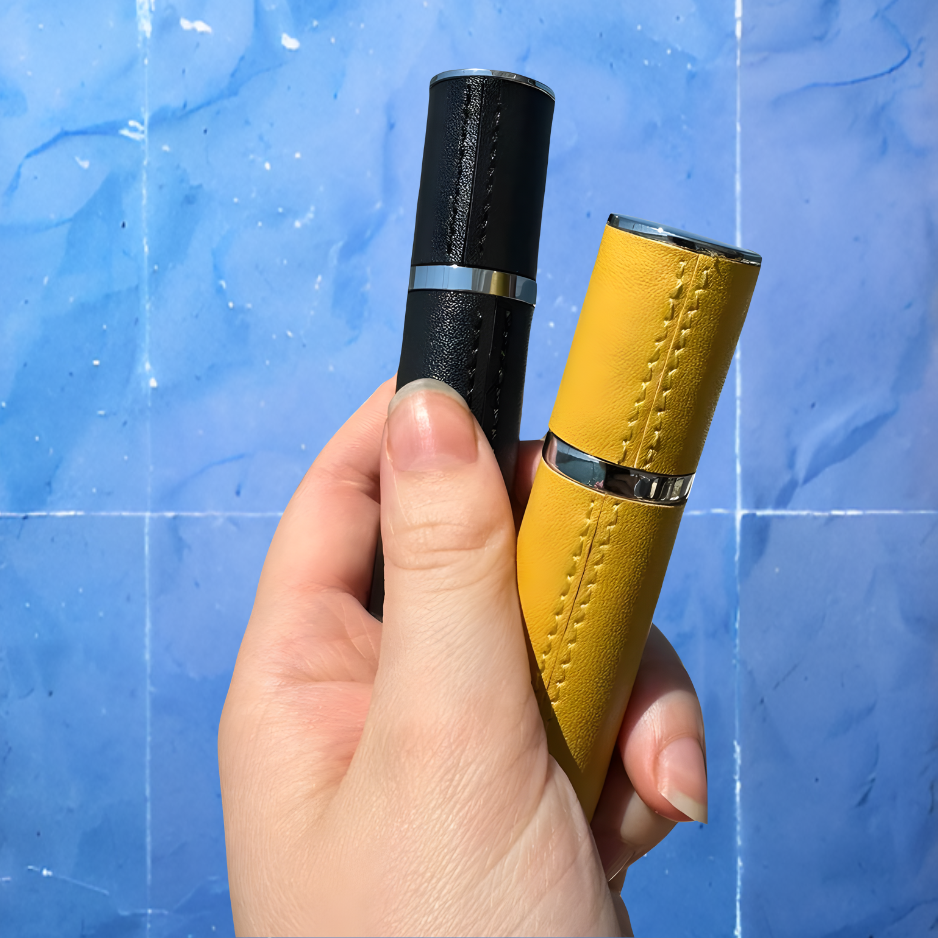
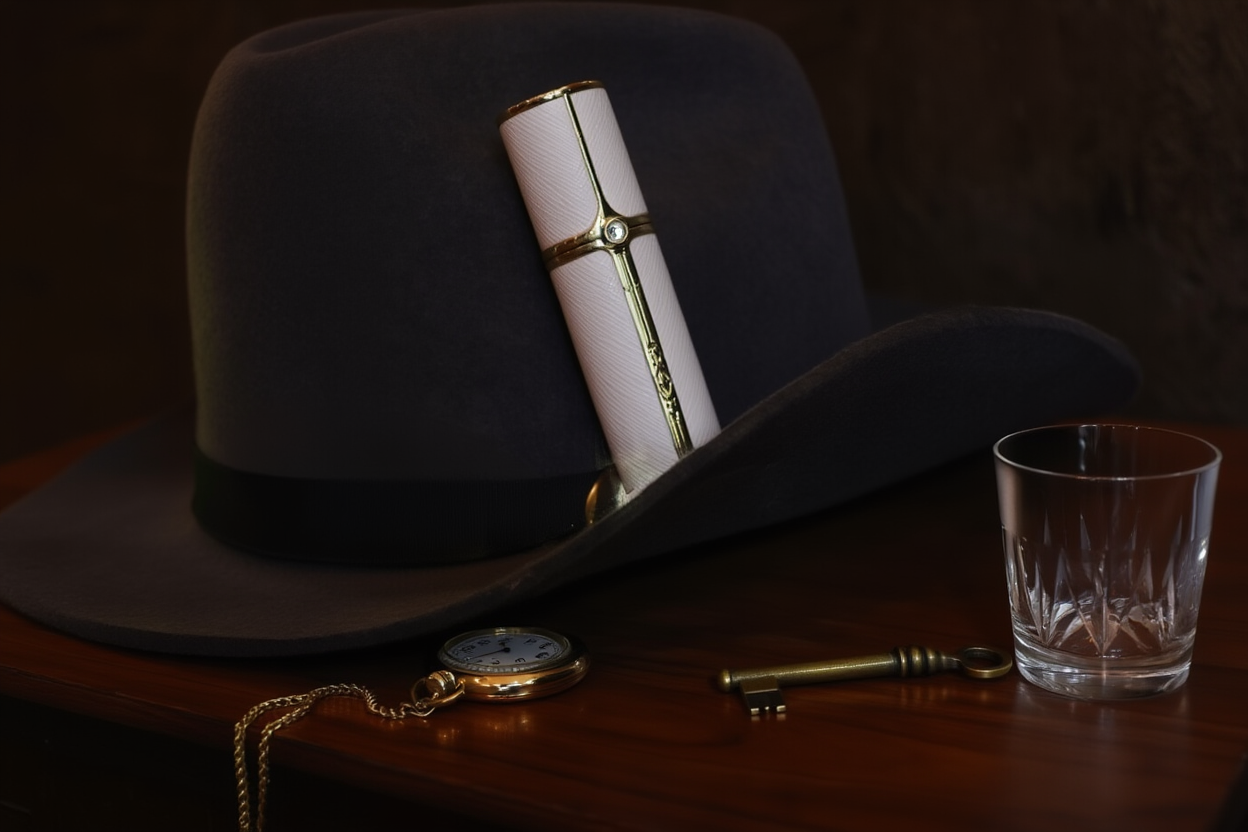
If you want something that slides into a pocket without adding bulk, the Monroe atomizer is the compact pick. If you prefer a slightly larger, more stylish option for a purse or travel bag, the Brando atomizer fits that role well. Both use durable, well-sealed construction designed specifically to hold fragrance without the leaching or evaporation risk that comes with generic plastic containers. If you’re unsure whether an atomizer will match your existing bottle’s spray mechanism, run the 5-second compatibility test before you buy. Pick your model and refill your first atomizer before your next trip.
Sources
- Personal care | Arkema HPP
- The new face of sustainable perfume packaging | Safic-Alcan
- Can you store perfume in a plastic bottle? | ShunScent
- Can you put perfume in a plastic spray bottle? | Sharing-Pack
FAQ
Is It Okay to Put Perfume in a Plastic Bottle?
Yes, for short-term use. PET, PP, and ionomer plastics handle alcohol-based perfume well for weeks or months, but concentrated oils and long-term storage call for glass.
What Is the Best Material for a Perfume Bottle?
Glass remains the best material for long-term storage since it’s completely inert, while high-performance ionomer resins and PET are solid choices for refillable or travel formats.
What Is the Best Way to Store Perfume?
Keep it cool, out of direct light, tightly sealed, and away from heat sources like car interiors; a refillable atomizer with a quality seal, like Spritzshop’s, adds an extra layer of protection for travel.
Can You Put Essential Oils in a Plastic Container?
Generally no. Essential oils are more chemically aggressive than diluted perfume and can degrade many common plastics faster, so glass is the safer default for oils.




Share and get 15% off!
Simply share this product on one of the following social networks and you will unlock 15% off!