

The fastest, least-mess way to refill perfume is to use a purpose-built refillable atomizer, or, if you’re keeping the original bottle, a blunt-tip syringe or the bottom-fill press method. Either way, the single rule that prevents almost every spill is leaving a moderate amount of headspace and working slowly instead of forcing air out under pressure.
TL;DR:
- Using a purpose-built refillable atomizer or a syringe ensures minimal spills and allows precise control during refilling.
- Identifying your perfume bottle type correctly—such as screw-on, snap-on, or bottom-fill—is crucial to choosing the right refilling method and avoiding messes.
- Leaving 10 to 15 percent headspace in the bottle prevents leaks caused by alcohol expansion when the perfume warms up or heats in transit.
- Cleaning bottles thoroughly with perfumer’s alcohol before switching scents prevents muddling or muddying fragrances.
- Testing for leaks with inversion checks and priming pumps ensures the bottling is secure before carrying it in a bag or pocket.
Table of Contents
- How Do I Identify My Perfume Bottle Type Before Refilling?
- What’s the Best Way to Refill Perfume Without Spillage?
- What Precautions Prevent Spills and Overfilling?
- How Do You Clean a Bottle Before Refilling With a New Scent?
- How Do You Test a Refilled Bottle for Leaks Before Carrying It?
- What Should You Look for in a Spill-Resistant Atomizer?
- Should You Refill the Original Bottle or Switch to an Atomizer?
- Get a Spill-Free Refill Without Touching a Syringe
- Sources
- FAQ
How Do I Identify My Perfume Bottle Type Before Refilling?
Before you refill anything, you need to know what you’re working with. Perfume bottles fall into a handful of categories, and picking the wrong method for the wrong bottle is the number one reason people end up with fragrance on their hands, counter, or carpet.
Look at the collar around the spray nozzle first. A metal band crimped tightly around the neck signals a permanent pump, the kind department-store bottles use, and it was never designed to come off without tools. Threads visible under a twist-off cap mean you have a screw-on bottle, which is the easiest type to work with because you can remove the whole top. A snap-on cap pops straight up with light pressure and usually reveals a simple friction-fit sprayer. If you’re holding a refillable atomizer, check the base: a small valve or fill port at the bottom means it’s a bottom-fill design that gets pressed onto the source bottle’s nozzle rather than filled from the top.
A few quick tests confirm what you’re looking at:
- Wiggle test: Gently rock the collar. If it moves independently of the glass, it’s likely screw-on or snap-on. If it doesn’t budge at all, assume crimped.
- Lift test: Try lifting the nozzle straight up a millimeter. Movement usually means a removable sprayer head.
- Base check: Turn the bottle over. A visible rubber gasket or metal pin at the bottom indicates a bottom-fill atomizer.
When you genuinely can’t tell, or the collar won’t budge, don’t force it. The safer move is a non-destructive transfer into an atomizer built to fit standard nozzles, which sidesteps the guesswork entirely.
What’s the Best Way to Refill Perfume Without Spillage?
The method changes depending on what kind of bottle you’re filling, but the underlying logic is the same across all of them: control the flow, let trapped air escape, and never rush the last 10%.
1. Syringe method (best for screw-on and snap-on bottles) Remove the cap and sprayer assembly carefully, setting them somewhere they won’t roll away. Draw your fragrance into a blunt-tip syringe, the kind sold for e-liquid or craft use works fine. Insert the tip down to the bottom of the target bottle so you’re filling from below the liquid line rather than dripping down the inside wall. Inject slowly, pausing every few seconds to let displaced air bubble out the neck. Stop when you’re 10 to 15% short of the rim.
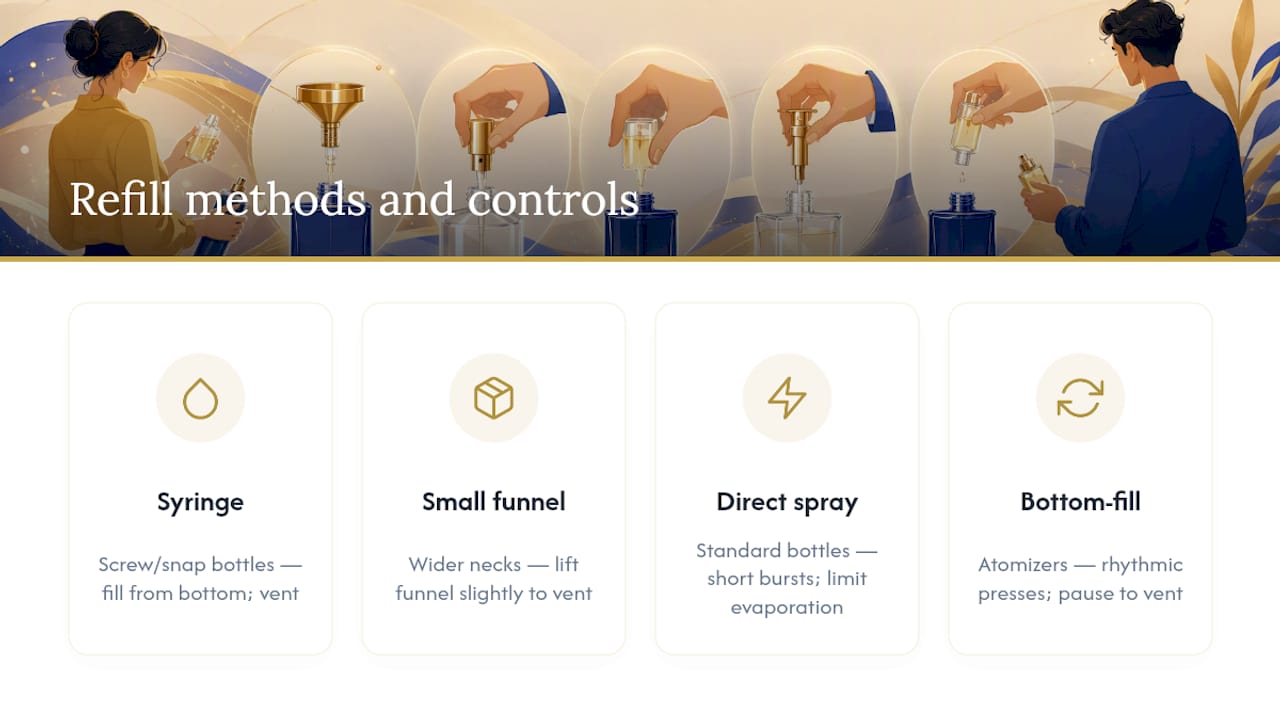
2. Small funnel method (best for wider-neck bottles) Seat a narrow funnel in the bottle’s opening, but lift it slightly, a millimeter or two, rather than pressing it flush against the neck. That small gap prevents an air lock from forming, which is what actually causes funnel pours to suddenly back up and overflow. Tilt the source bottle at a shallow angle and pour in a thin, steady stream rather than tipping it upright and letting gravity do the work too fast.
3. Direct-spray method (best for standard bottles with no fill valve) If neither bottle has a proper refill port, you can position the source nozzle directly against the target bottle’s opening and spray in short bursts. This skips tools entirely and limits evaporation, though it’s the least precise option and works best for small volumes.
4. Bottom-fill press method (for refillable atomizers) Purge the empty atomizer first with a few dry pumps to clear residual air. Align the atomizer’s fill stem squarely against the source bottle’s spray nozzle. Press down and release in a rhythmic pattern rather than holding continuous pressure, pausing briefly between presses to let trapped air work its way out. Slow, rhythmic pumping combined with letting air escape between presses is what reliably prevents overflow in bottom-fill designs. Stop pressing the moment you feel increased resistance. That resistance means the chamber is nearly full.
Handling crimped bottles: Don’t try to pry off a crimped collar with pliers or a knife. It usually cracks the glass or bends the sprayer beyond use. Instead, extract fragrance from the crimped bottle using a syringe through the existing nozzle opening (many crimped pumps have enough clearance for a thin syringe tip) and transfer it into an atomizer. If the collar has zero clearance, accept that opening it means permanently altering the bottle, and decide whether that trade-off is worth it before you start.
Pro Tip: Keep a folded paper towel under the neck of whichever bottle you’re filling. It catches the inevitable stray drop without you having to stop and grab something mid-pour.
What Precautions Prevent Spills and Overfilling?
Most refill accidents trace back to pressure, not clumsiness. Perfume is mostly ethanol, and ethanol expands with heat. A bottle filled to the very brim in a warm bathroom can leak days later once it warms up in a bag or car.
Leaving 10 to 15% headspace at the top of any bottle gives that expansion somewhere to go and protects pump seals from the pressure buildup that eventually forces liquid out around the gasket. That headspace matters just as much for a $15 drugstore bottle as it does for a designer atomizer.
Set up on a flat, stable surface in a dry, ventilated room, away from candles, stovetops, or space heaters. Perfume’s alcohol base is flammable, and pouring near an open flame is a genuinely bad idea, not just a theoretical one.
A short checklist for the actual refill:
- Use short, controlled pumps on bottom-fill valves. Continuous force pushes liquid past the seal before air has a chance to escape.
- Never top off a threaded bottle all the way to the neck.
- Don’t force a crimped collar without accepting that you’re likely opening it permanently.
- Work over a tray or folded towel regardless of how confident you feel.
How Do You Clean a Bottle Before Refilling With a New Scent?
Switching fragrances in the same bottle without cleaning it first is how you end up with a muddy, off blend instead of the scent you actually wanted.
A quick wipe with a dry cloth is enough if you’re topping off the same fragrance. Deep-cleaning matters when you’re switching between noticeably different scents, especially between something oud-heavy and something citrus-light, where leftover oils will visibly muddy the new fragrance.
For deep cleans:
- Use perfumer’s alcohol or high-proof ethanol rather than isopropyl. High-purity ethanol dissolves fragrance oils more completely, while isopropyl tends to leave a lingering chemical odor trapped in plastic components.
- Flush the atomizer’s tube and pump mechanism by drawing solvent through the actuator a few times, the same motion you’d use to spray perfume.
- Disassemble what you can, let everything air dry for 24 to 48 hours, and avoid reassembling while still damp, since trapped moisture invites cloudiness in the next fill.
How Do You Test a Refilled Bottle for Leaks Before Carrying It?
A refill that looks fine on the counter can still leak once it’s jostled around in a bag. Two quick checks catch that before it becomes a problem.
- Run the inversion leak test. Wipe the bottle completely dry on the outside, then set it upside down on a paper towel for five minutes. Any wet ring underneath means the seal isn’t seated correctly and needs to be reseated or replaced.
- Prime the pump. Hold the bottle upright and spray two to three times into a tissue until the mist comes out even and fine rather than sputtery. This clears leftover air from the chamber.
- Troubleshoot uneven spray. A weak or sputtering mist after priming usually means air is still trapped in the chamber or the internal dip tube shifted during filling. Re-prime with a few more pumps before assuming something’s broken.
What Should You Look for in a Spill-Resistant Atomizer?
Not every atomizer design is equally forgiving during a refill, and the difference usually comes down to how much you can see and control while pouring.
Top-fill designs with a visible window let you watch the liquid level in real time, which cuts down on the alignment guesswork that causes overfills in opaque, bottom-only designs. A sturdy valve mechanism and a cap that seats fully and audibly are the other two features worth checking before you trust a bottle in your bag.
A short checklist for atomizer shopping:
- Clear fill window so you can watch the level as you go.
- A valve that gives noticeable resistance, not one that feels loose or spongy.
- A cap with a firm, complete seal, not a wobbly friction fit.
- Consistent seals across the pump housing, since a single worn gasket is usually the source of a “random” leak.
Pro Tip: Purge a brand-new atomizer with three or four dry pumps before its first real fill, and run the inversion test right after. That combination catches almost every manufacturing or seal issue before the bottle ever leaves your house.
Should You Refill the Original Bottle or Switch to an Atomizer?
If a bottle has collector value or you care about keeping it intact, leave it sealed or have it professionally decanted rather than risk the crimp. For everyone else, prioritizing portability and low spill risk, a tested refillable atomizer beats reopening the original bottle every time. Convenience and risk rarely point the same direction, so pick the one that actually matches what you’re using the bottle for.
— Ash
Get a Spill-Free Refill Without Touching a Syringe
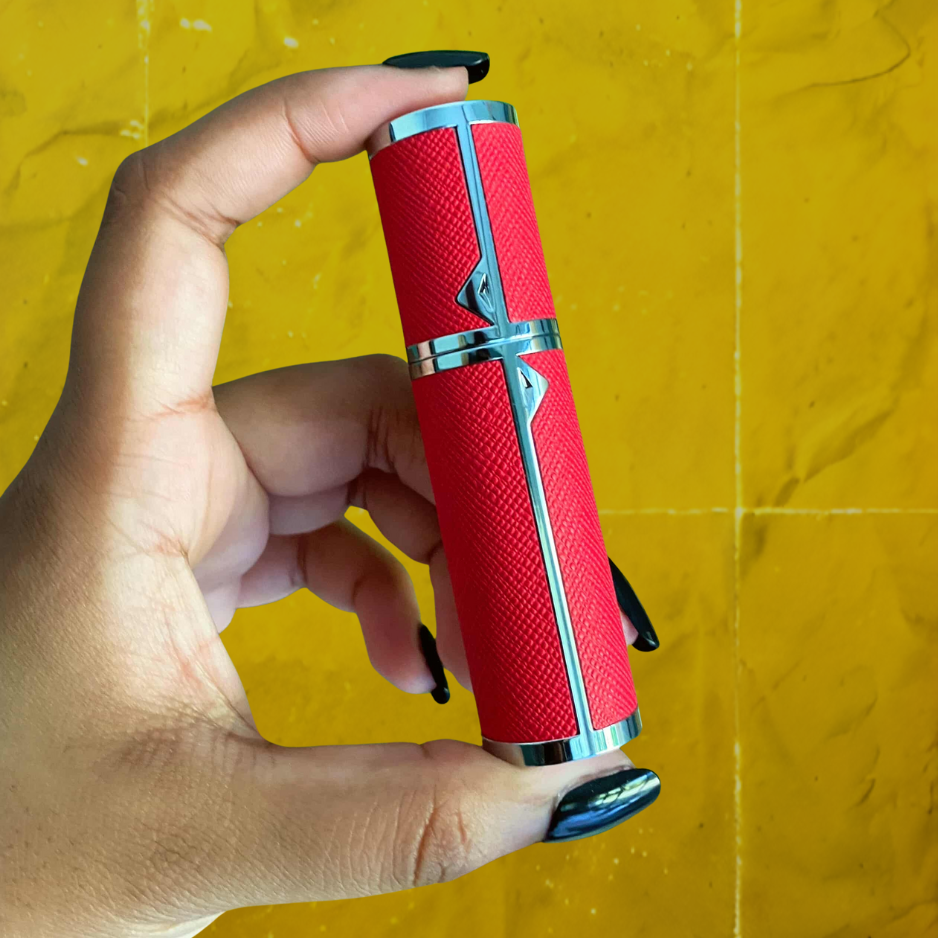
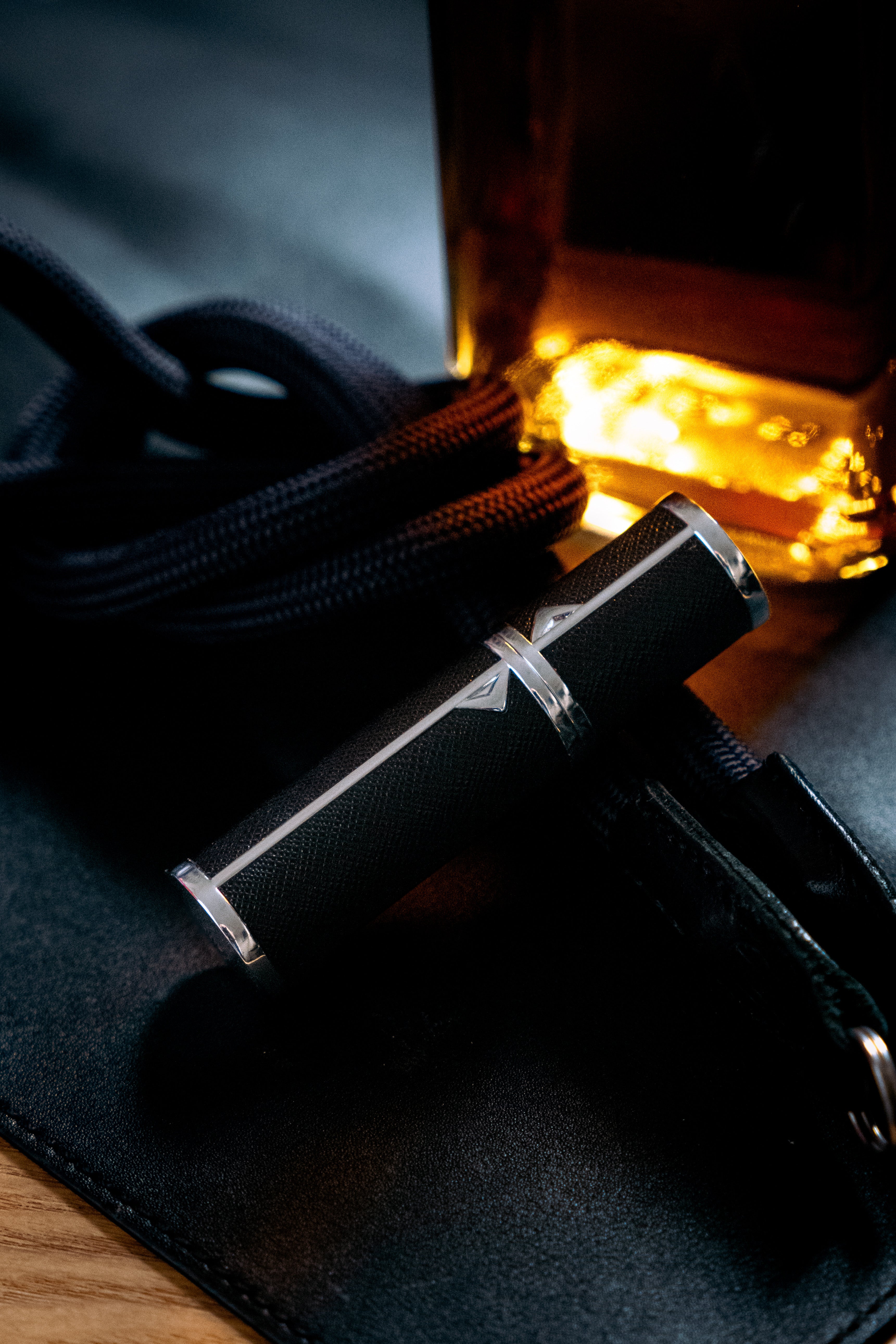
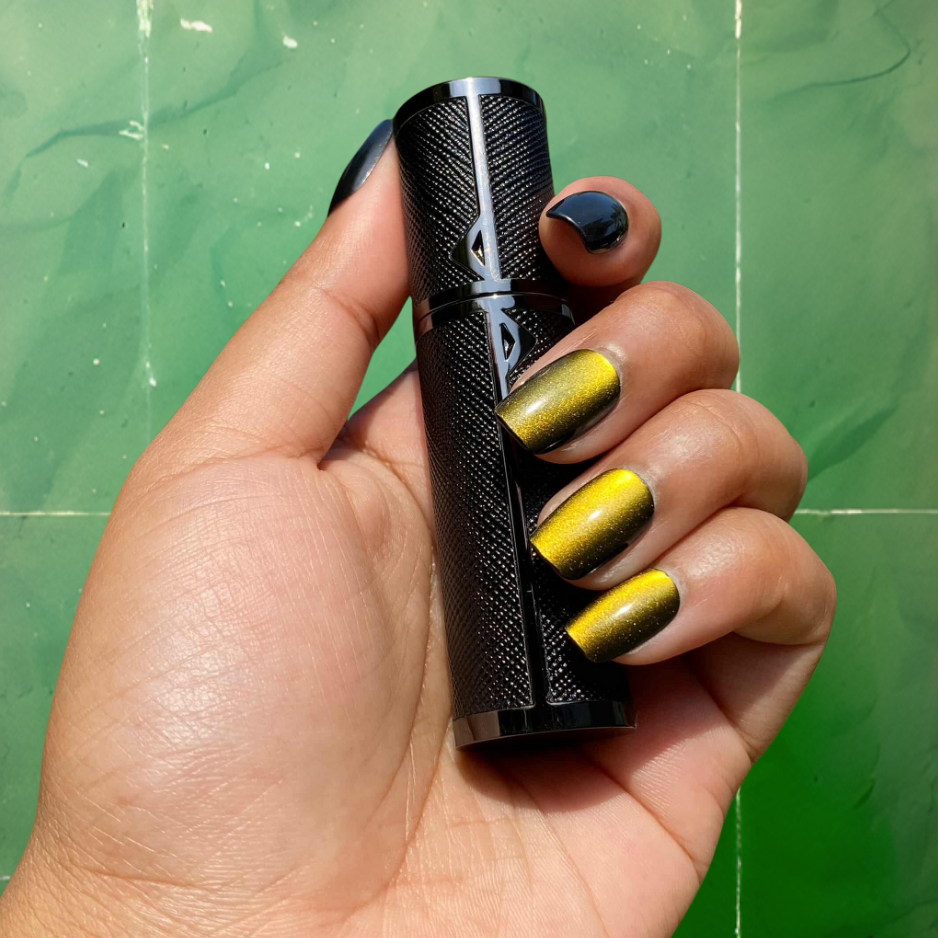
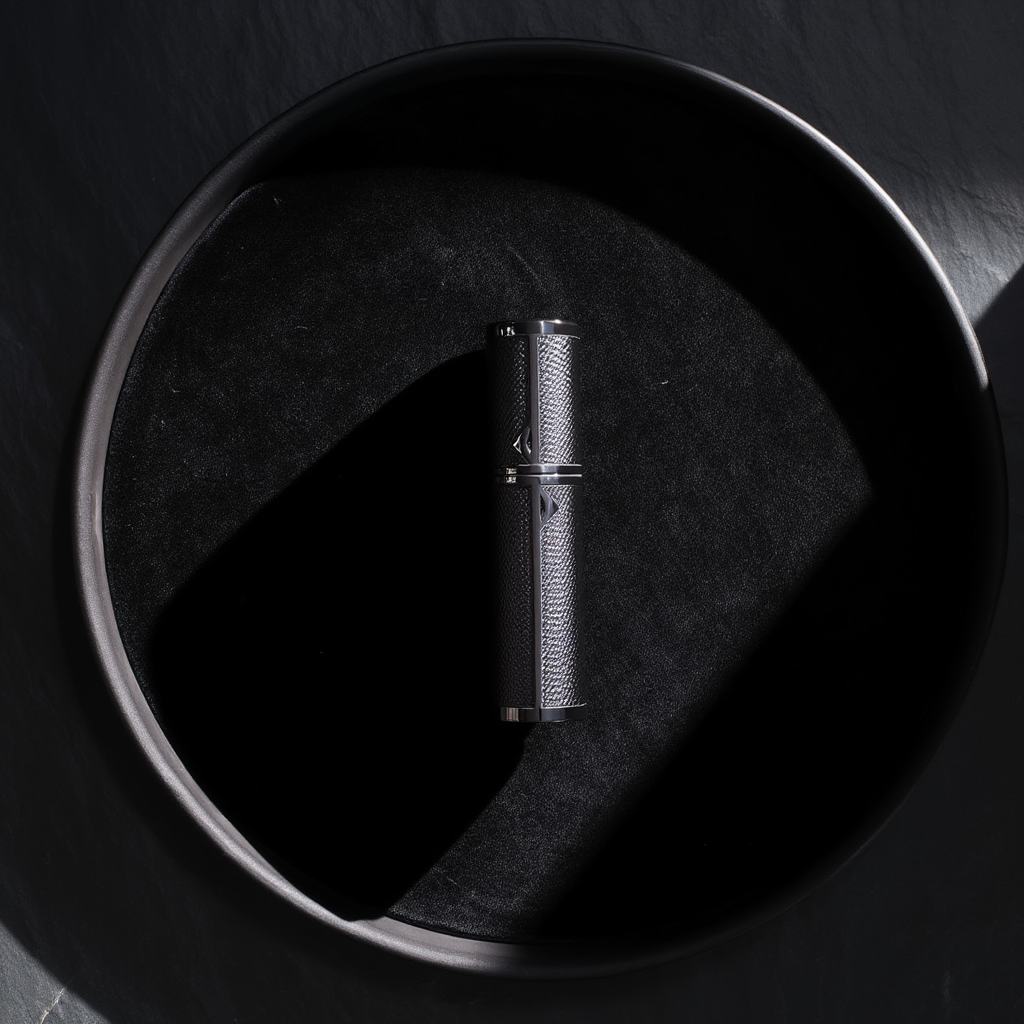
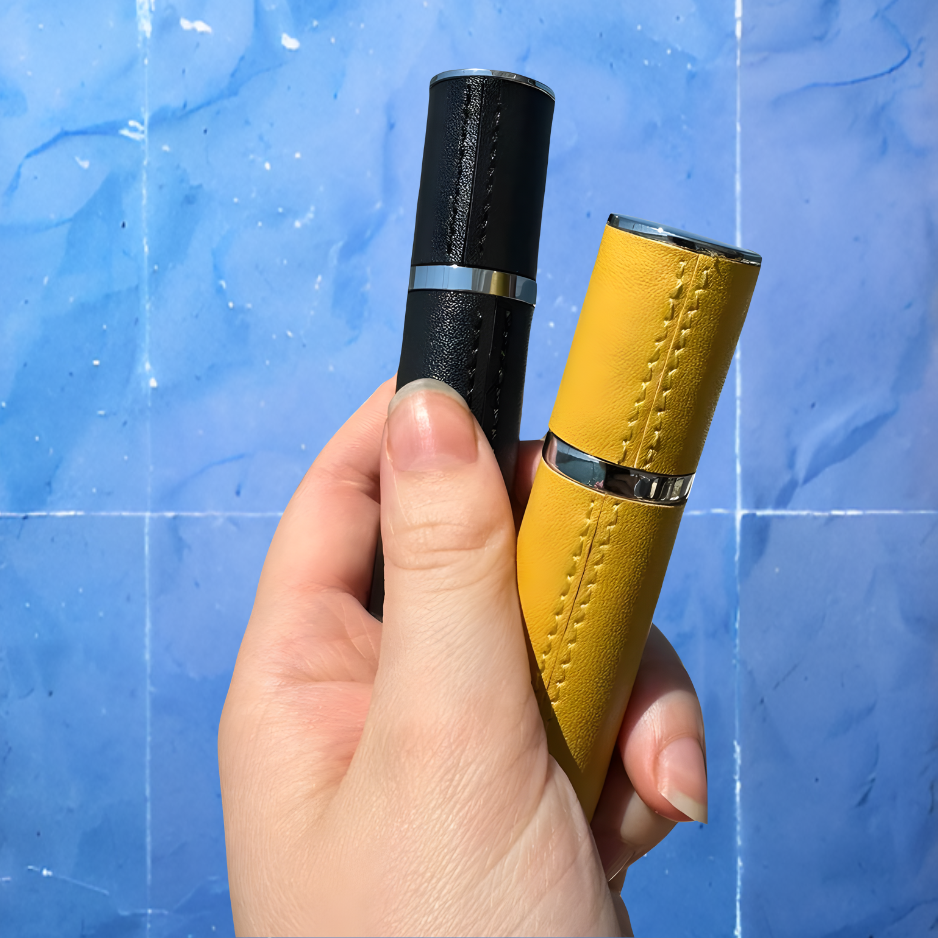
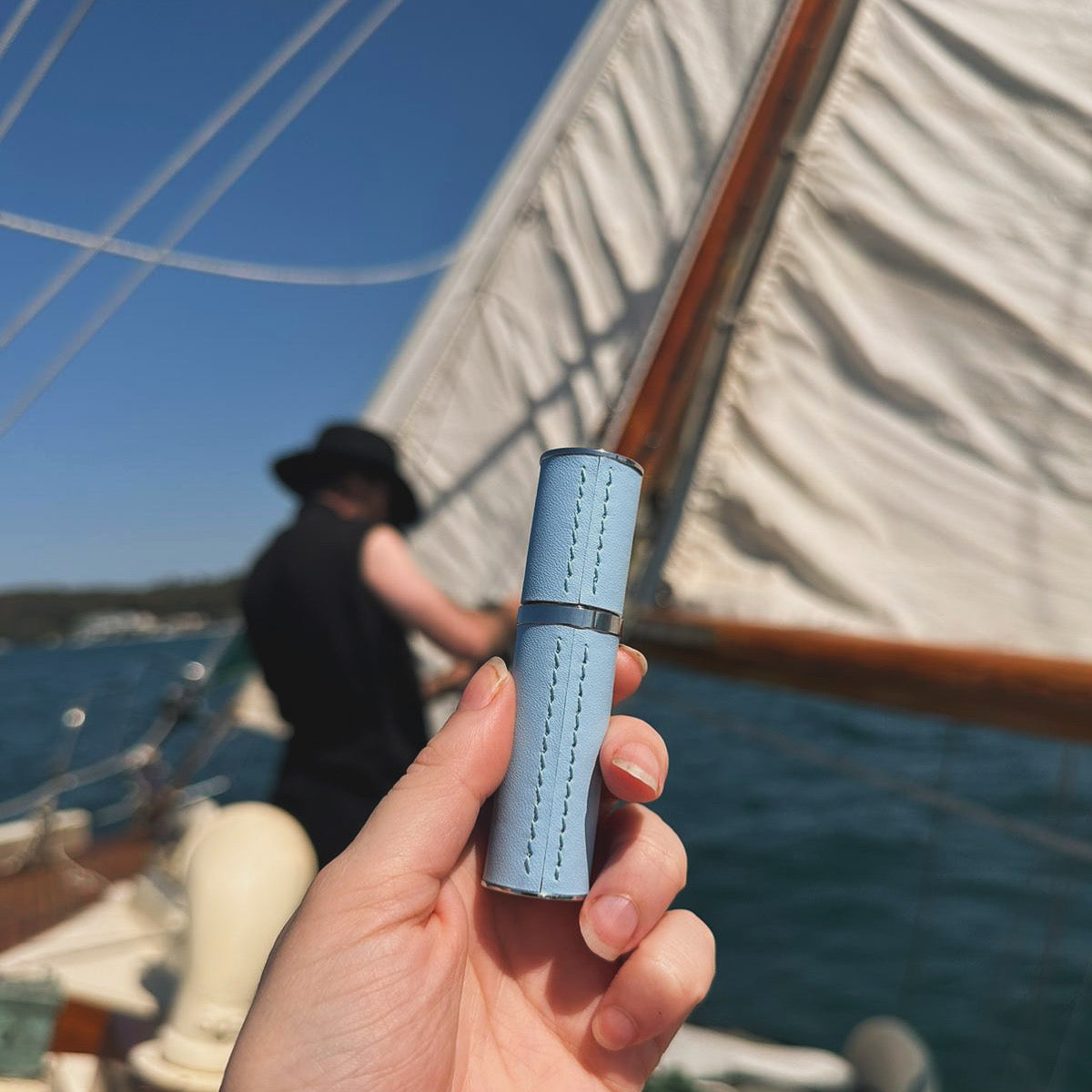
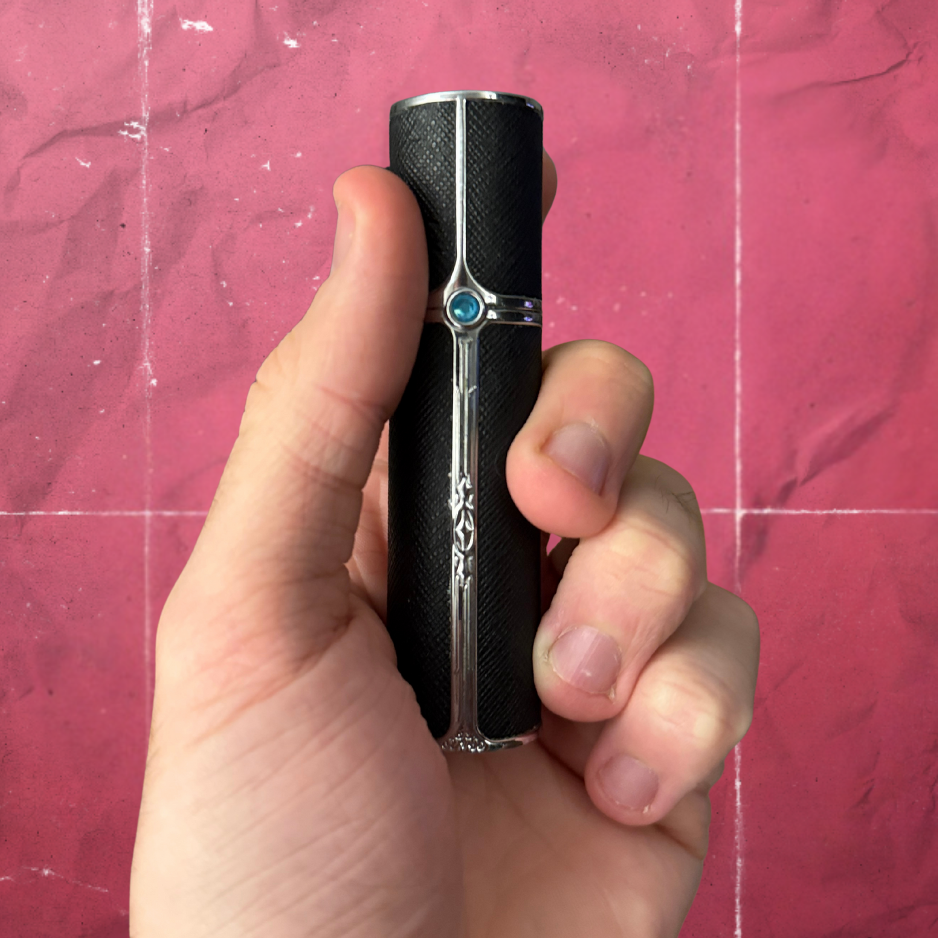
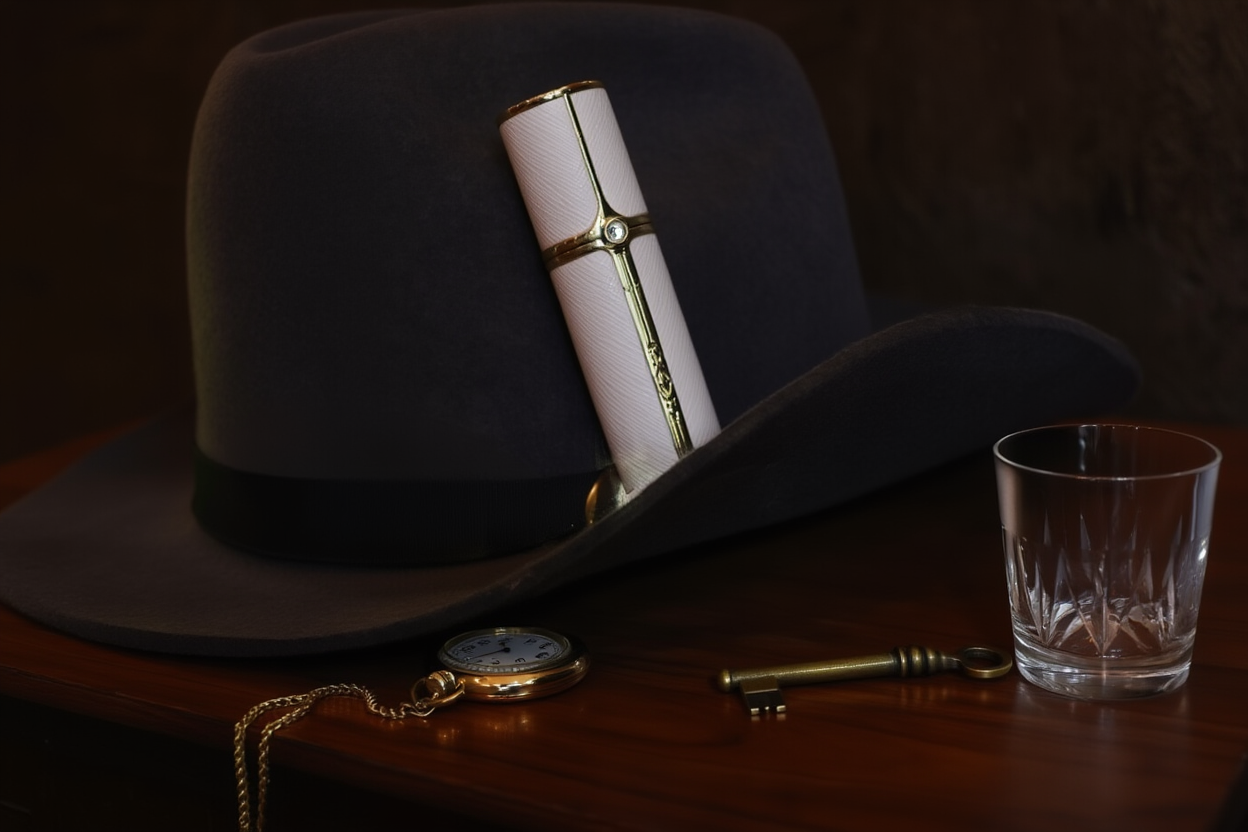
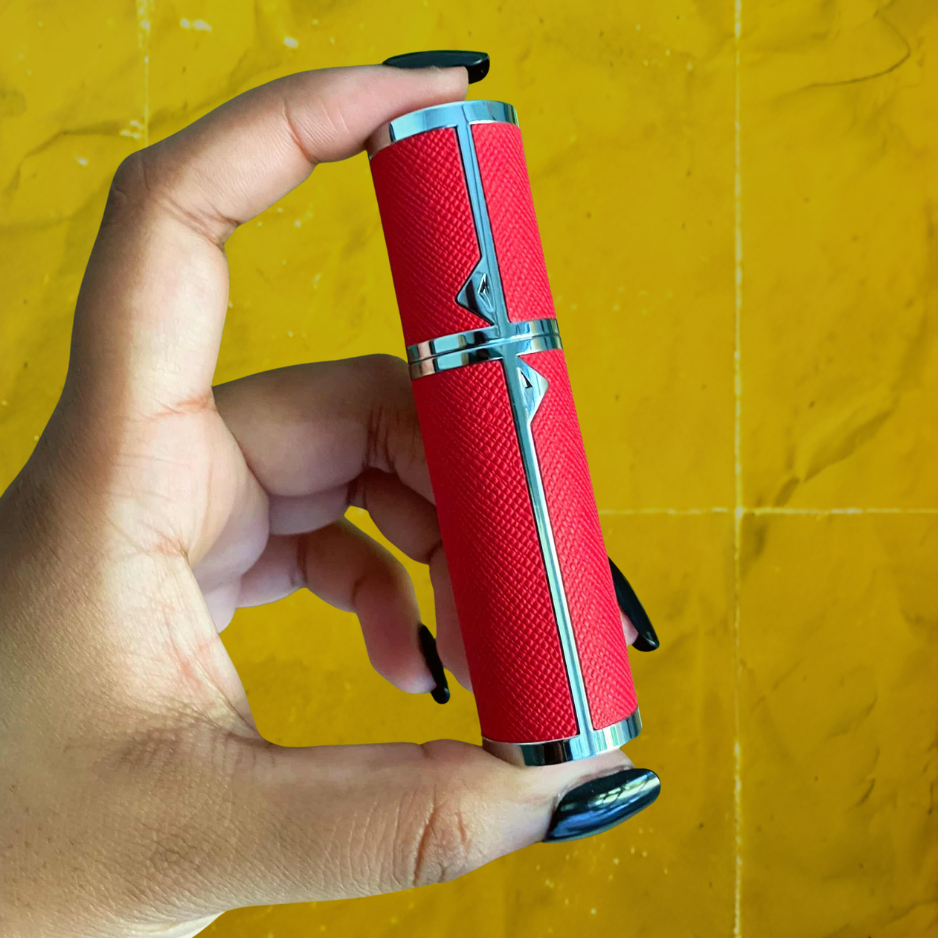
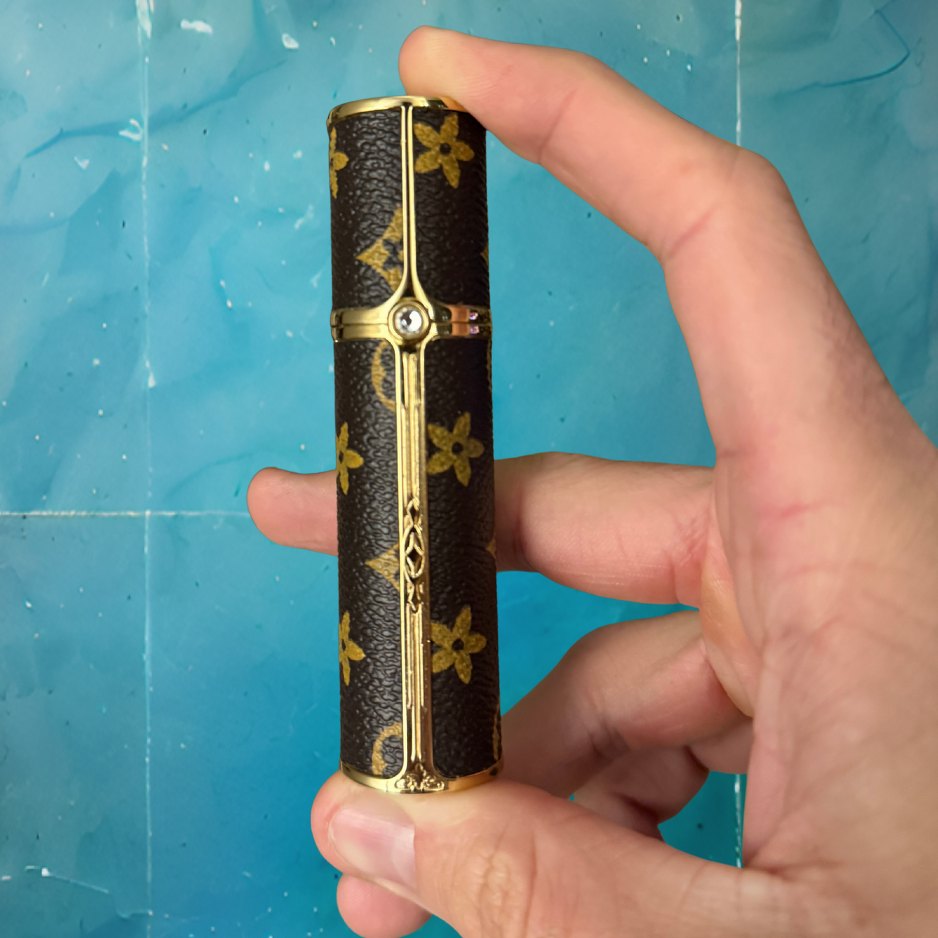
If the syringe and funnel methods above sound like more precision than you want to deal with every time you switch bottles, the Brando atomizer was built to skip that step entirely. It fills from any standard perfume bottle through a secure valve design, seats with a cap that locks down fully, and holds enough fragrance to outlast a weekend trip without the glass bulk of a full bottle in your bag.

The design is backed by a high average customer rating, reflecting its reliable performance on inversion and priming checks right out of the box. If you want a travel-ready atomizer built for sample-sized refills or you’re comparing options against other refillable travel spray bottles, start on the Brando product page and check current stock before your next trip.
Sources
The headspace, pump, and pressure guidance in this piece draws on a few practical sources worth reading directly if you want more detail:
- How to Refill a Perfume Bottle Without Spilling (3 Pro Methods)
- How to Refill a Perfume Atomizer Without Leaks or Waste | MUB Perfume Bottles
- Business Insider article on retailer perfume/refill policies
FAQ
How Do You Refill a Perfume Bottle That Doesn’t Open?
If the collar is crimped and won’t lift, don’t force it. Use a thin syringe to draw fragrance out through the existing nozzle opening, then transfer it into a refillable atomizer instead of trying to remove the crimp.
Can I Refill My Perfume Bottles at Sephora?
Generally, no. Large retailers commonly avoid in-store refills of customer-owned bottles for hygiene and liability reasons, which is exactly why a portable refillable atomizer is the more practical option for most people.
Can I Refill My Perfume Bottle at Macy’s?
Macy’s fragrance counters typically don’t offer refill services for bottles customers bring in from home, for the same hygiene and liability reasons that apply across most department store retailers. Refilling at home with an atomizer remains the more reliable route.
What’s the Biggest Mistake People Make When Refilling Perfume?
Filling a bottle completely to the rim with no headspace is the most common cause of leaks. That extra 10 to 15% of empty space protects the seal once the liquid warms and expands.




Share and get 15% off!
Simply share this product on one of the following social networks and you will unlock 15% off!