
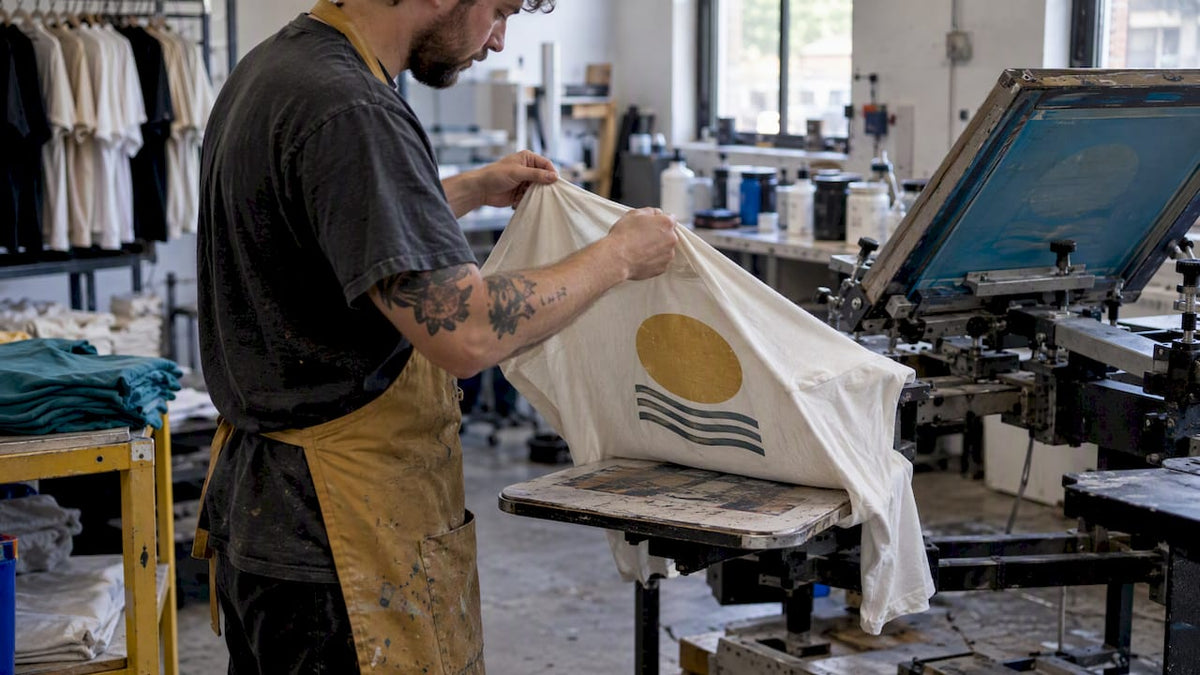
Combed is a fiber-preparation step that strips away short fibers before spinning, while ring-spun describes how fiber becomes yarn through twisting and drafting. Together, “combed ring-spun” cotton usually signals a smoother, softer fabric face that holds up to washing and prints cleanly, which is exactly what you want to look for on a hangtag if softness and longevity matter to you.
TL;DR:
- Combing removes short fibers and neps before spinning, while ring spinning twists yarn; either feature can appear without the other, so check for both terms.
- Carded or rotor spun cotton can suit budget purchases, canvas totes, and rugged work shirts, where a coarser feel matters less.
- Compare GSM and yarn count even when two shirts both say combed ring spun; higher yarn counts usually indicate finer, smoother yarn.
- Cotton’s combing and spinning methods do not create stretch; a garment’s knit structure or added spandex or elastane determines its elasticity.
- Wash printed cotton in cool or warm water, use mild detergent, turn garments inside out, and air dry or tumble dry on low heat.
Table of Contents
- What do “combed” and “ring-spun” actually mean?
- How combing and ring spinning actually happen on the production floor
- How these differences show up in softness, durability, and print quality
- Choosing the right cotton for your next garment
- Washing and drying habits that protect softness over time
- Why fabric construction deserves more attention than the label alone
- FAQ
- Sources
What do “combed” and “ring-spun” actually mean?
These two words describe completely different stages of making fabric, and mixing them up is the single biggest source of confusion when shopping for cotton apparel.
Combing is a mechanical process applied to raw cotton fiber before it ever becomes yarn. A comber removes short fibers, neps, and bits of plant trash, leaving behind longer, more uniform fibers that spin into a smoother strand, according to Cotton Incorporated’s technical documentation. Ring spinning, on the other hand, is a method of twisting fiber into finished yarn using a traveler that rides around a rotating ring, pulling and twisting the strand as it winds onto a bobbin.
A few quick contrasts help clarify where each term fits:
- Combed vs carded: carding is the basic cleaning and aligning step every cotton fiber goes through, while combing is an extra pass that removes more short fiber for a cleaner result.
- Ring-spun vs open-end (rotor): ring spinning twists fiber gradually through a traveler mechanism, while open-end spinning feeds fiber into a rotor that forms yarn faster but with a coarser structure.
- Combed and ring-spun are not substitutes: a yarn can be carded and ring-spun, combed and open-end, or combed and ring-spun, each with a different hand and price point.
How combing and ring spinning actually happen on the production floor
The differences you feel in a finished shirt trace back to specific mechanical steps, not marketing language.
- Carding: raw cotton is cleaned and aligned into a loose rope called a sliver, removing the bulk of trash and short fiber.
- Combing (optional): the sliver passes through a comber that pulls out additional short fibers and neps, removing a variable share of the fiber as noil, depending on the quality level targeted, per practitioner notes on textile yarns. Higher noil removal means a cleaner, pricier yarn.
- Drawing and roving: the sliver (combed or carded) is drawn out and lightly twisted into roving, a thinner, more manageable strand ready for spinning.
- Ring spinning: roving feeds through drafting rollers that thin it further, then a traveler circles a stationary ring to insert twist as the yarn winds onto a bobbin, producing a strong, relatively fine yarn.
- Compact spinning (optional): some ring-spinning setups add a compacting zone that condenses fibers just before twist insertion, cutting down on stray fiber ends and boosting strength even more.
Open-end, or rotor, spinning skips the traveler entirely. Fiber is fed into a spinning rotor that twists it directly, which runs faster and costs less but produces a bulkier, less uniform yarn. Air-jet spinning is faster still and suits certain blended fabrics, but it trades away some of the softness and strength that ring spinning delivers. Each method is a real trade-off between production speed, cost, and the hand of the finished fabric.
How these differences show up in softness, durability, and print quality
Once yarn reaches the knitting or weaving stage, the production choices made earlier become the properties you actually feel and see.
Combed yarns produce a smoother surface with fewer protruding fiber ends, which translates into less lint shedding, more even dyeing, and noticeably reduced pilling over time, a point Cotton Incorporated’s softness guidance backs up directly. Ring-spun yarns tend to deliver a softer hand along with higher tensile strength, which is part of why ring spinning is generally considered the spinning method most responsible for a soft, durable fabric.
- Combed yarn: smoother face, less lint, better evenness, lower pilling tendency.
- Ring-spun yarn: softer hand, higher strength, capable of finer yarn counts than open-end alternatives.
- Combed ring-spun yarn: combines both effects for a smooth, strong, soft result that holds its shape through repeated washing.
A 2022 study comparing fabrics made from ring-spun and rotor-spun yarns found that ring-spun fabrics generally showed higher bursting strength and better abrasion resistance, while rotor-spun fabrics showed higher air permeability and different thermal insulation values, according to experimental research on knitted fabric structures. That gives you a concrete reason ring-spun fabric tends to outlast rotor-spun fabric in everyday wear, even when both start from the same cotton.
Printability follows the same logic. A flat, smooth yarn surface, the kind combing and ring spinning produce together, gives ink less fiber texture to fight against, so screen printing and direct-to-garment printing both lay down cleaner, sharper detail on combed ring-spun fabric than on carded or open-end alternatives.

Choosing the right cotton for your next garment
Matching the fabric to the job matters more than chasing a label for its own sake.
For soft everyday t-shirts and garments meant for screen printing or DTG work, combed ring-spun cotton is the safer pick almost every time: it gives you the smooth face printers want and the hand feel shoppers notice immediately, which aligns with insights on modal vs. cotton fabrics. When budget is tight or you’re building something heavier like a canvas tote or a rugged work shirt, carded or open-end yarn can be perfectly acceptable since the slightly coarser texture matters less in that context.
Before buying, check for:
- GSM (grams per square meter): heavier isn’t automatically better, but it tells you how substantial the fabric will feel, a topic covered in more depth in our guide to what GSM means in clothing.
- Yarn count (Ne): a higher number usually means a finer, smoother yarn, which pairs well with combed ring-spun construction.
- Explicit “combed ring-spun” phrasing: vague terms like “100% cotton” alone tell you nothing about preparation or spinning method.
- Staple length claims: longer staple fibers, often labeled “long-staple” or by variety name, combine with combing to produce an even smoother result.
Pro Tip: Don’t stop at the word “combed” or “ring-spun” on a tag. Check the GSM and yarn count together, since two shirts can both say “combed ring-spun” and still feel completely different depending on those numbers, as explored further in our breakdown of GSM in fabric.
Washing and drying habits that protect softness over time
Even the best combed ring-spun fabric loses its advantage if it’s washed carelessly.
- Wash in cool or warm water, not hot, since high heat accelerates fiber breakdown and encourages the short fibers that remain in any yarn to work loose and pill.
- Use a mild liquid detergent and skip fabric softener on printed garments, since softener residue can dull ink and reduce breathability over repeated washes.
- Dry on low heat or air dry instead of high-heat tumble drying, which shrinks cotton fibers and distorts knit structure faster than almost anything else you can do to a shirt.
- Turn printed garments inside out before washing to reduce surface friction against the print and other fabrics in the load.
Consistent, gentle care compounds over time: a combed ring-spun tee washed properly can still feel smoother and show less pilling than an identical shirt put through hot washes and high-heat drying.
Why fabric construction deserves more attention than the label alone
Most people judge a shirt by how it feels off the rack, but the real test comes after repeated washes, and that’s where combing and spinning method actually separate good fabric from forgettable fabric. We think the industry leans too hard on buzzwords like “premium cotton” without explaining what’s structurally different, which leaves shoppers guessing. If you want a deeper, retailer-focused look at how fabric weight and construction affect quality, our articles on GSM in clothing and choosing blank t-shirts go further into the specifics.
— Ash
FAQ
Is combed cotton better than 100% cotton?
This compares two different things: “100% cotton” describes fiber content, while “combed” describes how that cotton was processed before spinning.
Is combed cotton stretchy?
Combed cotton itself isn’t inherently stretchy since the combing process only removes short fibers and improves smoothness, it doesn’t add elasticity. Stretch in a finished garment comes from the knit structure or from blending in spandex or elastane, not from the combing step.
What is combed and ring-spun cotton?
Combed and ring-spun cotton refers to cotton that has gone through both a combing step, which removes short fibers for a smoother strand, and ring spinning, a twisting method that produces finer, stronger yarn, according to technical yarn documentation. Together, these two steps typically produce the softest, most durable cotton fabric available for knit garments.
Does ring-spun cotton stretch?
Ring-spun cotton doesn’t stretch any more than other spun cotton yarns on its own, since spinning method affects strength and smoothness rather than elasticity. Any stretch you notice in a ring-spun cotton garment comes from the fabric’s knit construction or from an added stretch fiber blended into the yarn.
Sources
- COTTON SPUN YARNS FOR
- Experimental analysis on the effect of ring and rotor spun yarns for comfort characteristics of weft knitted fabric structures - Mekdes Gedilu, Sakthivel Santhanam, Meseret Bogale, Senthil Kumar Selvaraj, 2022
- Textile Yarns






साझा करें और 15% छूट पाएं!
बस इस उत्पाद को निम्नलिखित सामाजिक नेटवर्क में से किसी एक पर साझा करें और आपको 15% की छूट मिलेगी!