
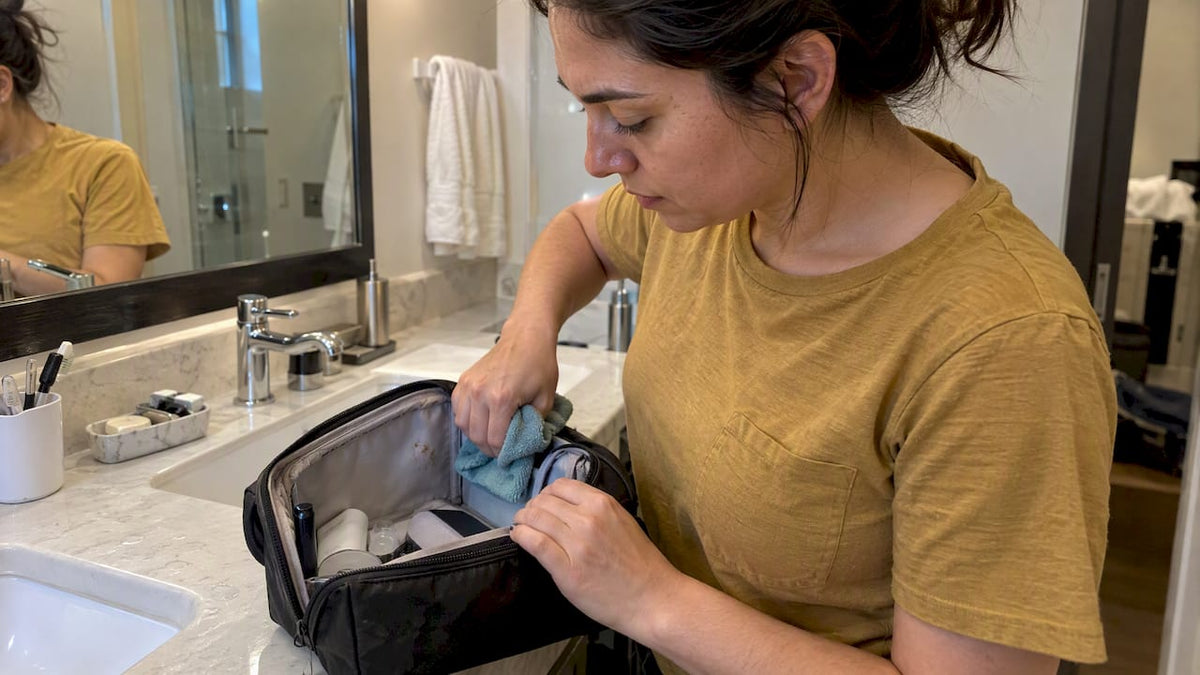
Most toiletry bags can be cleaned in about ten minutes of active work: empty it, wipe or hand wash it with mild soap and warm water, then dry it open and upside down away from direct sun. Only some fabric bags tolerate a washing machine, and leather, insulated and plastic-lined bags each need their own method. Below you will find the method for each material, the mistakes that ruin bags, and a simple routine that keeps one fresh between trips.
TL;DR
- Empty the bag completely, shake out debris, and spot clean with a damp microfiber cloth and a drop of mild soap for routine upkeep.
- Nylon and polyester: hand wash in warm soapy water, inside out, and line dry. Machine washing is a fallback, on a gentle cycle, zipped closed, inside a mesh bag.
- Leather: wipe only. Do not soak it or put it in a washer.
- Never dry a bag in direct sunlight or store it damp, in a car trunk or anywhere dark and warm. That is how mold starts.
- Clean it right away after any spill, and prevent most spills by keeping liquids in leak-proof containers.
Table of Contents
- Why a toiletry bag gets dirty faster than you think
- What you need before you start
- Step 1: Empty it and check what is inside
- Step 2: Spot clean for routine upkeep
- Step 3: Wash it by material
- Cleaning versus disinfecting
- Drying: the step that prevents mold
- How to store a clean toiletry bag
- Perspective: prevent the mess instead of cleaning it
- Build a routine that takes two minutes
- A cleaner way to carry fragrance
- FAQ
- Sources
Why a toiletry bag gets dirty faster than you think
A toiletry bag lives a hard life. It sits on bathroom counters, hotel sinks and airplane floors, and it holds products that leak, smear and drip: toothpaste, lotion, shampoo, deodorant, perfume. Add the damp toothbrush and the razor you packed before it was fully dry, and the interior becomes a warm, humid pocket.
The real risk is cross-contamination: whatever leaks inside the bag spreads onto everything else in it. The American Cleaning Institute says reusable bags need proper care to keep germs and mold from growing, and that bags should always be cleaned after contact with spills. Its guidance is written for reusable shopping bags, but the same logic applies to anything fabric that carries messy items.
How often should you clean yours? There is no fixed schedule. A practical rule: wipe the interior after every trip, do a full wash every few trips or whenever something leaks, and clean immediately after a spill.

What you need before you start
You do not need special products. Gather:
- Mild liquid soap or dish soap (no bleach, no solvents)
- A microfiber cloth and a soft brush or old toothbrush for seams
- A basin or sink with warm water
- A clean terry-cloth towel for drying
- A mesh laundry bag or pillowcase, only if you plan to machine wash
- Cotton swabs for corners and zipper tracks
Check the care label first. If there is none, treat the bag as hand-wash only. It is the gentler default.
Step 1: Empty it and check what is inside
- Take out every item, including the small pockets and the zip pouch you forgot about.
- Turn the bag upside down over a trash can and shake out crumbs, powder and lint.
- Look for leaked product, sticky patches, color changes and any musty smell. A musty smell means damp storage, so plan a full wash.
- Wash your containers too. Wipe the outside of every bottle, since residue on a cap is often what leaked into the bag in the first place.
If you are cleaning because of a leak, find out which container failed and swap it for a better one before you pack again. Our guide to stopping toiletry leaks with six packing steps walks through it.
Step 2: Spot clean for routine upkeep
For most bags, most of the time, spot cleaning is enough. Gravel’s care guide points out that avoiding the washing machine is easier on zippers, and a damp microfiber cloth with a drop of mild soap handles everyday upkeep.
Here is how to do it well:
- Dampen the cloth with warm water and add a drop of soap.
- Wipe the inside first, working into the seams and corners where residue collects.
- Use a soft brush or cotton swab on stubborn spots and zipper teeth.
- Go over the surface again with a cloth dampened with plain water to lift soap.
- Dry as described in the drying section below.
Spot cleaning also protects the coating on the fabric. Repeated machine cycles wear on seams and water-resistant finishes, so reserve a full wash for when the bag needs it.
Step 3: Wash it by material
The material decides the method. This table is the quick version.
| Material | Best method | Machine washable? | Avoid |
|---|---|---|---|
| Nylon or polyester | Hand wash in warm soapy water, turn inside out, line dry | Sometimes, gentle cycle with care | Direct sun, high heat |
| Woven polypropylene | Machine wash gentle, cold water | Yes, per ACI | Hot water |
| Leather | Wipe with a barely damp cloth, then dry | No | Soaking, washers, harsh cleaners |
| Plastic, PVC or vinyl lining | Mild dish soap and water | No need | Solvents, abrasive pads |
| Insulated | Disinfecting wipe on seams, then air dry | No | Storing damp |
Nylon and polyester
This covers most travel toiletry bags and hanging kits. The ACI recommends hand washing nylon or polyester bags in warm soapy water, turned inside out, then line drying. Woven polypropylene bags are the ones it says are safe for a gentle machine cycle in cold water.
To hand wash:
- Fill a basin with warm water and a small amount of mild soap.
- Turn the bag inside out and submerge it. Soak for about five minutes.
- Scrub soiled spots with a soft sponge or brush.
- Rinse until no suds remain. Leftover soap attracts dirt.
- Press out water with a towel. Do not wring or twist the bag, because that stresses seams and any lining.
If you searched for how to wash a nylon sling bag, the method is the same. Remove straps or detachable parts if you can, empty every pocket, and hand wash. Nylon dries quickly and resists mildew better than most fabrics, which is why hand washing works so well.
Machine washing, when you must
If a bag is heavily soiled and the label allows it, use these precautions from Better Homes & Gardens:
- Zip every zipper and close all fasteners fully to protect the drum and the bag itself.
- Put the bag in a mesh laundry bag, or a pillowcase secured with a knot or rubber band, so straps and hardware do not snag.
- Use a gentle cycle with cold water for polypropylene, and treat nylon more cautiously by skipping heat altogether.
- Add a small amount of mild detergent and skip fabric softener.
- Never put it in the dryer.
You can add a couple of towels to balance the load. Some bags with rigid frames, foam padding or metal hardware should never go in at all.
Leather
The leather vs nylon question comes down to maintenance. Nylon and polyester tolerate water, which makes them forgiving. Leather does not, so the rule is to keep it dry and wipe only:
- Dust the exterior with a dry soft cloth.
- Wipe with a cloth that is barely damp, with at most a trace of mild soap.
- Dry it at room temperature, away from radiators and sun.
- Apply a leather conditioner on the exterior now and then, following the product’s directions.
Most leather kits are lined with fabric or a coated lining. Treat the lining by its own material, and never soak the whole bag to reach it. If you travel often with liquids, a leather exterior with a wipeable lining can be a reasonable choice, but a fabric or coated bag is simpler to keep clean. Our comparison of a dopp kit and a standard toiletry bag covers the tradeoffs.
Plastic, PVC and vinyl linings
Many travel organizers have a clear or coated lining. Use mild dish soap and water here. An extension publication from the University of Nebraska is among the sources that advise against harsh, abrasive or solvent-based cleaners on synthetic materials, since these can leave hazing or streaking and make the material brittle. Skip alcohol-heavy sprays and scouring pads.

Insulated bags
If your bag is insulated and carries liquids or anything perishable, treat the seams as the problem area. The University of New Hampshire Extension advises cleaning these after use and letting them dry fully before storage. A sanitizing wipe along the interior seams, then air drying in a cool, ventilated spot, is the routine to follow.
Cleaning versus disinfecting
Soap and water remove dirt and most germs. The CDC says cleaning with water, soap and scrubbing removes most germs, dirt and impurities from surfaces, and that disinfecting is a separate step.
For a toiletry bag, soap and water is usually all you need. If you decide to disinfect, for example after a leak of something you cannot identify or after illness in the household:
- Clean first. Dirt can make disinfectants less effective.
- Choose an EPA-registered product labeled for soft surfaces and check that it suits your bag’s material.
- Follow the contact time on the label. The surface must stay wet for the whole listed time, so do not wipe it off early.
- Rinse or wipe as the label directs, since residue stays in a bag that holds skin products.
Note that some web advice suggests soaking bags in bleach solutions. Bleach can discolor and weaken fabric and damage coatings, and your label may forbid it. If you have a health concern, such as a skin condition or a compromised immune system, ask your doctor or pharmacist what level of disinfection is appropriate for items that touch your skin products.
Drying: the step that prevents mold
Drying matters more than washing. A bag put away damp can go musty within days.
From Better Homes & Gardens:
- Keep it out of direct sunlight, which can fade color and age synthetic fabrics such as nylon.
- Roll a clean, dry terry towel and place it in the main compartment or pockets to soak up trapped moisture. Swap it if it gets saturated.
- Hang or prop the bag upside down so water does not pool in the bottom seams.
- Leave every zipper open until it is bone dry.
It can take several hours, so wash it the day before you pack, not the morning of your flight.
What if you find mold or mildew?
A musty smell or spotting means moisture got trapped. The Smithsonian’s Museum Conservation Institute advises removing affected textiles from the damaging environment and spreading them on clean, absorbent, dry surfaces. In practice, move the bag out of the closet and away from other fabrics, let it dry fully, then brush off dry residue outdoors and wash by its material. If mold keeps returning or covers large areas, replacing the bag is safer than repeated washing, especially for anyone with asthma or mold allergies.
How to store a clean toiletry bag
Storage decides whether your effort lasts.
- Keep the bag in a cool, dry place at home. The ACI and the UNH Extension both warn that warm, dark places like a car trunk encourage bacteria and mold on bags.
- Store it open or with the zipper slightly ajar for airflow.
- Do not use the same bag for toiletries and other items such as snacks or laundry. The ACI recommends designating separate bags for different purposes, and the UNH fact sheet says the same. If you are putting together a travel snack bag for a trip, keep it fully separate from your toiletry kit.
- Keep a pouch or liner inside for products most likely to leak, so a spill is a one-minute wipe rather than a full wash.
Perspective: prevent the mess instead of cleaning it
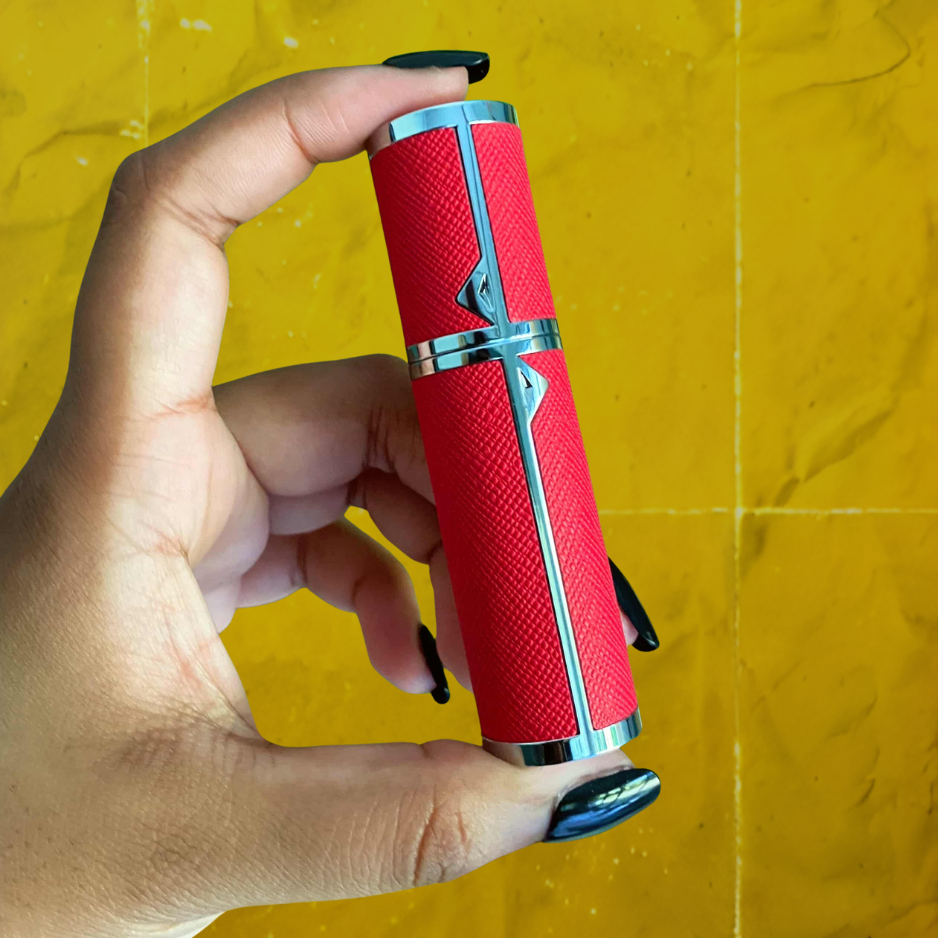
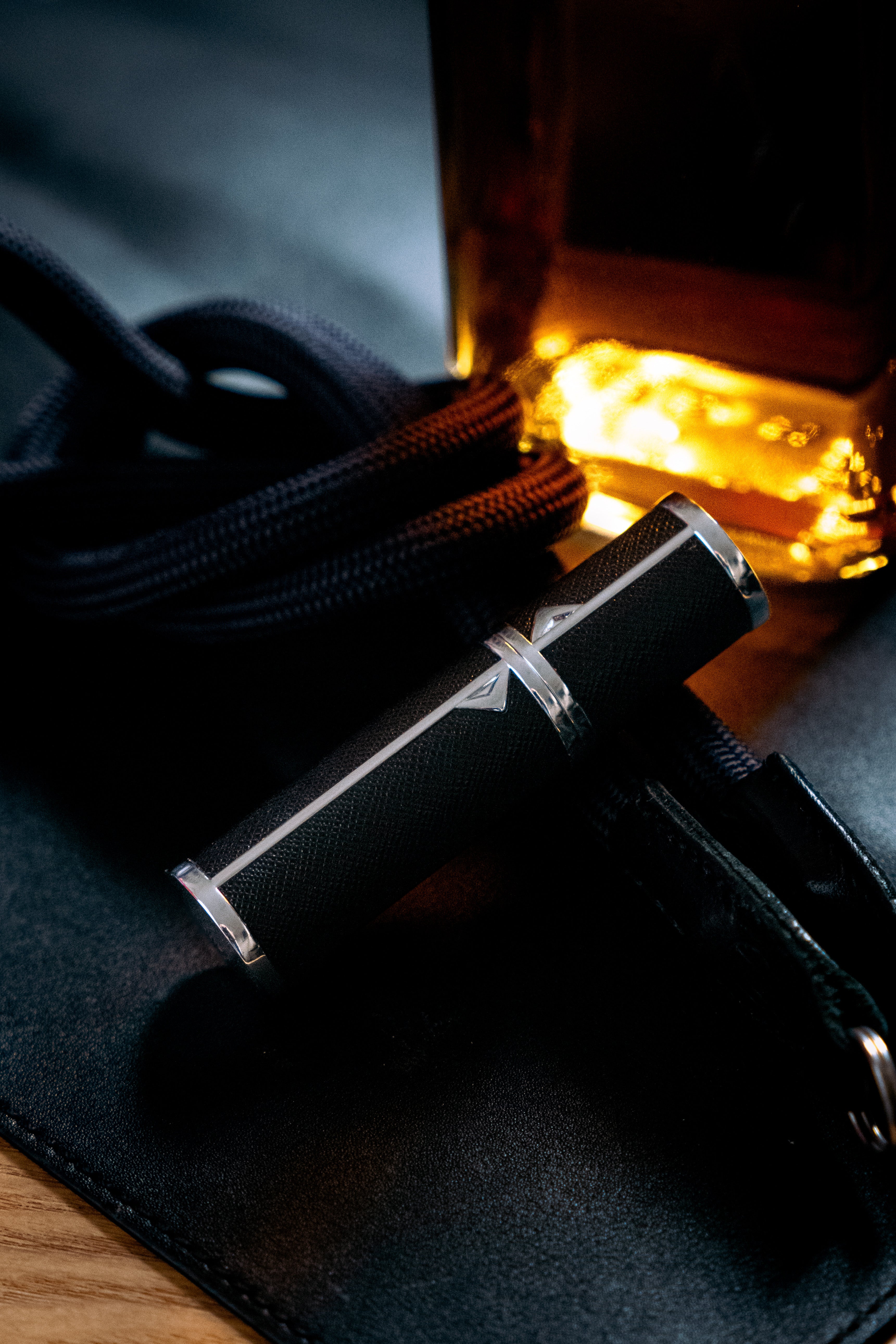
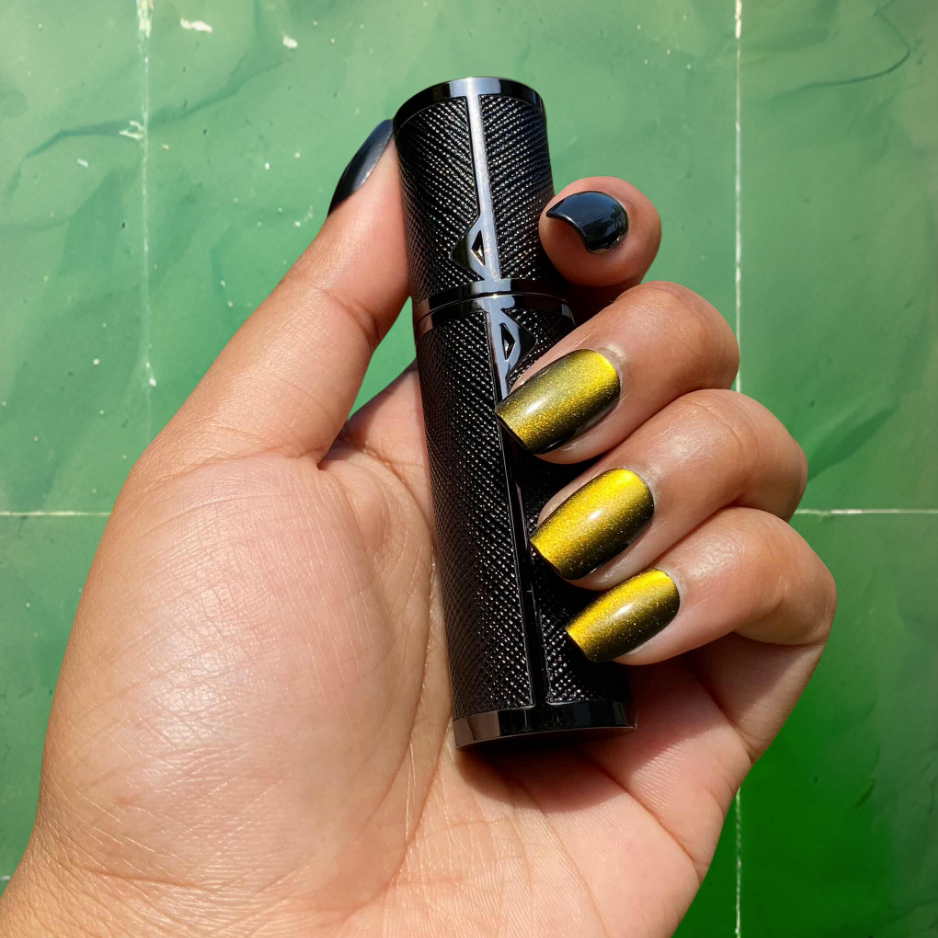
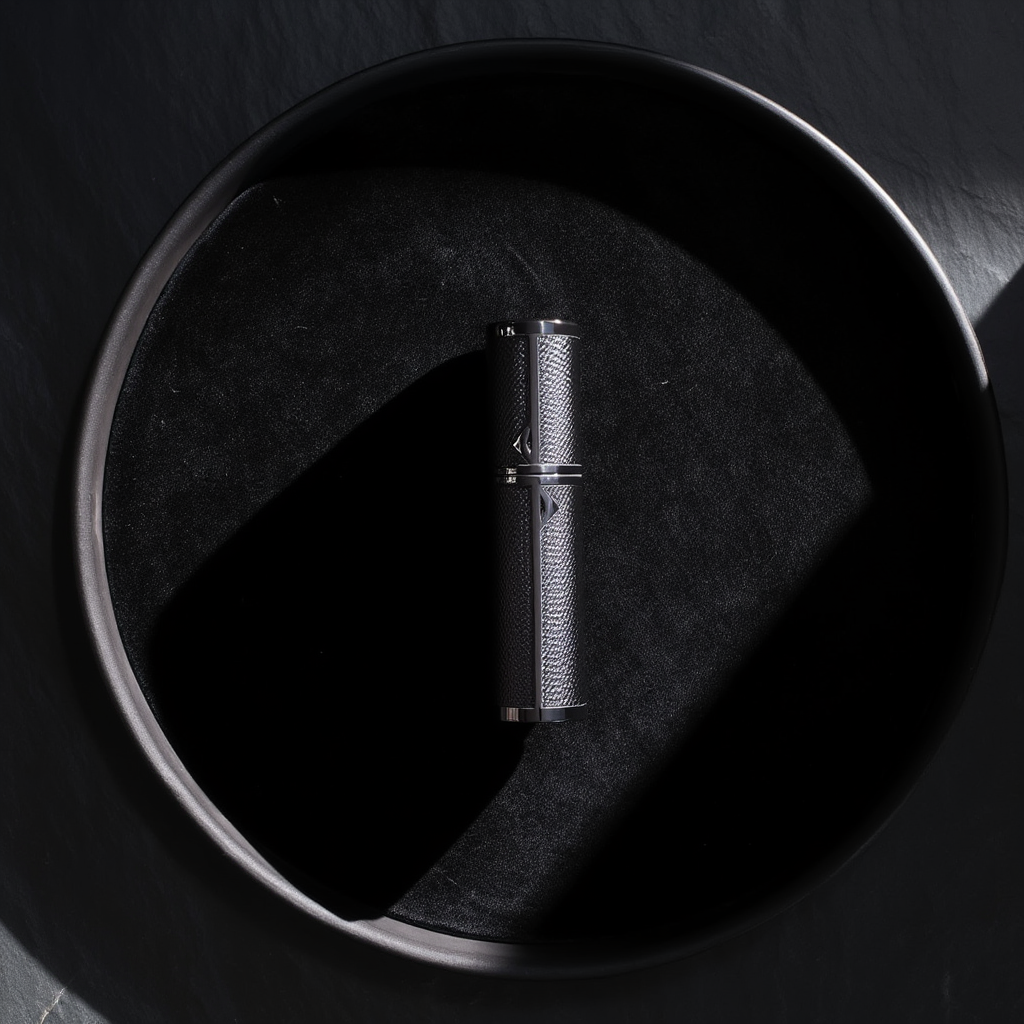
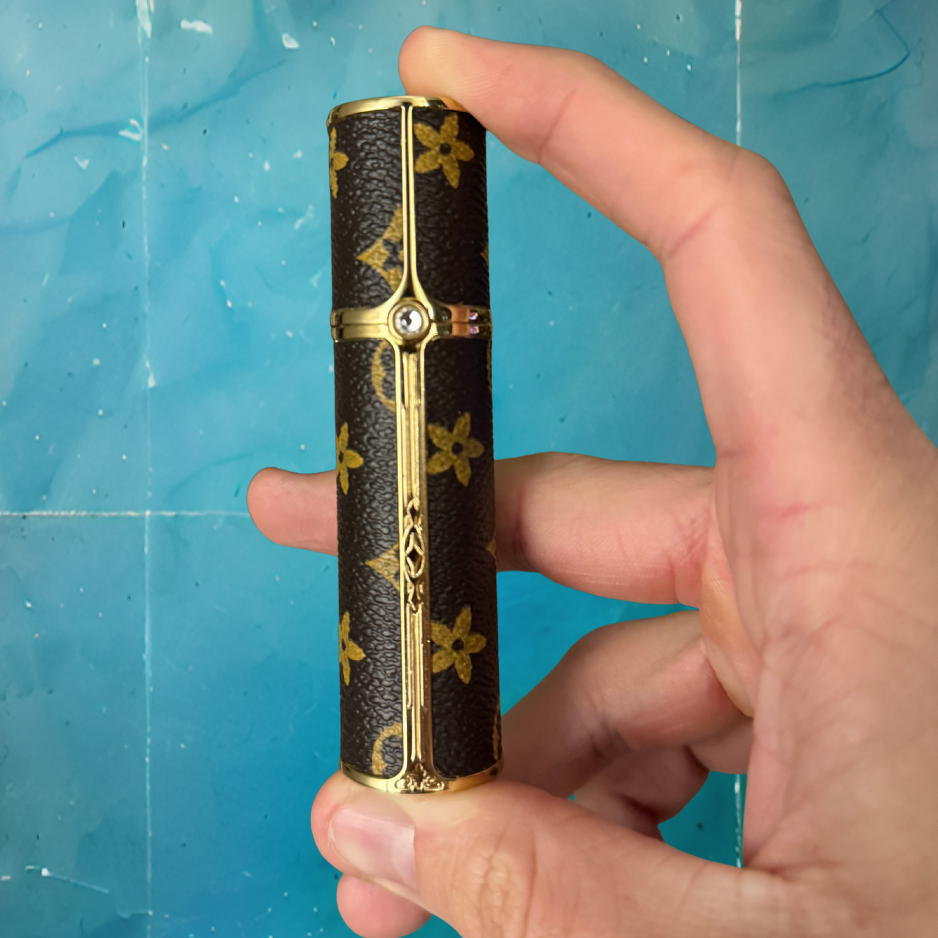
We sell refillable perfume atomizers, so we see the same story again and again. A full-size perfume bottle is bulky, breakable and the most likely thing in a bag to leak or stain it. Most of the toiletry bags that arrive in the “nasty” state are not dirty because of travel. They are dirty because something inside broke open or leaked.
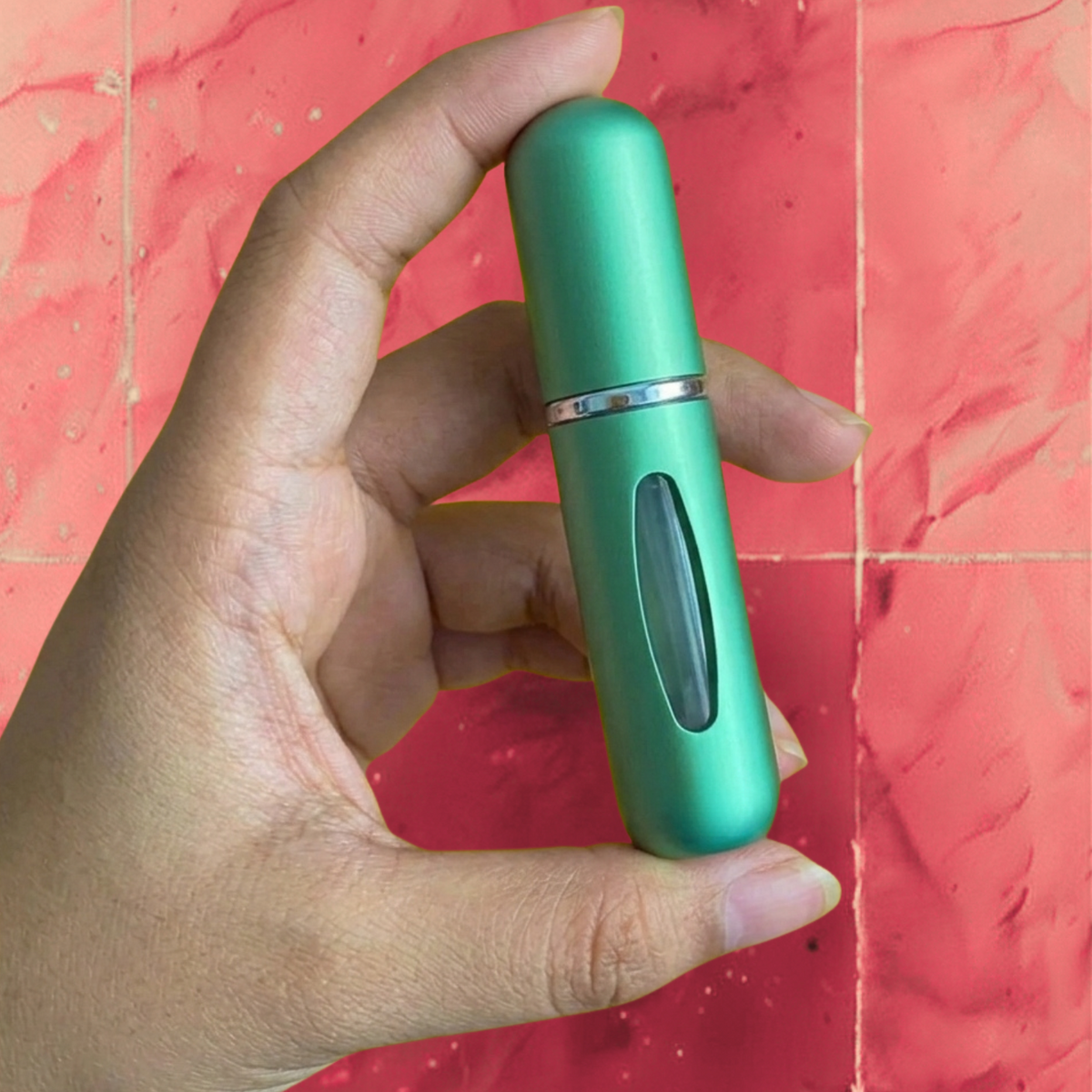
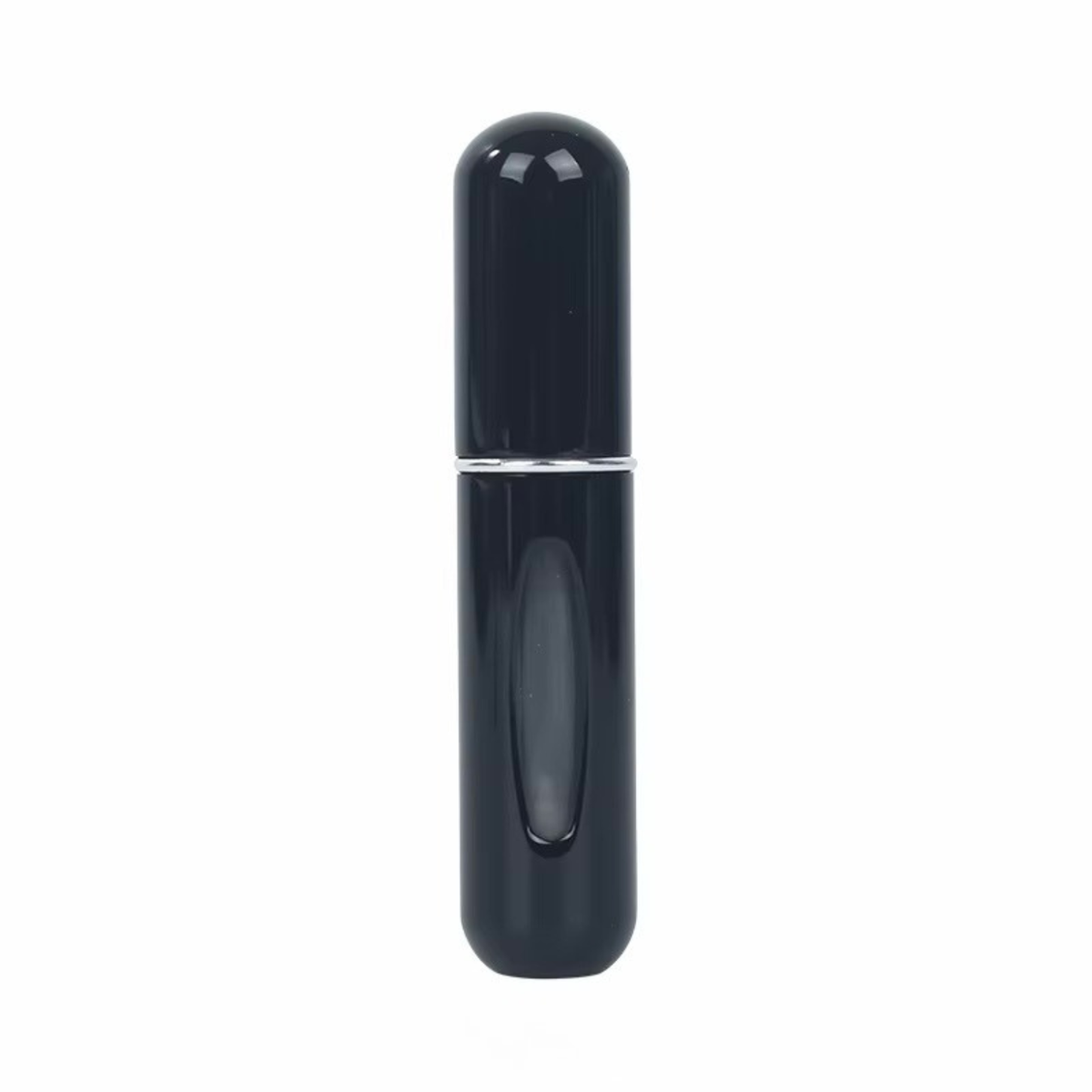
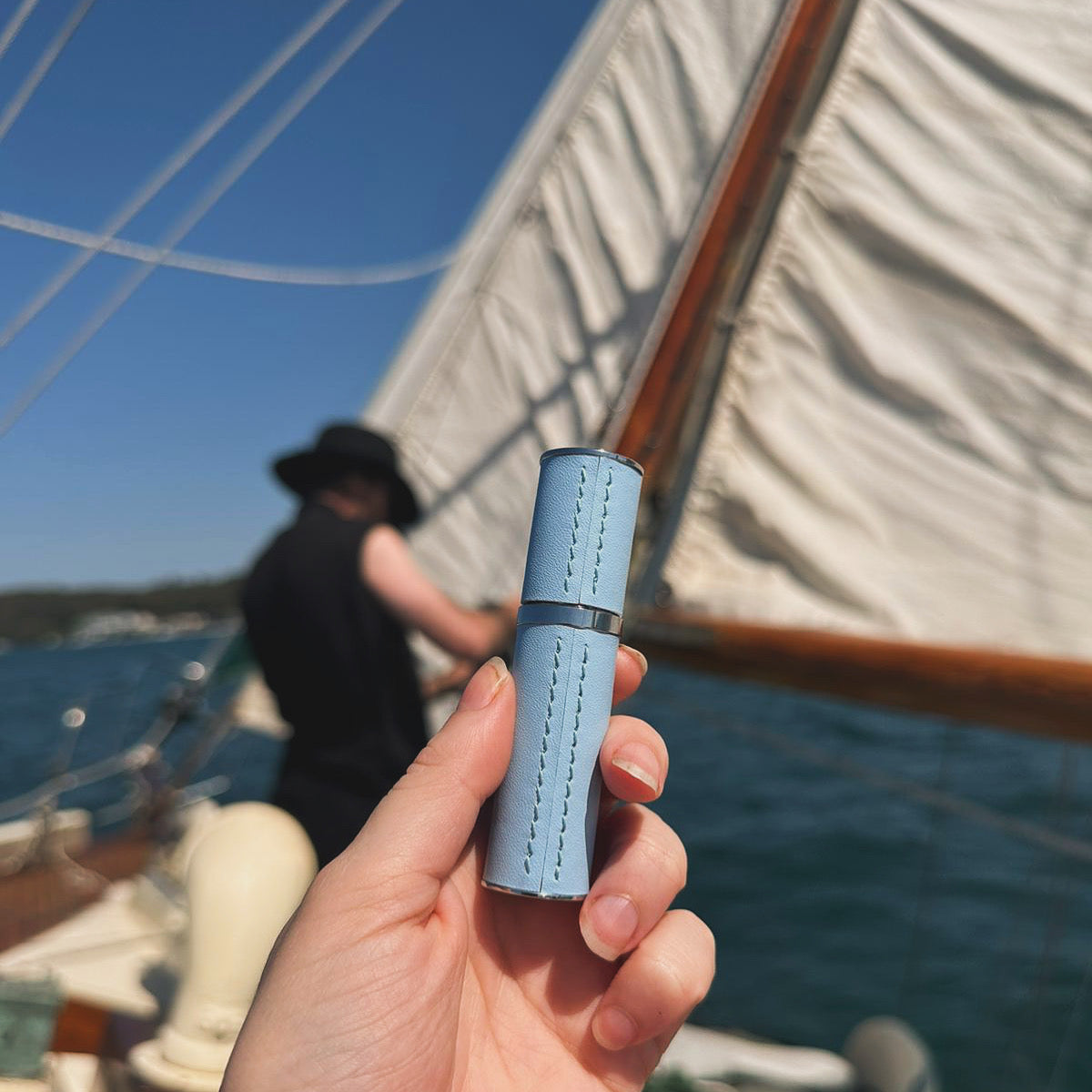
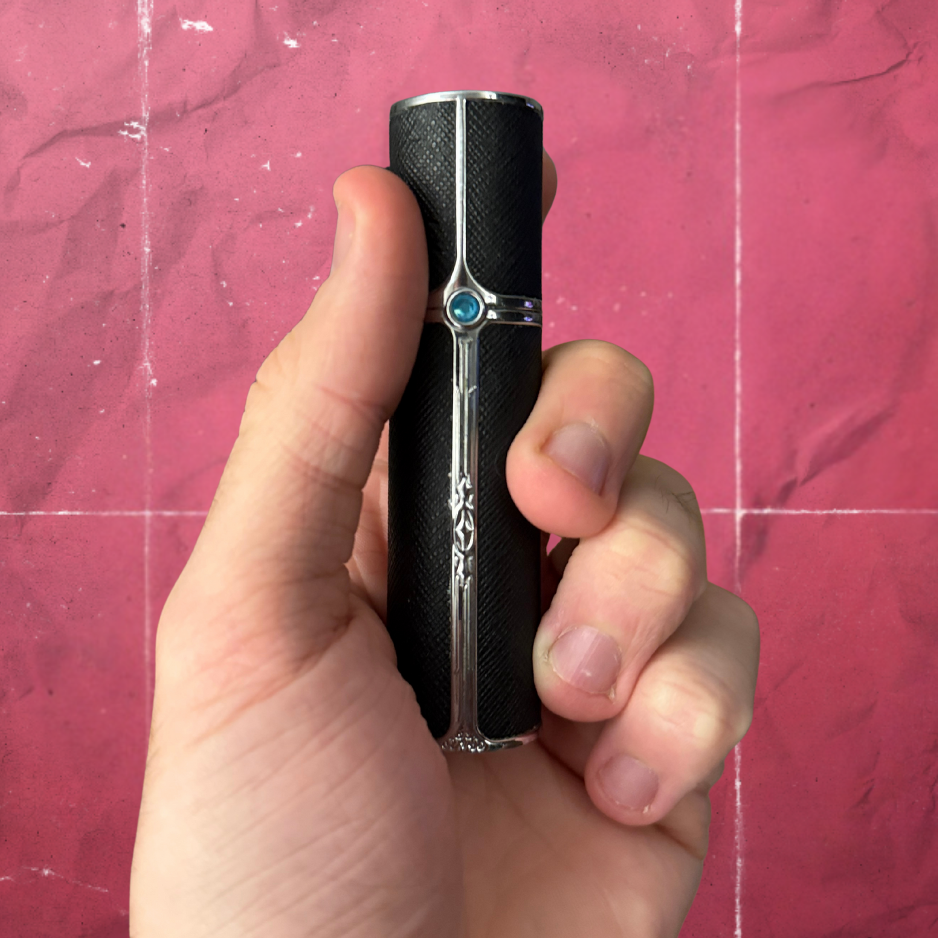
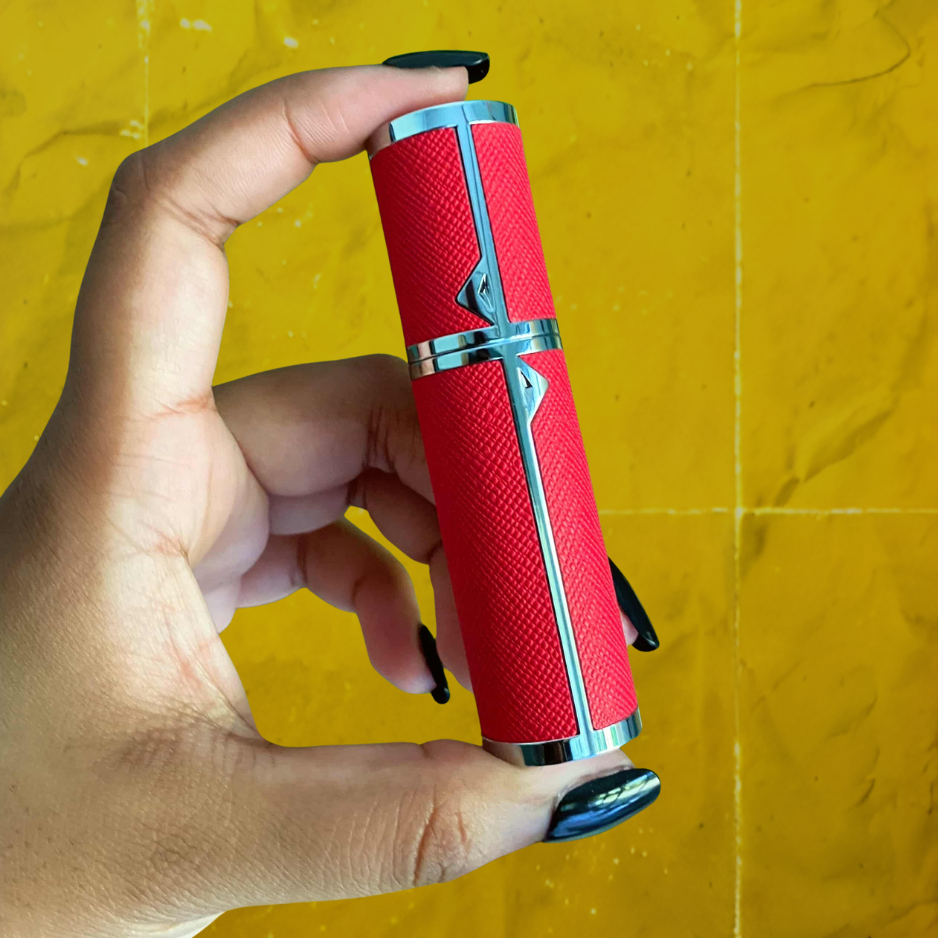
Our view is that the cleanest bag is one where liquids stay where they belong. That means decanting only what you need for the trip into a sealed, leak-proof container, keeping the fragrance in its own compartment, and wiping every container before it goes in. Our atomizers refill from any standard perfume bottle and fit in a pocket, purse or travel bag, so you do not have to carry the original glass. If you want to see how we think about pocket layout, our guide to toiletry bag compartments for liquids and perfume is a good start, and so is our guide to organizing toiletries for flights.
Cleaning is still necessary. But it should be a quick wipe after a trip, not a rescue job after a spill.
— Ash
Build a routine that takes two minutes
Here is a schedule that works for most people:
- After every trip: unpack at once, shake out debris, wipe the interior with a damp cloth, and leave the bag open to dry.
- Every few trips or after a leak: hand wash by material, dry upside down with a towel inside.
- Twice a year: inspect zippers, seams and linings. Replace the bag if a lining is peeling or cracked, because a cracked lining cannot be cleaned properly.
- Before flying: check that your containers are sealed and that your liquids meet carry-on rules. Our carry-on liquids guide and travel toiletries packing list cover that.
A gym bag benefits from the same habits, with extra attention to airing. See how to organize a gym bag and stop odor.
A cleaner way to carry fragrance
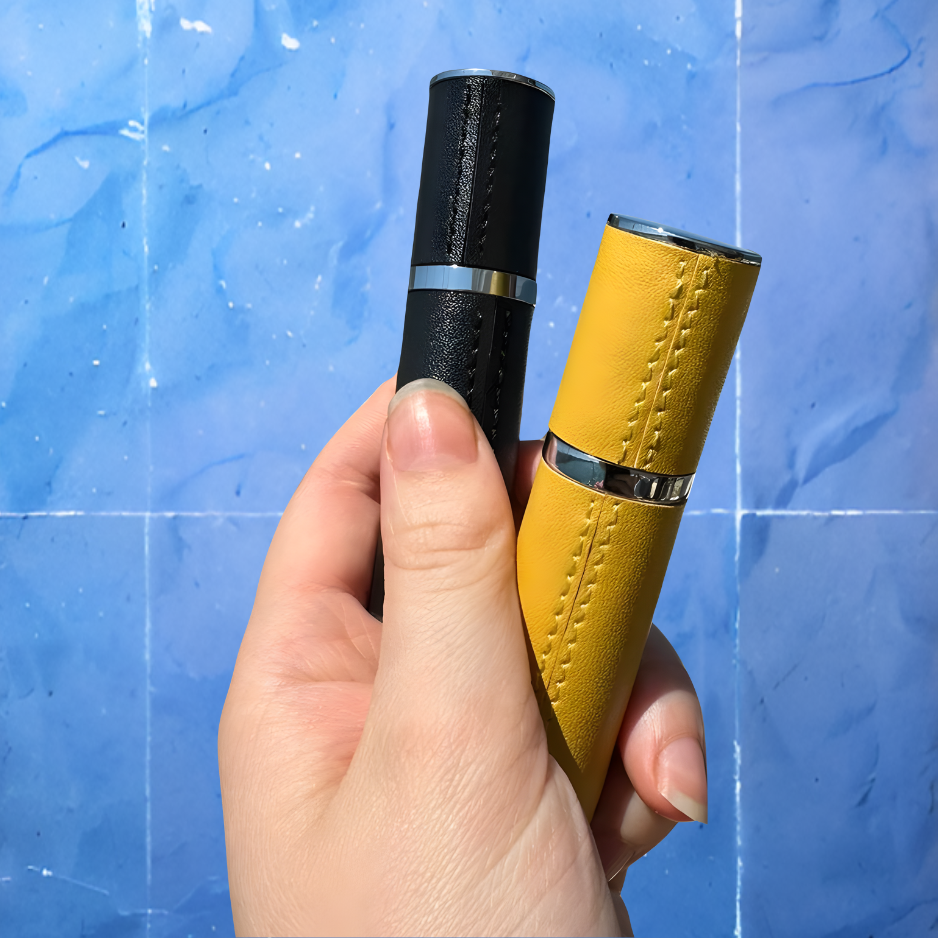
If a perfume leak is what sent you to this article, the fix is easier than a new cleaning routine. Our refillable perfume atomizers fill from any standard perfume bottle, are designed to be leak-proof and airline-approved, and take up a fraction of the space of the original bottle. For a bag that is easier to keep tidy, browse our travel organisers, or look at the McQueen Best Seller Set, which pairs an atomizer with a bag. Orders come with a 30-day money-back guarantee and free worldwide shipping.
FAQ
Are toiletry bags machine washable?
Some are, but check the label first. Woven polypropylene bags can go through a gentle cold cycle according to the ACI, while nylon and polyester are better hand washed. If you do use a machine, zip it closed and put it in a mesh bag or knotted pillowcase, and air dry it.
How do I wash a toiletry bag without ruining the zippers?
Hand wash or spot clean whenever you can, since less machine time means less wear on zippers and seams. Close the zippers before any machine cycle and use a mesh bag to prevent snagging. Clean the zipper teeth with a soft brush or cotton swab, then dry them fully.
How do I clean a leather toiletry bag?
Wipe it with a barely damp cloth and dry it at room temperature. Do not soak it or put it in a washer. Condition the leather occasionally with a product made for it, and treat any fabric lining separately.
How often should I clean my toiletry bag?
Wipe the interior after each trip and give it a full wash every few trips, or right away after a spill. If it smells musty, wash and dry it fully before you use it again.
Can I use bleach or disinfectant on my toiletry bag?
Soap and water is enough for most situations. If you want to disinfect, use an EPA-registered product labeled for soft surfaces and follow the contact time on its label, as the CDC advises. Avoid bleach unless your bag’s care label allows it.
Sources
- Cleaning Reusable Bags, American Cleaning Institute
- When and How to Clean and Disinfect Your Home, CDC
- The Best Way to Clean Your Toiletry Bag, Better Homes & Gardens
- How to Clean a Toiletry Bag in 3 Easy Steps, Gravel
- Caring for Reusable Bags fact sheet, UNH Extension
- Extension publication, University of Nebraska digital commons
- Mold and Mildew on Textiles, Museum Conservation Institute




Share and get 15% off!
Simply share this product on one of the following social networks and you will unlock 15% off!